क्रिएटिव फ़ाइल
How High Rise Forests Can Beautifully Transform Urban Existence and Elevate Human Happiness
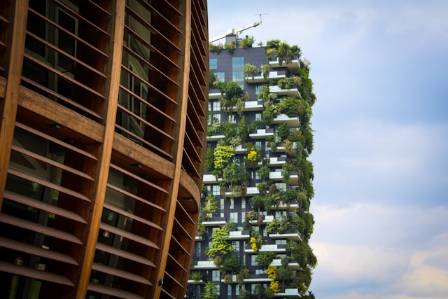
In two thousand and seven, an Italian designer observed the aggressive expansion of a metropolitan area in the Middle Eastern desert, which was heavily crowded with energy inefficient towers wrapped entirely in glass, steel, and ceramics. These reflective surfaces bounced intense sunlight away, significantly elevating temperatures in the atmosphere and across the concrete ground where everyday people walked. Thousands of miles away, the architect was simultaneously beginning drafts for two exceptionally tall residential buildings in a neglected district of northern Milan. A radical concept suddenly emerged to construct twin biological towers enveloped not by glass sheets but by living green leaves. This innovative layout aimed to welcome diverse wildlife and plants back into an industrial wasteland while cooling ambient temperatures internally and externally, establishing a pioneering architectural model that integrates living ecosystems as a foundational component. The extraordinary final outcome became the first vertical forest on the planet.
Orion Beaumont
निर्माता
फ़ाइल नोट
नीचे पूरा ट्यूटोरियल या लेख पढ़ें।
मॉड्यूल
डिजिटल कला
The Brilliant Genesis of the World First Living Skyscrapers
In two thousand and seven, an Italian designer observed the aggressive expansion of a metropolitan area in the Middle Eastern desert, which was heavily crowded with energy inefficient towers wrapped entirely in glass, steel, and ceramics. These reflective surfaces bounced intense sunlight away, significantly elevating temperatures in the atmosphere and across the concrete ground where everyday people walked. Thousands of miles away, the architect was simultaneously beginning drafts for two exceptionally tall residential buildings in a neglected district of northern Milan. A radical concept suddenly emerged to construct twin biological towers enveloped not by glass sheets but by living green leaves. This innovative layout aimed to welcome diverse wildlife and plants back into an industrial wasteland while cooling ambient temperatures internally and externally, establishing a pioneering architectural model that integrates living ecosystems as a foundational component. The extraordinary final outcome became the first vertical forest on the planet.
A Decade of Environmental Success and Global Influence
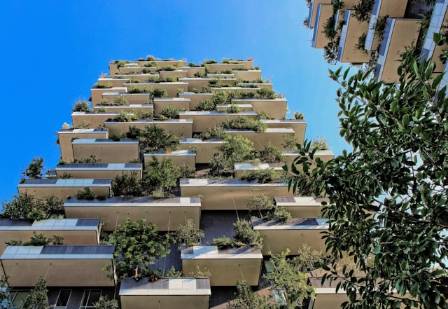
This internationally celebrated architectural design has crossed its ten year milestone, featuring rich greenery managed by specialized professionals who scale the exterior walls using safety harnesses. The dense foliage allows the inhabitants to enjoy temperatures that are up to three degrees cooler because the plants release moisture vapor and naturally filter the intense sunlight. To commemorate this special anniversary, a comprehensive volume has been compiled to explore the structural morphology of these living structures, gathering analytical reflections from prominent experts working at the crossroads of ecology and architecture alongside stunning visual documentation. This publication chronicles the deep progression of the architectural project and the sustainable values it champions, celebrating a structural masterpiece that has evolved into a global symbol for collective environmental stewardship and care for the plant kingdom.
Overturning conventional structural hierarchies, this architectural philosophy redefines the high rise tower as an ecosystem centered on vegetation and wildlife that also conveniently provides housing for human beings. The design draws heavily from academic texts and biological philosophies detailing the indispensable role that trees fulfill in terrestrial survival by capturing carbon emissions, generating vital nutrients, and offering natural shade. Leading global naturalists emphasize that as urban populations continue to expand rapidly, it is absolutely essential to introduce creative incentives that incorporate the natural world directly into existing metropolitan areas and the master plans of future cities.
The Global Green Construction Movement and Affordable Living
Since the successful completion of the original living towers in Italy, an expansive green wave of plant integrated construction has begun to spread across the globe, actively reintroducing natural ecosystems into major cities spanning from North America to Asia and Europe, with similar vertical ecosystems scheduled to begin construction in North Africa very soon. Addressing skeptical critics who questioned the financial feasibility of such complex projects, an innovative social housing development in Eindhoven, Netherlands, proved the concept viable by offering a fully forested high rise explicitly reserved for lower income residents with strictly regulated monthly rental fees under six hundred euros.
Similarly, in Montpellier, France, a substantial portion of an upcoming forested residential complex has been explicitly set aside to provide accessible and affordable urban housing. By integrating sustainable practices such as high altitude agriculture and advanced wastewater recycling, this eco friendly development actively confronts the ongoing climate crisis by repairing the deep emotional bond between humanity and the natural environment. The architectural team notes that by empowering local residents to become active urban cultivators and transforming structural facades into functional carbon traps, modern architecture demonstrates that sustainability is not a restrictive limitation but a profound lifestyle philosophy.
Fostering Human Well Being and Deep Social Connections
The inherent capacity of these remarkable structures to revolutionize how human beings live and feel sits at the very center of their architectural layout. Emerging designs across Southeast Asia draw creative inspiration from the vibrant multi colored bark of native eucalyptus trees. These towering structures require the active cooperation of hundreds of individual apartment residents to collectively maintain the delicate external flora. This shared responsibility, alongside communal agricultural green spaces and high altitude beehives, helps cultivate powerful social bonds while establishing a deep sense of shared community and mutual connection among neighbors.
The fundamental premise that biophilic architecture can measurably optimize human well-being is heavily reinforced by recent scientific investigations. A comprehensive study conducted by a prominent European university indicated that introducing dense vegetation into corporate environments dramatically enhanced the visual appeal of workspaces while significantly boosting employee satisfaction. Furthermore, laborers observed a noticeable improvement in indoor air quality and documented a substantial reduction in work related health complaints.
In another extensive ten year medical study monitoring millions of health records, researchers discovered that residential surroundings rich in green landscapes were directly linked to a forty percent reduction in instances of anxiety and depression compared to populations living in concrete areas devoid of nature. Inhabitants residing in economically disadvantaged neighborhoods experienced the most profound benefits, where consistent access to open green spaces and natural water features lowered psychological risks by ten percent compared to a six percent drop in wealthier communities.
Revolutionizing Healthcare Facilities and Civic Infrastructure
Given these powerful psychological benefits, it is entirely logical that biophilic principles are now being integrated into the design of modern medical facilities. Innovative healthcare architecture incorporates therapeutic vertical ecosystems covered in greenery to actively alleviate patient stress and accelerate physical recovery, utilizing comforting interior environments filled with cascading plant life. Meanwhile, a major medical facility in Milan is constructing a massive rooftop sanctuary spanning over seven thousand square meters. This integration of nature represents a profound shift in modern medical planning, moving far beyond the historical notion of clinical confinement to establish interactive spaces of genuine healing and well being through direct contact with the biosphere.
The organic elements of biophilic design are successfully entering a vast array of civic and commercial structures. A famous ten story transportation and leisure hub in Singapore features an immense indoor woodland comprising thousands of trees alongside the tallest indoor waterfall on earth reaching forty meters. In Amsterdam, a highly sustainable hospitality structure utilizes a rich bamboo interior to house a thriving tropical garden within its central atrium, which climbs rapidly toward the high ceiling using captured rainwater. Nearby in Rotterdam, an elevated forest situated nearly forty meters above the street crowns a magnificent mirrored public art storage archive, transforming a civic utility into a beautiful natural landmark.
Battling Global Climate Change Through Structural Biomimicry
Beyond elevating human spirits, high rise forests serve as an invaluable weapon in the global fight against catastrophic climate change. A prominent twenty one story tower in Taipei shaped precisely like a DNA double helix integrates tens of thousands of plants that actively absorb over one hundred tons of carbon dioxide annually, while their natural cooling effect on the exterior facade reduces structural air conditioning requirements by nearly one third. The skyscraper utilizes rotating balconies to optimize solar exposure, while integrated ventilation shafts within the core utilize advanced biomimicry to mimic a living lung, drawing in fresh air at the base, filtering out pollutants, and expelling purified air at the summit.
By extending vertically rather than horizontally, these high rise ecosystems drastically minimize urban soil sealing, thereby preserving natural land and reducing regional flooding hazards. These projects embody a progressive vision where cities transition away from being environmental liabilities to become living ecological solutions. Rather than treating nature as an ornamental afterthought or a structural obstacle, it serves as the foundational rule of the design, creating inhabited trees that trap carbon, generate clean energy, and provide a secure sanctuary for urban biodiversity. Anticipating the dual crises of global warming and mental health decline, architects are already planning entire metropolitan areas wrapped in forest canopies, with futuristic low emission eco cities designed for thirty thousand inhabitants currently approved and awaiting construction across various global regions.
Returning to the original urban experiment in Milan, the foundational towers operate precisely like massive artificial trees, generating clean energy from rooftop solar panels and drawing up deep groundwater for sustenance. Philosophers observe that nature is not a concept locked away in an ancient past, but represents our definitive technological future. Ultimately, these twin vertical forests are far more than mere real estate developments, functioning instead as a powerful architectural manifesto delivering a simple global message that living nature must return to occupy the spaces built for humanity.
संबंधित फ़ाइलें
Guide to the Black Winged Stilt Habitat and Key Facts
AUTH: Scarlett Thompson

आलूबुखारा और आलूबुखारा जूस के 10 बेहतरीन स्वास्थ्य लाभ
AUTH: हर्ष
विश्व की सबसे ऊंची इमारत कौन सी है?
AUTH: भास्कर
मोंटे पैलेस मदीरा गार्डन: पहाड़ों में कला और प्रकृति की दुनिया
AUTH: आरुषि

DIY Metal Artistry: A Comprehensive Introduction for New Crafters
AUTH: Norma Jean Wainwright

10 रंग विकल्प जो छोटे कमरों को बड़ा दिखाएंगे
AUTH: कवि