← मुख्य पन्ना4 मिनट का पाठ
क्रिएटिव फ़ाइल
Essential Koala Information: Key Insights
Koalas may appear adorable and laid-back, but they are remarkably complex creatures. There is a wealth of intriguing information about them that goes beyond standard educational materials. In this section, we address the most frequent inquiries and reveal details you might never have considered.
O
Oliver
निर्माता
फ़ाइल नोट
नीचे पूरा ट्यूटोरियल या लेख पढ़ें।
मॉड्यूल
डिजिटल कला
Koalas may appear adorable and laid-back, but they are remarkably complex creatures. There is a wealth of intriguing information about them that goes beyond standard educational materials. In this section, we address the most frequent inquiries and reveal details you might never have considered.
Fascinating Realities of Koalas
As an emblematic species found exclusively in Australia, koalas have won global affection due to their plush fur and sedentary lifestyle. Regrettably, these animals are currently at risk of extinction. A core part of our preservation work involves educating the public about the unique attributes of these creatures. Below, we answer common questions, debunk popular misconceptions, and provide details regarding their singular biological requirements and habits. We hope this information inspires a deeper commitment to their protection.
Defining the Koala
The koala is an arboreal marsupial indigenous to the Australian continent.() Marsupials are a specific group of mammals distinguished by giving birth to highly immature young, often called "pinkies," which further develop inside a dedicated pouch on the mother’s abdomen.() Although they look like they might be fun to hold, they are wild fauna and should only be observed from a respectful distance.
Formal Scientific Classification
Scientifically, the koala is identified as Phascolarctos cinereus.() They stand as the sole surviving representatives of the Phascolarctidae lineage. The genus name Phascolarctos is derived from Greek roots meaning "pouch bear," while the species name cinereus comes from Latin, meaning "ash-colored," referencing their greyish coat.() This nomenclature was established in 1810 by the British scholar George Perry.
Geographic Distribution
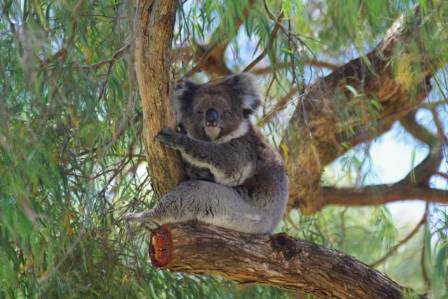
Koalas inhabit the eastern and southeastern coastal regions of Australia, spanning Queensland, New South Wales, Victoria, and South Australia.() They thrive in areas with high densities of eucalyptus forests, which provide their food and shelter.() The Northern Rivers region is particularly significant as it maintains one of the most genetically varied populations remaining. Sightings are frequent in local areas such as Ballina, Lismore, and the Tweed.()
Clarifying the "Bear" Misconception
Although many people internationally refer to them as "koala bears" because of their resemblance to teddy bears, they are not part of the bear family.() As marsupials, their closest biological relatives are actually wombats and kangaroos.()
Dietary Habits and Nutrition
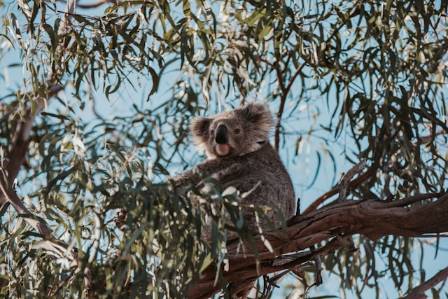
Koalas possess a highly specialized diet centered almost exclusively on eucalyptus.() They utilize various parts of the tree, including stems, blossoms, and bark.() Out of more than 700 eucalyptus varieties in Australia, koalas are quite picky, favoring only a small selection that varies by region. Their physiology is uniquely adapted to handle these tough, nutrient-poor, and fibrous leaves. A specialized organ known as the caecum contains specific bacteria that break down the fibers and neutralize the toxic chemicals found in the foliage.()
Hydration Sources
Generally, koalas get most of their liquid intake from eucalyptus leaves, which consist of roughly 50% to 55% water. This adaptation allows them to go long periods without visiting a water source. The term "koala" is actually thought to originate from an Indigenous word meaning "no drink."() However, during heatwaves or severe dry spells, they may seek out water from puddles or hollows. If you encounter a thirsty koala, contact a rescue group immediately rather than offering water from a bottle, which can cause them to choke.
Natural Environment and Habitat
The preferred setting for a koala is the eucalyptus woodland. These trees are vital, offering both sustenance and safety. Koalas spend the vast majority of their lives high in the canopy, eating and resting.() Unfortunately, the destruction of these forests is the primary threat leading to population decline. Protecting these habitats and establishing safe travel paths for wildlife are essential steps for their survival.
The Impact of Chlamydia
Koalas are prone to several illnesses, with chlamydia being a major concern.() Caused by the Chlamydia pecorum bacteria, it can lead to blindness, respiratory issues, and reproductive failure. While researchers are still studying why they are so vulnerable, environmental stress and habitat fragmentation likely weaken their immune responses. Fortunately, a new vaccine has been created through collaborative research to help manage the spread of this infection within populations.
Life Expectancy
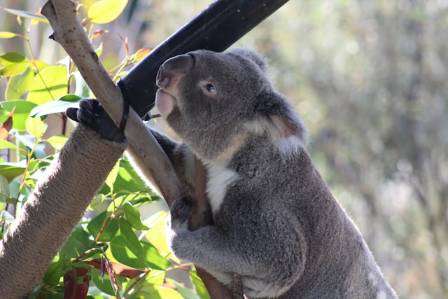
The lifespan of a koala varies between those in the wild and those in managed care. Wild individuals typically live between 10 and 15 years, though some have reached 19. They face numerous external dangers like predators, illness, and traffic.() In managed environments, they may live up to 20 years due to consistent medical attention and a steady diet. However, it is vital to keep them in the wild, as artificial settings cannot fully satisfy their complex social and physical requirements.
Sleeping Patterns
Koalas are remarkably sedentary, resting for anywhere from 18 to 22 hours daily.() This long period of inactivity is necessary for them to conserve the limited energy they gain from their low-calorie diet while their bodies process the fibrous leaves.
Classification as Marsupials
Koalas are a branch of mammals known as marsupials.() Unlike placental mammals, which have long internal pregnancies, marsupials have a very short gestation.() The offspring, known as joeys, emerge in an undeveloped state and must navigate to the mother's pouch.() There, they latch onto a teat and remain for several months to finish their development, receiving all their nutrients from the mother's milk.
संबंधित फ़ाइलें
// hi
बंगाल हनुमान लंगूर
AUTH: सूरज

// hi
शीर्ष 10 ड्रैग रेसिंग लीजेंड से मिलें
AUTH: नवीन
// en
Convallaria majalis: From Woodland Plant to Garden Favorite
AUTH: Sydney Clark

// en
8 Fascinating Facts About Astronauts You Probably Didn’t Know
AUTH: Mason

// en
Remarkable AI Trained Robot Dog Climbs Stairs and Bounds Through Dense Forests
AUTH: Thomas Walker

// en
The Ultimate Family Sports Cars of 2023
AUTH: Noah Greyson