क्रिएटिव फ़ाइल
20 Hummingbird Facts That Will Spark Your Curiosity
Welcome to the wonderful world of hummingbirds! These tiny feathered friends are full of surprises and secrets. From their lightning-fast wing beats to their incredible flying abilities, hummingbirds are truly amazing creatures. In this blog post, we’re going to share a bunch of fascinating facts about hummingbirds that will have you humming with excitement. So, get ready to soar with knowledge and discover the incredible world of hummingbirds!
Mia Sullivan
निर्माता
फ़ाइल नोट
नीचे पूरा ट्यूटोरियल या लेख पढ़ें।
मॉड्यूल
डिजिटल कला
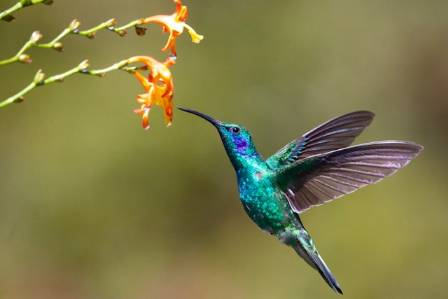
Welcome to the wonderful world of hummingbirds! These tiny feathered friends are full of surprises and secrets. From their lightning-fast wing beats to their incredible flying abilities, hummingbirds are truly amazing creatures. In this blog post, we’re going to share a bunch of fascinating facts about hummingbirds that will have you humming with excitement. So, get ready to soar with knowledge and discover the incredible world of hummingbirds!
1. Hummingbirds are the smallest birds in the world
Hummingbirds are extremely tiny birds, they hold the title of the smallest birds on the entire planet! They’re so small that they can fit right in the palm of your hand. Some hummingbirds are even smaller than a human thumb. Just imagine how tiny they are when compared to bigger birds like eagles or pigeons. They’re like little flying fairies that flit around, sipping nectar from flowers. Isn’t that amazing?
2. Hummingbirds are the only birds that can fly both upside down and backward
Hummingbirds are special because they can do things no other bird can. They’re famous for their agility and acrobatic flying skills, and they really can fly in many directions including upside down and backward. This is all thanks to their unique wing structure and specialized muscles, which let them rotate their wings 180 degrees and move in different ways. They can also hover in one spot, which comes in handy when they’re feeding on flower nectar. This incredible flying ability is just one of the things that makes hummingbirds so special and fun to watch.
3. There are more than 340 species of hummingbirds
Scientists have identified and recognized over 340 different species of hummingbirds. These species live all across the Americas, from Alaska down to Tierra del Fuego. They can be found in a variety of habitats, such as tropical rainforests, deserts, and high-altitude mountains. Hummingbirds are known for their small size, shiny iridescent feathers, fast wing beats, and their ability to hover while feeding. Each species has its own unique features like size, color, and favorite habitat—making them a very diverse group of birds.
4. Hummingbirds have very fast wing beats, up to 80 beats per second
Hummingbirds are well-known for their super-fast wing beats, which can reach speeds of 80 beats every second. That’s how quickly their wings move! They can achieve this high frequency thanks to a special muscle in their chest called the pectoralis muscle, which lets them flap their wings at such a rapid rate. Their wings move so fast that they make a humming sound and that’s how they got their name. This fast wing flapping lets them hover in place while drinking nectar, as well as fly in different directions like backward and upside down.
5. Hummingbirds feed on nectar from flowers and also small insects and spiders for protein
Hummingbirds mainly eat nectar from flowers, which gives them the energy they need to fly and keep their high metabolism going. They have long, thin beaks and even longer tongues that help them reach deep into flowers to get the nectar. But they also need protein to survive and grow, so besides nectar, they eat small insects and spiders, these provide them with essential amino acids. They’re known to catch tiny insects like gnats, mosquitoes, and fruit flies while they’re feeding on nectar. Some species also drink tree sap or eat pollen.
6. Hummingbirds have long tongues that help them drink nectar from flowers
Hummingbirds have long tongues that are perfect for sipping nectar from flowers. Their tongues have grooves, and they can stretch them out to reach deep inside flowers to get the nectar. The tips of their tongues are frayed, which helps them collect more nectar with each lick. The length of their tongues varies by species, but they’re usually longer relative to their beaks than other birds’ tongues. You can think of their tongues like long, thin spaghetti noodles that they use to slurp up sweet nectar. They’re so good at using their tongues that they can drink from more than 2,000 flowers in a single day!
7. Hummingbirds are known for their fast metabolism and need to eat frequently
Hummingbirds have an extremely fast metabolism, which means they need to eat often to keep their energy levels up. Their metabolism rate is so high that they need to eat more food relative to their size than most other birds. Every day, they have to eat half their body weight in food, and they’re always on the move to find flowers with nectar. They mostly eat flower nectar, a sweet liquid that gives them energy, but they also eat small insects and spiders to get extra protein. Because of their fast metabolism, they need to eat almost every 10 to 15 minutes.
8. The smallest hummingbird is called Bee Hummingbird and it is the same size as a honeybee
The smallest type of hummingbird is the Bee Hummingbird, and it’s so tiny that it’s about the same size as a honeybee! Can you picture how small that is? This tiny bird lives in Cuba and Isla de la Juventud, and it’s the smallest bird in the world when measured by both weight and length. Even though it’s tiny, it has a high metabolism and needs to feed often. It’s known for its bright colors and shiny iridescent feathers, which are a beautiful sight to see.
9. Hummingbirds have the ability to hover in one spot while they feed
Hummingbirds can hover in one place while they eat, a skill called “hovering flight,” and it’s one of their most impressive and unique traits. They do this by flapping their wings in a figure-eight pattern, which lets them create lift on both the upstroke and downstroke of each wing beat. This ability to stay in one spot makes it easy for them to feed on flower nectar. They can also fly forward, backward, and even upside down, all thanks to their unique wing structure and specialized muscles. This combination of hovering and multi-directional flight makes hummingbirds some of the most agile and acrobatic birds in the world.
10. Hummingbirds are important pollinators for many plants
Hummingbirds are what we call pollinators meaning they help plants reproduce. When a hummingbird drinks nectar from a flower, some of the flower’s pollen sticks to its beak or feet. Then, when the hummingbird flies to another flower, it rubs off some of that pollen onto the new flower. This helps the new flower make seeds, which can grow into new plants. Many plants have evolved to rely specifically on hummingbirds for pollination, they have bright colors and deep flower tubes to attract these birds. Hummingbirds can also fly long distances, which lets them pollinate a wide range of plants over large areas. They’re especially important for plants that aren’t well-suited to other types of pollination, like wind or insect pollination. So, hummingbirds help plants reproduce and create more flowers and plants making them vital for the environment.
11. Hummingbirds are very territorial and will fiercely defend their food sources
Hummingbirds can be very protective of their food. They’re highly territorial, meaning they like to keep certain areas just for themselves. They’ll strongly defend their food sources like flower gardens or hummingbird feeders—from other hummingbirds. Imagine having a favorite toy or a delicious snack that you don’t want to share with anyone that’s how hummingbirds feel about their food. They’ll chase away other hummingbirds that get too close, and they might even fight to protect their food. They’re brave and determined to keep what’s theirs. It’s a bit like how a lion guards its territory—hummingbirds guard their food sources. This is important for them because they need to eat a lot to keep going, and they have to make sure they have enough food to survive.
12. Hummingbirds are able to see ultraviolet light, which helps them find flowers
Hummingbirds have special eyes that can see ultraviolet light, a type of light humans can’t detect. This helps them find flowers from far away. Ultraviolet light is like a “secret light,” and flowers have special patterns on them that are invisible to us but visible to hummingbirds in this light. These patterns act like a map, guiding hummingbirds to the nectar. It’s almost like having a secret treasure map that only they can read. These patterns help hummingbirds find the flowers with the most nectar, even when the flowers are hidden among leaves. So, this special ability helps them locate the food that gives them the most energy. Without it, finding food would be much harder for them, making survival more difficult.
13. Hummingbirds are solitary creatures and only come together to mate
Hummingbirds are usually solitary, they don’t form flocks and prefer to spend most of their time alone. They’re very independent and like having their own space. They’re territorial and will defend their food sources and nesting spots from other hummingbirds. But during the breeding season, they might come together to mate. Males will chase away other males and defend their territory from rival hummingbirds during this time.
14. In cold weather, they are able to go into a state of torpor, where they lower their metabolism to conserve energy
Hummingbirds have a special way to handle cold weather, they can enter a state called torpor, which is like a deep sleep that helps them save energy. In torpor, their body slows down its metabolism, heart rate, and temperature to conserve energy. During this state, a hummingbird’s body temperature can drop to as low as 5 degrees Celsius—much lower than its normal temperature of around 37 degrees Celsius. When it’s cold outside, hummingbirds struggle to find enough food to stay warm. So, to survive, they slow down their metabolism, which means their body uses less energy.
15. Hummingbirds are able to fly up to 1,300 miles non-stop during migration
Hummingbirds are famous for their amazing flying skills, and one of the most impressive is their long-distance migration. Some hummingbird species can fly up to 1,300 miles without stopping during migration—an incredible feat for such small birds. That’s like flying from New York City to Houston, Texas, without taking a break! During migration season, they fly long distances to find food and warmer weather. They use the wind, sun, and stars to navigate their way.
16. Hummingbirds are known to live for 3 to 5 years on average
Hummingbirds have a relatively short lifespan—on average, they live 3 to 5 years. But some species can live longer, with a few individuals reaching up to 10 years. Many factors affect how long a hummingbird lives, such as its diet, habitat, and exposure to predators or disease. Hummingbirds that live in areas with plenty of food and good nesting spots are more likely to survive and live longer than those in areas with limited food and poor nesting conditions. Even though their lifespan is short, hummingbirds reproduce quickly, which helps keep their species alive. Female hummingbirds usually lay 2 eggs per clutch, and they can lay multiple clutches each year. This lets them have many offspring in a short time, ensuring their species survives even if individual birds don’t live long.
17. Hummingbirds have a unique mating ritual where males perform aerial displays to attract females
Hummingbirds have a unique and special way of mating. Males put on a show called an aerial display to attract females, it’s like a talent show where males show off their best moves to impress the females. During these displays, males fly quickly and colorfully, flap their wings at high speed, and make different shapes in the air. They might also make sounds or show off their bright feathers to get females’ attention. They even spread their tail feathers and their bright gorgets (throat feathers) to look more attractive. Females watch these displays and choose the male they like best, based on his color, movements, and flying skills. This unique and spectacular mating ritual is one of the many fascinating things about hummingbirds—watching these tiny birds perform such acrobatic shows is truly a sight to behold.
18. Hummingbirds are unable to walk or hop
Hummingbirds are amazing fliers, but they struggle to walk or hop. They have tiny feet and can’t use them to walk or hop like other birds. They only use their feet to perch and hold onto branches or flowers. Hummingbirds are built for flying, they spend most of their time in the air, and they can hover, fly forward, backward, and even upside down. Their wings are larger relative to their body size than any other bird’s, which lets them fly at high speeds and make sharp turns.
19. Hummingbirds have no sense of smell but they can hear and see better than humans
Hummingbirds have a very poor sense of smell, they can’t detect odors, unlike many other birds and animals. But they have highly developed hearing and vision. Their hearing is much better than humans’, their ears are on the sides of their heads, letting them pick up a wide range of sounds, including the high-frequency calls of other hummingbirds. Their vision is also superior to humans’, helping them spot flowers and navigate their surroundings easily.
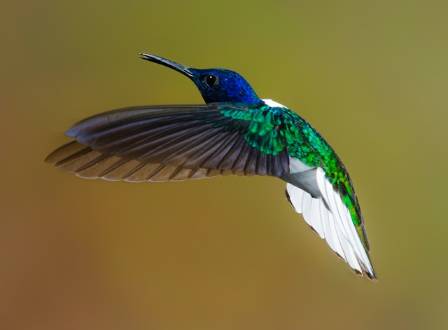
20. Hummingbirds use spiderwebs to build their nests
Hummingbirds are small, so they need to build small, lightweight nests that can support their tiny bodies and their eggs. To do this, they use a variety of materials, including moss, lichens, leaves, and fibers. One of the most interesting materials they use is spiderwebs. Spiderwebs are sticky and help create nests that are strong, flexible, and lightweight—perfect for hummingbirds’ needs. This unique choice of material makes their nests both durable and easy to carry, which is important for these small birds.
Conclusion
Hummingbirds are truly some of the most remarkable creatures on Earth. From their tiny size and acrobatic flying to their unique feeding habits and important role as pollinators, every fact about them reveals a new layer of their charm and importance. Whether they’re hovering over a flower, performing aerial mating displays, or using spiderwebs to build nests, these tiny birds never fail to impress. Learning about their ability to survive cold weather with torpor, their long migration journeys, and their superior senses only deepens our appreciation for them. Hummingbirds remind us that even the smallest creatures can have a big impact on the environment. By understanding and celebrating these amazing birds, we can better protect them and the habitats they depend on, ensuring that future generations will also get to marvel at the wonder of hummingbirds.
संबंधित फ़ाइलें

लैपलैंड में सर्दी – चरम स्थितियों के लिए तैयार
AUTH: योगेश
Ballerina Orchids: Characteristics And Cultivation
AUTH: Ethan Johnson
Transforming Your Living Space with Harvest Gold Interior Tones
AUTH: Jonathan Michael Carter

4 बुनियादी बैडमिंटन कौशल जिन्होंने मेरे खेल को बेहतर बनाया (केस स्टडी)
AUTH: अनन्या

Beautiful and Intelligent Ways to Arrange a Children Bedroom That Parents and Kids Will Both Enjoy
AUTH: Austin Ryan Perry
जब चंद्रमा पृथ्वी से दूर चला जाएगा तो समुद्री ज्वार पर क्या प्रभाव पड़ेगा?
AUTH: तन्वी