क्रिएटिव फ़ाइल
Evolutionary History of Larks: Convergence and Complexity in a Diverse Avian Lineage
Larks are often perceived by casual observers as a somewhat uniform group of brown, ground-dwelling birds. However, this family—technically known as alaudids—is far more dynamic than its reputation suggests. Found across nearly every continent, larks have a complex evolutionary history marked by surprising genetic relationships and remarkable physical convergence.
Violet Genevieve Caldwell
निर्माता
फ़ाइल नोट
नीचे पूरा ट्यूटोरियल या लेख पढ़ें।
मॉड्यूल
डिजिटल कला
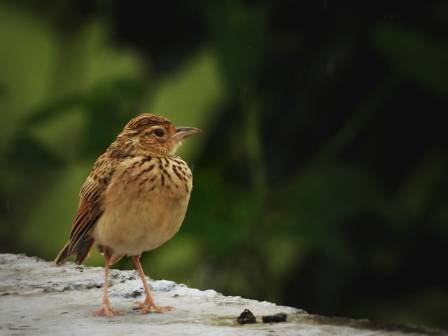
Larks are often perceived by casual observers as a somewhat uniform group of brown, ground-dwelling birds. However, this family—technically known as alaudids—is far more dynamic than its reputation suggests. Found across nearly every continent, larks have a complex evolutionary history marked by surprising genetic relationships and remarkable physical convergence.
Geographic Distribution and Habitat
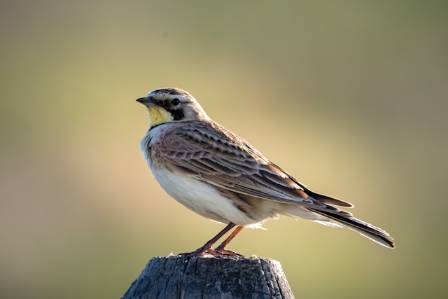
Larks are highly widespread, inhabiting almost all continents with the exception of Antarctica. They are primarily associated with open landscapes such as deserts, steppes, savannas, and semi-arid regions. While Africa is the heart of lark diversity—hosting over 80% of the approximately 100 living species—other regions have fewer representatives. North America and Australia, for example, each host only a single species: the Horned Lark (Eremophila alpestris) and the Australasian Bush Lark (Mirafra javanica), respectively.
In Europe, the Eurasian Skylark (Alauda arvensis) is the most iconic member of the family. These birds have successfully adapted to agricultural land, as modern fields often mimic the treeless, steppe-like environments they naturally prefer.
Anatomy and Physical Adaptations
Larks are generally characterized by cryptic, brownish plumage that provides excellent camouflage on the ground. Despite this "standard" look, the family displays significant morphological variety:
-
Crests: Elongated feathers on the crown have evolved multiple times. These can be singular erectile crests, as seen in the Skylark, or paired "horns," as seen in the Horned Lark.
-
Specialized Bills: While many larks have generalist bills, some have evolved extreme forms. The Greater Hoopoe-lark features a long, slender, decurved bill for probing, while the Thick-billed Lark possesses a massive, finch-like beak.
-
Foot Structure: Many species have exceptionally long hind claws (hallux claws). Research suggests this increases the foot's surface area, preventing the bird from getting tangled in thick grass or sinking into soft sand.
Larks in the Evolutionary Tree
For decades, larks were considered "primitive" or "archaic" members of the oscine passerines (songbirds). This traditional view was based on several anatomical features that appeared less specialized than those of other songbirds, such as a simpler syrinx and a different humerus structure. Consequently, larks were often placed at the very beginning of songbird classifications in older field guides.
However, modern molecular phylogenetics has overturned this "living fossil" narrative. Genetic data reveals that larks are not at the root of the songbird tree but are instead deeply embedded within a large group of "warbler-like" birds known as the Sylvioidea. Surprisingly, their closest relatives include groups like babblers and even the Bearded Reedling.
Convergence and Phylogenetic Surprises
Recent comprehensive studies of lark DNA have uncovered "cryptic complexity"—cases where birds that look nearly identical are actually distant relatives. This phenomenon, known as evolutionary convergence, occurs when unrelated species develop similar traits because they live in similar environments.
-
Non-Monophyletic Genera: Several traditional groups, such as the bush larks (Mirafra) and desert larks (Ammomanes), were found to be "dumping grounds" for unrelated species. For example, Gray’s Lark was moved to its own genus, Ammomanopsis, after DNA showed it was not a true desert lark.
-
Deceptive Lookalikes: The African Spizocorys larks and Asian Calandrella larks look almost identical and were long thought to be the same genus. Molecular data shows they are unrelated, having independently evolved the same "short-toed" appearance.
-
Anatomical Shifts: Conversely, some close relatives look nothing alike. The Thick-billed Lark, despite its specialized anatomy, is genetically close to the standard-looking Skylarks and desert larks.
The history of larks proves that outward appearance can be a deceptive guide to ancestry. Far from being a "boring" group of brown birds, the Alaudidae represent a masterclass in how evolution can produce high levels of diversity and hidden complexity within a single family.
संबंधित फ़ाइलें

दुनिया की 10 सबसे बेहतरीन केबल कार राइड
AUTH: अभय
Water Reflecting Sky in a Large Lake
AUTH: Oliver Hawthorne

5 Transformative Tech Trends Shaping the Landscape of Fashion
AUTH: Elijah Finnegan
पेस्टल रंगों से यथार्थवादी पशु फर बनाना सीखें: एक व्यापक मार्गदर्शिका
AUTH: शुभ्रांशु झिल्ला

What Does the Hermit Crab Eat?
AUTH: Julian Prescott

Eight Important Portrait Artists
AUTH: William