क्रिएटिव फ़ाइल
Water Reflecting Sky in a Large Lake
The Andes Mountains are not only the longest mountain range on Earth but also contain many extraordinary natural wonders, including the driest desert on the planet, vast cloud forests, and the world’s most level land surface. This incredibly flat landscape is home to a giant salt plain famous for its unusual reflective effects, especially during the nighttime.
Oliver Hawthorne
निर्माता
फ़ाइल नोट
नीचे पूरा ट्यूटोरियल या लेख पढ़ें।
मॉड्यूल
डिजिटल कला
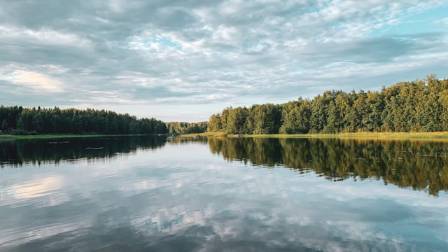
The Andes Mountains are not only the longest mountain range on Earth but also contain many extraordinary natural wonders, including the driest desert on the planet, vast cloud forests, and the world’s most level land surface. This incredibly flat landscape is home to a giant salt plain famous for its unusual reflective effects, especially during the nighttime.
Located in Daniel Campos Province, Bolivia, near the highlands of the Andes, Salar de Uyuni is the largest salt flat in the world, covering an area of approximately 4,086 square miles. A salt flat is a broad region where the ground is covered by a layer of salt deposits. Situated at an elevation of about 11,995 feet above sea level, Salar de Uyuni is often called the “world’s largest mirror” because a thin layer of water spreads across its surface after rainfall, creating a stunning reflection of the sky and surroundings.
The Formation of Salar de Uyuni
Salar de Uyuni was created through a long process of geological change involving ancient lakes. It forms part of Bolivia’s Altiplano plateau, a high plain shaped by the uplift of the Andes Mountains. The region contains both saltwater and freshwater lakes, along with several salt flats, and has no natural drainage because it is surrounded by mountains.
Between approximately 30,000 and 42,000 years ago, the area was covered by a massive prehistoric lake known as Lake Minchin. Over time, this lake gradually disappeared and transformed into Lake Tauca, which once reached a depth of about 460 feet. Later, Lake Coipasa became the final major prehistoric lake in the region before it also dried up, leaving behind smaller lakes such as Uru Uru and Poopó, as well as two enormous salt deserts: Salar de Uyuni and Salar de Coipasa.
During rainy periods, Lake Titicaca can overflow and send water toward Lake Poopó, which may then contribute to flooding the nearby salt flats. Today, Salar de Uyuni is covered by a thick salt layer that is remarkably flat, with elevation differences of only around three feet across the entire surface. Beneath this crust lies a large amount of lithium-rich brine, containing an estimated 50% to 70% of the world’s lithium reserves.

The World’s Largest Natural Mirror
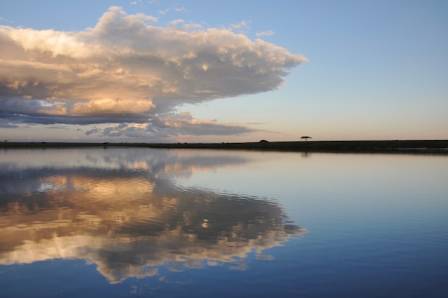
During the rainy season, rainfall and water from nearby Lake Poopó can cover parts of Salar de Uyuni with a thin layer of water. This creates a massive reflective surface stretching for nearly 80 miles, turning the salt flat into an enormous natural mirror.
The water-covered salt plain reflects the sky, clouds, and surrounding landscape, producing a breathtaking visual effect that appears to merge the earth and sky together. This unique phenomenon attracts countless travelers, photographers, and nature lovers who come to experience and capture one of the most surreal landscapes on Earth.
Salar de Uyuni earned its nickname “the world’s largest mirror” not only because it is the biggest salt flat on the planet, but also because the reflective surface it creates is far larger than other famous salt flats, including the Bonneville Salt Flats in the United States.
A Natural Site for Satellite Calibration
Large salt flats are valuable for scientific purposes because their vast size, stable surface, and strong reflective properties make them ideal for calibrating satellite measurement equipment.
Salar de Uyuni is especially useful because of its high altitude, extremely flat terrain, and the lack of nearby industrial activity. From April to November, the region typically experiences clear skies and very dry air, providing excellent conditions for satellite observations.
The seasonal flooding of the salt surface creates an exceptionally smooth and even landscape. In addition, the area has a very strong reflection of ultraviolet light, with only minor changes throughout the day. These unique characteristics make Salar de Uyuni one of the most important natural locations on Earth for satellite calibration and scientific research.
संबंधित फ़ाइलें

5 Health Benefits of Drinking Black Tea
AUTH: Cory

AI Bionic Hand Brings Human-Like Movement Closer
AUTH: Harper Lane

किसी भी अवसर के लिए सरल चीनी स्टिर-फ्राई रेसिपी
AUTH: देबाशीष घोष

Coordinating Your Handbag with Your Wardrobe: A Color Styling Guide
AUTH: Edmund Faraday

मोबाइल फोन ने हमारे जीवन को कैसे बदल दिया है
AUTH: मारिका एरेनक्रोन

स्मार्ट होम क्या है? वो सब कुछ जो आपको जानना चाहिए
AUTH: ईशा