Section 1
Bridge Bilingual Classics
Jack London's Short Stories (Vol. IX)
·
Misfortunes
Jack London
·
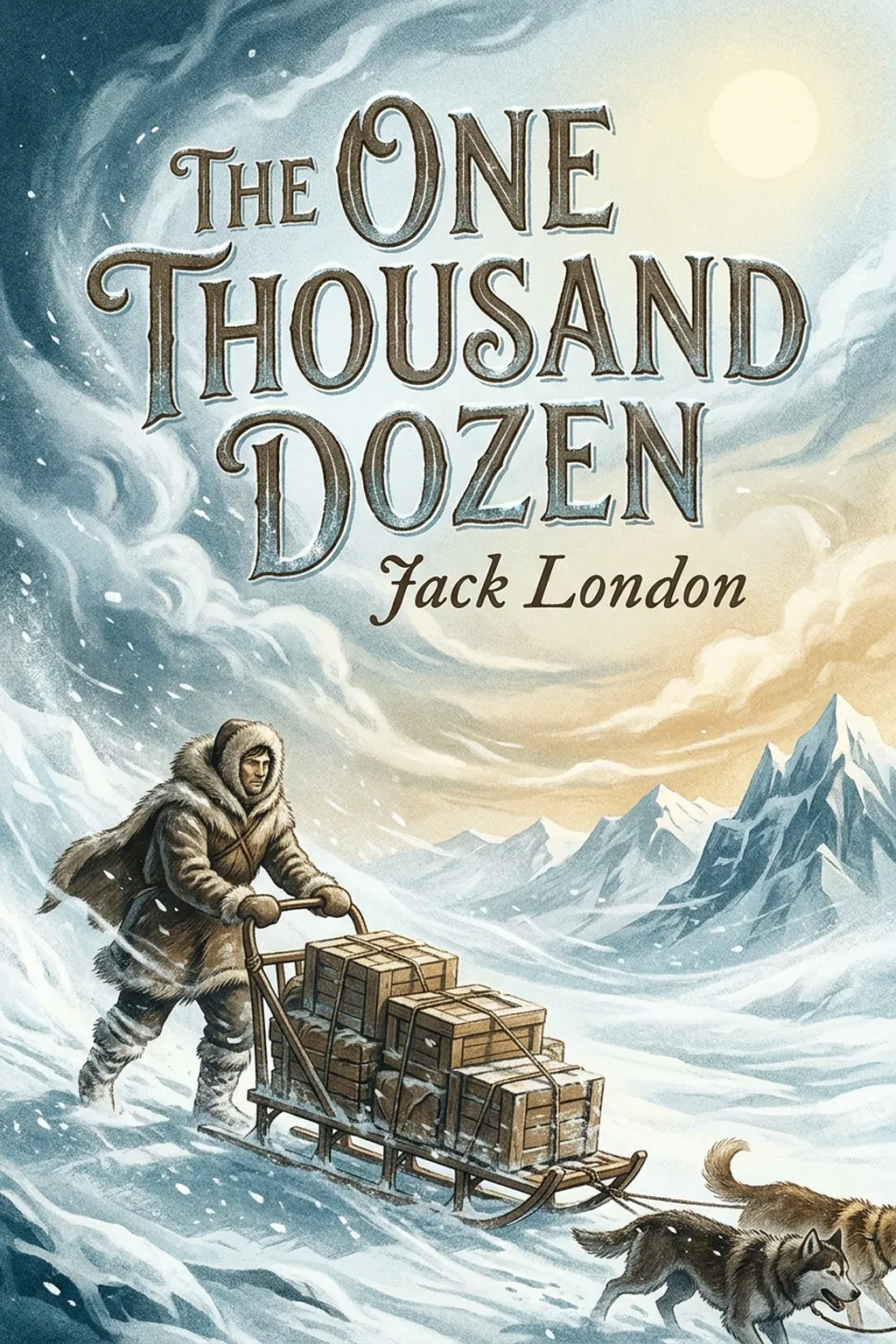
The One Thousand Dozen
The One Thousand Dozen
David Rasmunsen was a hustler, and, like many a greater man, a man of the one idea. Wherefore, when the clarion call of the North rang on his ear, he conceived an adventure in eggs and bent all his energy to its achivement. He figured briefly and to the point, and the adventure became iridescent-hued, splendid. That eggs would sell at Dawson for five dollars a dozen was a safe working premise. Whence it was incontrovertible that one thousand dozen would bring, in the Golden Metropolis, five thousand dollars.
·“”
On the other hand, expense was to be considered, and he considered it well, for he was a careful man, keenly practical, with a hard head and a heart that imagination never warmed. At fifteen cents a dozen, the initial cost of his thousand dozen would be one hundred and fifty dollars, a mere bagatelle in face of the enormous profit. And suppose, just suppose, to be wildly extravagant for once, that transportation for himself and eggs should run up eight hundred and fifty more; he would still have four thousand clear cash and clean when the last egg was disposed of and the last dust had rippled into his sack.
"You see, Alma,"—he figured it over with his wife, the cosy dining room submerged in a sea of maps, government surveys, guidebooks, and Alaskan itineraries,—"you see, expenses don't really begin till you make Dyea—fifty dollars'll cover it with a first-class passage thrown in. Now from Dyea to Lake Linderman, Indian packers take your goods over for twelve cents a pound, twelve dollars a hundred, or one hundred and twenty dollars a thousand. Say I have fifteen hundred pounds, it'll cost one hundred and eighty dollars—call it two hundred and be safe. I am creditably informed by a Klondiker just come out that I can buy a boat for three hundred. But the same man says I'm sure to get a couple of passengers for one hundred and fifty each, which will give me the boat for nothing, and, further, they can help me manage it. And...that's all; I put my eggs ashore from the boat at Dawson. Now let me see how much is that?”
“”,“——————”
"Fifty dollars from San Francisco to Dyea, two hundred from Dyea to Linderman, passengers pay for the boat—two hundred and fifty all told," she summed up swiftly.
“,——”
"And a hundred for my clothes and personal outfit," he went on happily; "that leaves a margin of five hundred for emergencies. And what possible emergencies can arise?"
“”“”
Alma shrugged her shoulders and elevated her brows. If that vast Northland was capable of swallowing up a man and a thousand dozen eggs, surely there was room and to spare for whatever else he might happen to possess. So she thought, but she said nothing. She knew David Rasmunsen too well to say anything.
·
"Doubling the time because of chance delays, I should make the trip in two months. Think of it, Alma! Four thousand in two months! Beats the paltry hundred a month I'm getting now. Why, we'll build further out where we'll have more space, gas in every room, and a view, and the rent of the cottage'll pay taxes, insurance, and water, and leave something over. And then there's always the chance of my striking it and coming out a millionnaire. Now tell me, Alma, don't you think I'm very moderate ?”
“”
And Alma could hardly think otherwise. Besides, had not her own cousin,—though a remote and distant one to be sure, the black sheep, the harum-scarum, the ne'er-do-well,—had not he come down out of that weird North country with a hundred thousand in yellow dust, to say nothing of a half-ownership in the hole from which it came?
————
David Rasmunsen's grocer was surprised when he found him weighing eggs in the scales at the end of the counter, and Rasmunsen himself was more surprised when he found that a dozen eggs weighed a pound and a half—fifteen hundred pounds for his thousand dozen! There would be no weight left for his clothes, blankets, and cooking utensils, to say nothing of the grub he must necessarily consume by the way. His calculations were all thrown out, and he was just proceeding to recast them when he hit upon the idea of weighing small eggs. "For whether they be large or small, a dozen eggs is a dozen eggs," he observed sagely to himself; and a dozen small ones he found to weigh but a pound and a quarter. Thereat the city of San Francisco was overrun by anxious-eyed emissaries, and commission houses and dairy associations were startled by a sudden demand for eggs running not more than twenty ounces to the dozen.
·——“”
Rasmunsen mortgaged the little cottage for a thousand dollars, arranged for his wife to make a prolonged stay among her own people, threw up his job, and started North. To keep within his schedule he compromised on a second-class passage, which, because of the rush, was worse than steerage; and in the late summer, a pale and wabbly man, he disembarked with his eggs on the Dyea beach. But it did not take him long to recover his land legs and appetite. His first interview with the Chilkoot packers straightened him up and stiffened his backbone. Forty cents a pound they demanded for the twenty-eight-mile portage, and while he caught his breath and swallowed, the price went up to forty-three. Fifteen husky Indians put the straps on his packs at forty-five, but took them off at an offer of forty-seven from a Skaguay Croesus in dirty shirt and ragged overalls who had lost his horses on the White Pass Trail and was now making a last desperate drive at the country by way of Chilkoot.
But Rasmunsen was clean grit, and at fifty cents found takers, who, two days later, set his eggs down intact at Linderman. But fifty cents a pound is a thousand dollars a ton, and his fifteen hundred pounds had exhausted his emergency fund and left him stranded at the Tantalus point where each day he saw the fresh-whipsawed boats departing for Dawson. Further, a great anxiety brooded over the camp where the boats were built. Men worked frantically, early and late, at the height of their endurance, calking, nailing, and pitching in a frenzy of haste for which adequate explanation was not far to seek. Each day the snowline crept farther down the bleak, rock-shouldered peaks, and gale followed gale, with sleet and slush and snow, and in the eddies and quiet places young ice formed and thickened through the fleeting hours. And each morn, toil-stiffened men turned wan faces across the lake to see if the freeze-up had come. For the freeze-up heralded the death of their hope—the hope that they would be floating down the swift river ere navigation closed on the chain of lakes.
——
To harrow Rasmunsen's soul further, he discovered three competitors in the egg business. It was true that one, a little German, had gone broke and was himself forlornly back-tripping the last pack of the portage; but the other two had boats nearly completed and were daily supplicating the god of merchants and traders to stay the iron hand of winter for just another day. But the iron hand closed down over the land. Men were being frozen in the blizzard, which swept Chilkoot, and Rasmunsen frosted his toes ere he was aware. He found a chance to go passenger with his freight in a boat just shoving off through the rubble, but two hundred, hard cash, was required, and he had no money.
"Ay tank you yust wait one leedle w'ile," said the Swedish boatbuilder, who had struck his Klondike right there and was wise enough to know it—"one leedle w'ile und I make you a tam fine skiff boat, sure Pete.”
“”“”
With this unpledged word to go on, Rasmunsen hit the back trail to Crater Lake, where he fell in with two press correspondents whose tangled baggage was strewn from Stone House, over across the Pass, and as far as Happy Camp.
"Yes," he said with consequence. "I've a thousand dozen eggs at Linderman, and my boat's just about got the last seam calked. Consider myself in luck to get it. Boats are at a premium, you know, and none to be had.”
“”“”
Whereupon and almost with bodily violence the correspondents clamored to go with him, fluttered greenbacks before his eyes, and spilled yellow twenties from hand to hand. He could not hear of it, but they overpersuaded him, and he reluctantly consented to take them at three hundred apiece. Also they pressed upon him the passage money in advance. And while they wrote to their respective journals concerning the good Samaritan with the thousand dozen eggs, the good Samaritan was hurrying back to the Swede at Linderman.
"Here, you! Gimme that boat!" was his salutation, his hand jingling the correspondents' gold pieces and his eyes hungrily bent upon the finished craft.
“”
The Swede regarded him stolidly and shook his head.
"How much is the other fellow paying? Three hundred? Well, here's four. Take it.”
“”
He tried to press it upon him, but the man backed away.
"Ay tank not. Ay say him get der skiff boat. You yust wait—”
“……”
"Here's six hundred. Last call. Take it or leave it. Tell'm it's a mistake.”
“”
The Swede wavered. "Ay tank yes," he finally said, and the last Rasmunsen saw of him his vocabulary was going to wreck in a vain effort to explain the mistake to the other fellows.
“”
The German slipped and broke his ankle on the steep hogback above Deep Lake, sold out his stock for a dollar a dozen, and with the proceeds hired Indian packers to carry him back to Dyea. But on the morning Rasmunsen shoved off with his correspondents, his two rivals followed suit.
"How many you got?" one of them, a lean little New Englander, called out.
“”
"One thousand dozen," Rasmunsen answered proudly.
“”
"Huh! I'll go you even stakes I beat you in with my eight hundred.”
“”
The correspondents offered to lend him the money; but Rasmunsen declined, and the Yankee closed with the remaining rival, a brawny son of the sea and sailor of ships and things, who promised to show them all a wrinkle or two when it came to cracking on. And crack on he did, with a large tarpaulin squaresail which pressed the bow half under at every jump. He was the first to run out of Linderman, but, disdaining the portage, piled his loaded boat on the rocks in the boiling rapids. Rasmunsen and the Yankee, who likewise had two passengers, portaged across on their backs and then lined their empty boats down through the bad water to Bennett.
Bennett was a twenty-five-mile lake, narrow and deep, a funnel between the mountains through which storms ever romped. Rasmunsen camped on the sand-pit at its head, where were many men and boats bound north in the teeth of the Arctic winter. He awoke in the morning to find a piping gale from the south, which caught the chill from the whited peaks and glacial valleys and blew as cold as north wind ever blew. But it was fair, and he also found the Yankee staggering past the first bold headland with all sail set. Boat after boat was getting under way, and the correspondents fell to with enthusiasm.
"We'll catch him before Cariboo Crossing," they assured Rasmunsen, as they ran up the sail and the Alma took the first icy spray over her bow.
“”“”
Now Rasmunsen all his life had been prone to cowardice on water, but he clung to the kicking steering-oar with set face and determined jaw. His thousand dozen were there in the boat before his eyes, safely secured beneath the correspondents' baggage, and somehow, before his eyes, were the little cottage and the mortgage for a thousand dollars.
It was bitter cold. Now and again he hauled in the steering-sweep and put out a fresh one while his passengers chopped the ice from the blade. Wherever the spray struck, it turned instantly to frost, and the dipping boom of the spritsail was quickly fringed with icicles. The Alma strained and hammered through the big seas till the seams and butts began to spread, but in lieu of bailing the correspondents chopped ice and flung it overboard. There was no let-up. The mad race with winter was on, and the boats tore along in a desperate string.
“”
"W-w-we can't stop to save our souls!" one of the correspondents chattered, from cold, not fright.
“”
"That's right! Keep her down the middle, old man!" the other encouraged.
“”
Rasmunsen replied with an idiotic grin. The iron-bound shores were in a lather of foam, and even down the middle the only hope was to keep running away from the big seas. To lower sail was to be overtaken and swamped. Time and again they passed boats pounding among the rocks, and once they saw one on the edge of the breakers about to strike. A little craft behind them, with two men, jibed over and turned bottom up.
"Wow-watch out, old man!" cried he of the chattering teeth.
“”
Rasmunsen grinned and tightened his aching grip on the sweep. Scores of times had the send of the sea caught the big square stern of the Alma and thrown her off from dead before it till the after leach of the spritsail fluttered hollowly, and each time, and only with all his strength, had he forced her back. His grin by then had become fixed, and it disturbed the correspondents to look at him.
“”
They roared down past an isolated rock a hundred yards from shore. From its wave-drenched top a man shrieked wildly, for the instant cutting the storm with his voice. But the next instant the Alma was by, and the rock growing a black speck in the troubled froth.
“”
"That settles the Yankee! Where's the sailor?" shouted one of his passengers.
“”
Rasmunsen shot a glance over his shoulder at a black squaresail. He had seen it leap up out of the gray to windward, and for an hour, off and on, had been watching it grow. The sailor had evidently repaired damages and was making up for lost time.
"Look at him come!"
“”
Both passengers stopped chopping ice to watch. Twenty miles of Bennett were behind them—room and to spare for the sea to toss up its mountains toward the sky. Sinking and soaring like a storm god, the sailor drove by them. The huge sail seemed to grip the boat from the crests of the waves, to tear it bodily out of the water, and fling it crashing and smothering down into the yawning troughs.
——
"The sea'll never catch him!”
“”
"But he'll r-r-run her nose under!”
“”
Even as they spoke, the black tarpaulin swooped from sight behind a big comber. The next wave rolled over the spot, and the next, but the boat did not reappear. The Alma rushed by the place. A little riffraff of oars and boxes was seen. An arm thrust up and a shaggy head broke, surface a score of yards away. For a time there was silence. As the end of the lake came in sight, the waves began to leap aboard with such steady recurrence that the correspondents no longer chopped ice but flung the water out with buckets. Even this would not do, and, after a shouted conference with Rasmunsen, they attacked the baggage. Flour, bacon, beans, blankets, cooking stove, ropes, odds and ends, everything they could get hands on, flew overboard. The boat acknowledged it at once, taking less water and rising more buoyantly.
“”
"That'll do!” Rasmunsen called sternly, as they applied themselves to the top layer of eggs.
“”
"The in-hell it will!" answered the shivering one, savagely. With the exception of their notes, films, and cameras, they had sacrificed their outfit. He bent over, laid hold of an egg-box, and began to worry it out from under the lashing.
“”
"Drop it! Drop it, I say!"
“”
Rasmunsen had managed to draw his revolver, and with the crook of his arm over the sweep head was taking aim. The correspondent stood up on the thwart, balancing back and forth, his face twisted with menace and speechless anger.
"My God!"
“”
So cried his brother correspondent, hurling himself, face downward, into the bottom of the boat. The Alma, under the divided attention of Rasmunsen, had been caught by a great mass of water and whirled around. The after leach hollowed, the sail emptied and jibed, and the boom, sweeping with terrific force across the boat, carried the angry correspondent overboard with a broken back. Mast and sail had gone over the side as well. A drenching sea followed, as the boat lost headway, and Rasmunsen sprang to the bailing bucket.
“”
Several boats hurtled past them in the next half-hour,—small boats, boats of their own size, boats afraid, unable to do aught but run madly on. Then a ten-ton barge, at imminent risk of destruction, lowered sail to windward and lumbered down upon them.
——
"Keep off! Keep off!" Rasmunsen screamed.
“”
But his low gunwale ground against the heavy craft, and the remain-ing correspondent clambered aboard. Rasmunsen was over the eggs like a cat and in the bow of the Alma, striving with numb fingers to bend the hauling-lines together.
“”
'Come on!' a red-whiskered man yelled at him.
“”
"I've a thousand dozen eggs here," he shouted back. "Gimme a tow! I'll pay you!”
“”“”
"Come on!" they howled in chorus.
“”
A big whitecap broke just beyond, washing over the barge and leaving the Alma half swamped. The men cast off, cursing him as they ran up their sail. Rasmunsen cursed back and fell to bailing. The mast and sail, like a sea anchor, still fast by the halyards, held the boat head on to wind and sea and gave him a chance to fight the water out. Three hours later, numbed, exhausted, blathering like a lunatic, but still bailing, he went ashore on an ice-strewn beach near Cariboo Crossing. Two men, a government courier and a half-breed voyageur, dragged him out of the surf, saved his cargo, and beached the Alma. They were paddling out of the country in a Peterborough, and gave him shelter for the night in their storm-bound camp. Next morning they de-parted, but he elected to stay by his eggs. And thereafter the name and fame of the man with the thousand dozen eggs began to spread through the land. Gold-seekers who made in before the freeze-up carried the news of his coming. Grizzled old-timers of Forty Mile and Circle City, sour doughs with leathern jaws and bean-calloused stomachs, called up dream memories of chickens and green things at mention of his name. Dyea and Skaguay took an interest in his being, and questioned his progress from every man who came over the passes, while Dawson—golden, omeletless Dawson—fretted and worried, and waylaid every chance arrival for word of him.
“”“”————
But of this, Rasmunsen knew nothing. The day after the wreck he patched up the Alma and pulled out. A cruel east wind blew in his teeth from Tagish, but he got the oars over the side and bucked manfully into it, though half the time he was drifting backward and chopping ice from the blades. According to the custom of the country, he was driven ashore at Windy Arm; three times on Tagish saw him swamped and beached; and Lake Marsh held him at the freeze-up. The Alma was crushed in the jamming of the floes, but the eggs were intact. These he back-tripped two miles across the ice to the shore, where he built a cache, which stood for years after and was pointed out by men who knew.
“”“”
Half a thousand frozen miles stretched between him and Dawson, and the waterway was closed. But Rasmunsen, with a peculiar tense look in his face, struck back up the lakes on foot. What he suffered on that lone trip, with naught but a single blanket, an axe, and a handful of beans, is not given to ordinary mortals to know. Only the Arctic adventurer may understand. Suffice that he was caught in a blizzard on Chilkoot and left two of his toes with the surgeon at Sheep Camp. Yet he stood on his feet and washed dishes in the scullery of the Pawona to the Puget Sound, and from there passed coal on a P. S. boat to San Francisco. It was a haggard, unkempt man who limped across the shining office floor to raise a second mortgage from the bank people. His hollow cheeks betrayed themselves through the scraggly beard, and his eyes seemed to have retired into deep caverns where they burned with cold fires. His hands were grained from exposure and hard work, and the nails were rimmed with tight-packed dirt and coal dust. He spoke vaguely of eggs and ice-packs, winds and tides; but when they declined to let him have more than a second thousand, his talk became incoherent, concerning itself chiefly with the price of dogs and dog-food, and such things as snowshoes and moccasins and winter trails. They let him have fifteen hundred, which was more than the cottage warranted, and breathed easier when he scrawled his signature and passed out the door.
“”
Two weeks later he went over Chilkoot with three dog sleds of five dogs each. One team he drove, the two Indians with him driving the others. At Lake Marsh they broke out the cache and loaded up. But there was no trail. He was the first in over the ice, and to him fell the task of packing the snow and hammering away through the rough river jams. Behind him he often observed a camp-fire smoke trickling thinly up through the quiet air, and he wondered why the people did not overtake him. For he was a stranger to the land and did not understand. Nor could he understand his Indians when they tried to explain. This they conceived to be a hardship, but when they balked and refused to break camp of mornings, he drove them to their work at pistol point.
When he slipped through an ice bridge near the White Horse and froze his foot, tender yet and oversensitive from the previous freezing, the Indians looked for him to lie up. But he sacrificed a blanket, and, with his foot incased in an enormous moccasin, big as a water-bucket, continued to take his regular turn with the front sled. Here was the cruelest work, and they respected him, though on the side they rapped their foreheads with their knuckles and significantly shook their heads. One night they tried to run away, but the zip-zip of his bullets in the snow brought them back, snarling but convinced. Whereupon, being only savage Chilkat men, they put their heads together to kill him; but he slept like a cat, and, waking or sleeping, the chance never came. Often they tried to tell him the import of the smoke wreath in the i rear, but he could not comprehend and grew suspicious of them. And when they sulked or shirked, he was quick to let drive at them between the eyes, and quick to cool their heated souls with sight of his ready revolver.
And so it went—with mutinous men, wild dogs, and a trail that broke the heart. He fought the men to stay with him, fought the dogs to keep them away from the eggs, fought the ice, the cold, and the pain of his foot, which would not heal. As fast as the young tissue renewed, it was bitten and seared by the frost, so that a running sore developed, into which he could almost shove his fist. In the mornings, when he first put his weight upon it, his head went dizzy, and he was near to fainting from the pain; but later on in the day it usually grew numb, to recommence when he crawled into his blankets and tried to sleep. Yet he, who had been a clerk and sat at a desk all his days, toiled till the Indians were exhausted, and even outworked the dogs. How hard he worked, how much he suffered, he did not know. Being a man of the one idea, now that the idea had come, it mastered him. In the foreground of his consciousness was Dawson, in the background his thousand dozen eggs, and midway between the two his ego fluttered, striving alway to draw them together to a glittering golden point. This golden point was the five thousand dollars, the consummation of the idea and the point of departure for whatever new idea might present itself. For the rest, he was a mere automaton. He was unaware of other things, seeing them as through a glass darkly, and giving them no thought. The work of his hands he did with machine-like wisdom; likewise the work of his head. So the look on his face grew very tense, till even the Indians were afraid of it, and marvelled at the strange white man who had made them slaves and forced them to toil with such foolishness.
——
Then came a snap on Lake Le Barge, when the cold of outer space smote the tip of the planet, and the frost ranged sixty and odd degrees below zero. Here, laboring with open mouth that he might breathe more freely, he chilled his lungs, and for the rest of the trip he was troubled with a dry, hacking cough, especially irritable in smoke of camp or under stress of undue exertion. On the Thirty Mile river he found much open water, spanned by precarious ice bridges and fringed with narrow rim ice, tricky and uncertain. The rim ice was impossible to reckon on, and he dared it without reckoning, falling back on his revolver when his drivers demurred. But on the ice bridges, covered with snow though they were, precautions could be taken. These they crossed on their snowshoes, with long poles, held crosswise in their hands, to which to cling in case of accident. Once over, the dogs were called to follow. And on such a bridge, where the absence of the centre ice was masked by the snow, one of the Indians met his end. He went through as quickly and neatly as a knife through thin cream, and the current swept him from view down under the stream ice.
That night his mate fled away through the pale moonlight, Rasmunsen futilely puncturing the silence with his revolver—a thing that he handled with more celerity than cleverness. Thirty-six hours later the Indian made a police camp on the Big Salmon. "Um—um—um funny mans—what you call?—top um head all loose," the interpreter explained to the puzzled captain. "Eh ? Yep, crazy, much crazy mans. Eggs, eggs, all a time eggs—savvy? Come bime-by.”
——“——”“——”
It was several days before Rasmunsen arrived, the three sleds lashed together, and all the dogs in a single team. It was awkward, and where the going was bad he was compelled to back-trip it sled by sled, though he managed most of the time, through herculean efforts, to bring all along on the one haul. He did not seem moved when the captain of police told him his man was hitting the high places for Dawson, and was by that time, probably, halfway between Selkirk and Stewart. Nor did he appear interested when informed that the police had broken the trail as far as Pelly; for he had attained to a fatalistic acceptance of all natural dispensations, good or ill. But when they told him that Dawson was in the bitter clutch of famine, he smiled, threw the harness on his dogs, and pulled out.
But it was at his next halt that the mystery of the smoke was explained. With the word at Big Salmon that the trail was broken to Pelly, there was no longer any need for the smoke wreath to linger in his wake; and Rasmunsen, crouching over his lonely fire, saw a motley string of sleds go by. First came the courier and the half-breed who had hauled him out from Bennett; then mail-carriers for Circle City, two sleds of them, and a mixed following of ingoing Klondikers. Dogs and men were fresh and fat, while Rasmunsen and his brutes were jaded and worn down to the skin and bone. They of the smoke wreath had travelled one day in three, resting and reserving their strength for thei dash to come when broken trail was met with; while each day he had plunged and floundered forward, breaking the spirit of his dogs and, robbing them of their mettle.
As for himself, he was unbreakable. They thanked him kindly for his efforts in their behalf, those fat, fresh men,—thanked him kindly, with broad grins and ribald laughter; and now, when he understood, he made no answer. Nor did he cherish silent bitterness. It was immaterial. The idea—the fact behind the idea—was not changed. Here he was and his thousand dozen; there was Dawson; the problem was unaltered.
——————
At the Little Salmon, being short of dog food, the dogs got into his grub, and from there to Selkirk he lived on beans—coarse, brown beans, big beans, grossly nutritive, which griped his stomach and doubled him up at two-hour intervals. But the Factor at Selkirk had a notice on the door of the Post to the effect that no steamer had been up the Yukon for two years, and in consequence grub was beyond price. He offered to swap flour, however, at the rate of a cupful for each egg, but Ras-munsen shook his head and hit the trail. Below the Post he managed to buy frozen horse hide for the dogs, the horses having been slain by the Chilkat cattle men, and the scraps and offal preserved by the Indians. He tackled the hide himself, but the hair worked into the bean sores of his mouth, and was beyond endurance.
——
Here at Selkirk, he met the forerunners of the hungry exodus of Dawson, and from there on they crept over the trail, a dismal throng. "No grub!" was the song they sang. "No grub, and had to go." "Every-body holding candles for a rise in the spring.” "Flour dollar'n a half a pound, and no sellers.”
“”“”“”“”
"Eggs?" one of them answered. "Dollar apiece, but they ain't none.” Rasmunsen made a rapid calculation. "Twelve thousand dollars," he said aloud.
“”“”“”
"Hey?" the man asked.
“”
"Nothing," he answered, and mushed the dogs along.
“”
When he arrived at Stewart River, seventy miles from Dawson, five of his dogs were gone, and the remainder were falling in the traces. He, also, was in the traces, hauling with what little strength was left in him. Even then he was barely crawling along ten miles a day. His cheekbones and nose, frost-bitten again and again, were turned bloody-black and hideous. The thumb, which was separated from the fingers by the gee-pole, had likewise been nipped and gave him great pain. The monstrous moccasin still incased his foot, and strange pains were beginning to rack the leg. At Sixty Mile, the last beans, which he had been rationing for some time, were finished; yet he steadfastly refused to touch the eggs. He could not reconcile his mind to the legitimacy of it, and staggered and fell along the way to Indian River. Here a fresh-killed moose and an open-handed old-timer gave him and his dogs new strength, and at Ainslie's he felt repaid for it all when a stampede, ripe from Dawson in five hours, was sure he could get a dollar and a quarter for every egg he possessed.
He came up the steep bank by the Dawson barracks with fluttering heart and shaking knees. The dogs were so weak that he was forced to rest them, and, waiting, he leaned limply against the gee-pole. A man, an eminently decorous-looking man, came sauntering by in a great bearskin coat. He glanced at Rasmunsen curiously, then stopped and ran a speculative eye over the dogs and the three lashed sleds.
"What you got?" he asked.
“”
"Eggs," Rasmunsen answered huskily, hardly able to pitch his voice above a whisper.
“”
"Eggs! Whoopee! Whoopee!" He sprang up into the air, gyrated madly, and finished with half a dozen war steps. "You don't say—all of 'em?”
“”“——”
"All of 'em.”
“”
"Say, you must be the Egg Man." He walked around and viewed Rasmunsen from the other side. "Come, now, ain't you the Egg Man?” Rasmunsen didn't know, but supposed he was, and the man sobered down a bit.
“”“”
"What d'ye expect to get for 'em?" he asked cautiously.
“”
Rasmunsen became audacious. "Dollar'n a half," he said.
“”
"Done !" the man came back promptly. "Gimme a dozen."
“”“”
"I—I mean a dollar'n a half apiece," Rasmunsen hesitatingly explained.
“”
"Sure. I heard you. Make it two dozen. Here's the dust.” The man pulled out a healthy gold sack the size of a small sausage and knocked it negligently against the gee-pole. Rasmunsen felt a strange trembling in the pit of his stomach, a tickling of the nostrils, and an almost overwhelming desire to sit down and cry. But a curious, wide-eyed crowd was beginning to collect, and man after man was calling out for eggs. He was without scales, but the man with the bearskin coat fetched a pair and obligingly weighed in the dust while Rasmunsen passed out the goods. Soon there was a pushing and shoving and shouldering, and a great clamor. Everybody wanted to buy and to be served first. And as the excitement grew, Rasmunsen cooled down. This would never do. There must be something behind the fact of their buying so eagerly. It would be wiser if he rested first and sized up the market. Perhaps eggs were worth two dollars apiece. Anyway, whenever he wished to sell, he was sure of a dollar and a half. "Stop!" he cried, when a couple of hundred had been sold. "No more now. I'm played out. I've got to get a cabin, and then you can come and see me.”
“”“”“”
A groan went up at this, but the man with the bearskin coat approved. Twenty-four of the frozen eggs went rattling in his capacious pockets and he didn't care whether the rest of the town ate or not. Besides, he could see Rasmunsen was on his last legs.
"There's a cabin right around the second corner from the Monte Carlo," he told him—“the one with the sody-bottle window. It ain't mine, but I've got charge of it. Rents for ten a day and cheap for the money. You move right in, and I'll see you later. Don't forget the sody-bottle window.”
“”“”
"Tra-la-loo!" he called back a moment later. "I'm goin' up the hill to eat eggs and dream of home.”
“”“”
On his way to the cabin, Rasmunsen recollected he was hungry and bought a small supply of provisions at the N. A. T. & T. store—also a beefsteak at the butcher shop and dried salmon for the dogs. He found the cabin without difficulty and left the dogs in the harness while he started the fire and got the coffee under way.
"A dollar'n a half apiece—one thousand dozen—eighteen thousand dollars!” He kept muttering it to himself, over and over, as he went about his work.
“————”
As he flopped the steak into the frying-pan the door opened. He turned. It was the man with the bearskin coat. He seemed to come in with determination, as though bound on some explicit errand, but as he looked at Rasmunsen an expression of perplexity came into his face.
"I say—now I say—” he began, then halted.
“——”
Rasmunsen wondered if he wanted the rent.
"I say, damn it, you know, them eggs is bad."
“”
Rasmunsen staggered. He felt as though some one had struck him an astounding blow between the eyes. The walls of the cabin reeled and tilted up. He put out his hand to steady himself and rested it on the stove. The sharp pain and the smell of the burning flesh brought him back to himself.
"I see," he said slowly, fumbling in his pocket for the sack. "You want your money back."
“”“”
"It ain't the money," the man said, "but hadn't you got any eggs—good ?”
“”“”
Rasmunsen shook his head. "You'd better take the money.”
“”
But the man refused and backed away. "I'll come back," he said, "when you've taken stock, and get what's comin’.”
“”“”
Rasmunsen rolled the chopping-block into the cabin and carried in the eggs. He went about it quite calmly. He took up the hand-axe, and, one by one, chopped the eggs in half. These halves he examined care-fully and let fall to the floor. At first he sampled from the different cases, then deliberately emptied one case at a time. The heap on the floor grew larger. The coffee boiled over and the smoke of the burning beefsteak filled the cabin. He chopped steadfastly and monotonously till the last case was finished.
Somebody knocked at the door, knocked again, and let himself in.
"What a mess!" he remarked, as he paused and surveyed the scene.
“”
The severed eggs were beginning to thaw in the heat of the stove, and a miserable odor was growing stronger.
"Must a-happened on the steamer," he suggested.
“”
Rasmunsen looked at him long and blankly.
"I'm Murray, Big Jim Murray, everybody knows me," the man volunteered. "I'm just hearin' your eggs is rotten, and I'm offerin' you two hundred for the batch. They ain't good as salmon, but still they're fair scoffin's for dogs.”
“·”“”
Rasmunsen seemed turned to stone. He did not move. "You go to hell," he said passionlessly.
“”
"Now just consider. I pride myself it's a decent price for a mess like that, and it's better'n nothin’. Two hundred. What you say?”
“”
"You go to hell," Rasmunsen repeated softly, "and get out of here."
“”“”
Murray gaped with a great awe, then went out carefully, backward, with his eyes fixed on the other's face.
Rasmunsen followed him out and turned the dogs loose. He threw them all the salmon he had bought, and coiled a sled-lashing up in his hand. Then he reentered the cabin and drew the latch in after him. The smoke from the cindered steak made his eyes smart. He stood on the bunk, passed the lashing over the ridge-pole, and measured the swingoff with his eye. It did not seem to satisfy, for he put the stool on the bunk and climbed upon the stool. He drove a noose in the end of the lashing and slipped his head through. The other end he made fast. Then he kicked the stool out from under.
The House of Mapuhi
Despite the heavy clumsiness of her lines, the Aorai handled easily in the light breeze, and her captain ran her well in before he hove to just outside the suck of the surf. The atoll of Hikueru lay low on the water, a circle of pounded coral sand a hundred yards wide, twenty miles in circumference, and from three to five feet above high-water mark. On the bottom of the huge and glassy lagoon was much pearl shell, and from the deck of the schooner, across the slender ring of the atoll, the divers could be seen at work. But the lagoon had no entrance for even a trading schooner. With a favoring breeze cutters could win in through the tortuous and shallow channel, but the schooners lay off and on outside and sent in their small boats.
“”
The Aorai swung out a boat smartly, into which sprang half a dozen brown-skinned sailors clad only in scarlet loincloths. They took the oars, while in the stern sheets, at the steering sweep, stood a young man garbed in the tropic white that marks the European. The golden strain of Polynesia betrayed itself in the sun-gilt of his fair skin and cast up golden sheens and lights through the glimmering blue of his eyes. Raoul he was, Alexandre Raoul, youngest son of Marie Raoul, the wealthy quarter-caste, who owned and managed half a dozen trading schooners similar to the Aorai. Across an eddy just outside the entrance, and in and through and over a boiling tide-rip, the boat fought its way to the mirrored calm of the lagoon. Young Raoul leaped out upon the white sand and shook hands with a tall native. The man's chest and shoulders were magnificent, but the stump of a right arm, beyond the flesh of which the age-whitened bone projected several inches, attested the encounter with a shark that had put an end to his diving days and made him a fawner and an intriguer for small favors.
“”“”···“”
"Have you heard, Alec?" were his first words. "Mapuhi has found a pearl—such a pearl. Never was there one like it ever fished up in Hikueru, nor in all the Paumotus, nor in all the world. Buy it from him. He has it now. And remember that I told you first. He is a fool and you can get it cheap. Have you any tobacco?”
“”“——”
Straight up the beach to a shack under a pandanus tree Raoul headed. He was his mother's supercargo, and his business was to comb all the Paumotus for the wealth of copra, shell, and pearls that they yielded up.
He was a young supercargo, it was his second voyage in such capacity, and he suffered much secret worry from his lack of experience in pricing pearls. But when Mapuhi exposed the pearl to his sight he managed to suppress the startle it gave him, and to maintain a careless, commercial expression on his face. For the pearl had struck him a blow. It was large as a pigeon egg, a perfect sphere, of a whiteness that reflected opalescent lights from all colors about it. It was alive. Never had he seen anything like it. When Mapuhi dropped it into his hand he was surprised by the weight of it. That showed that it was a good pearl. He examined it closely, through a pocket magnifying glass. It was without flaw or blemish. The purity of it seemed almost to melt into the atmosphere out of his hand. In the shade it was softly luminous, gleaming like a tender moon. So translucently white was it, that when he dropped it into a glass of water he had difficulty in finding it. So straight and swiftly had it sunk to the bottom that he knew its weight was excellent.
"Well, what do you want for it?" he asked, with a fine assumption of nonchalance.
“”
"I want—” Mapuhi began, and behind him, framing his own dark face, the dark faces of two women and a girl nodded concurrence in what he wanted. Their heads were bent forward, they were animated by a suppressed eagerness, their eyes flashed avariciously.
“——”
"I want a house," Mapuhi went on. "It must have a roof of galvanized iron and an octagon-drop-clock. It must be six fathoms long with a porch all around. A big room must be in the centre, with a round table in the middle of it and the octagon-drop-clock on the wall. There must be four bedrooms, two on each side of the big room, and in each bedroom must be an iron bed, two chairs, and a washstand. And back of the house must be a kitchen, a good kitchen, with pots and pans and a stove. And you must build the house on my island, which is Fakarava.”
“”“”
"Is that all?" Raoul asked incredulously.
“”
"There must be a sewing machine," spoke up Tefara, Mapuhi's wife.
“”
"Not forgetting the octagon-drop-clock," added Nauri, Mapuhi's mother.
“”
"Yes, that is all," said Mapuhi.
“”
Young Raoul laughed. He laughed long and heartily. But while he laughed he secretly performed problems in mental arithmetic. He had never built a house in his life, and his notions concerning house building were hazy. While he laughed, he calculated the cost of the voyage to Tahiti for materials, of the materials themselves, of the voyage back again to Fakarava, and the cost of landing the materials and of building the house. It would come to four thousand French dollars, allowing a margin for safety—four thousand French dollars were equivalent to twenty thousad francs. It was impossible. How was he to know the value of such a pearl? Twenty thousand francs was a lot of money—and of his mother's money at that.
————
"Mapuhi," he said, "you are a big fool. Set a money price."
“”“”
But Mapuhi shook his head, and the three heads behind him shook with his.
"I want the house," he said. "It must be six fathoms long with a porch all around—”
“”“……”
"Yes, yes," Raoul interrupted. "I know all about your house, but it won't do. I'll give you a thousand Chili dollars.”
“”“”
The four heads chorused a silent negative.
"And a hundred Chili dollars in trade."
“”
"I want the house," Mapuhi began.
“”
"What good will the house do you?" Raoul demanded. "The first hurricane that comes along will wash it away. You ought to know. Captain Raffy says it looks like a hurricane right now."
“”“”
"Not on Fakarava," said Mapuhi. "The land is much higher there. On this island, yes. Any hurricane can sweep Hikueru. I will have the house on Fakarava. It must be six fathoms long with a porch all around—”
“”“……”
And Raoul listened again to the tale of the house. Several hours he spent in the endeavor to hammer the house obsession out of Mapuhi's mind; but Mapuhi's mother and wife, and Ngakura, Mapuhi's daughter, bolstered him in his resolve for the house. Through the open doorway, while he listened for the twentieth time to the detailed description of the house that was wanted, Raoul saw his schooner's second boat draw up on the beach. The sailors rested on the oars, advertising haste to be gone. The first mate of the Aorai sprang ashore, exchanged a word with the one-armed native, then hurried toward Raoul. The day grew suddenly dark, as a squall obscured the face of the sun. Across the lagoon Raoul could see approaching the ominous line of the puff of wind.
“”
"Captain Raffy says you've got to get to hell outa here," was the mate's greeting. "If there's any shell, we've got to run the risk of picking it up later on—so he says. The barometer's dropped to twenty-nine-seventy.”
“”“——29.70”
The gust of wind struck the pandanus tree overhead and tore through the palms beyond, flinging half a dozen ripe cocoanuts with heavy thuds to the ground. Then came the rain out of the distance, advancing with the roar of a gale of wind and causing the water of the lagoon to smoke in driven windrows. The sharp rattle of the first drops was on the leaves when Raoul sprang to his feet.
"A thousand Chili dollars, cash down, Mapuhi," he said. "And two hundred Chili dollars in trade."
“”“”
"I want a house—” the other began.
“……”
"Mapuhi!" Raoul yelled, in order to make himself heard. "You are a fool!"
“”“”
He flung out of the house, and, side by side with the mate, fought his way down the beach toward the boat. They could not see the boat. The tropic rain sheeted about them so that they could see only the beach under their feet and the spiteful little waves from the lagoon that snapped and bit at the sand. A figure appeared through the deluge. It was Huru-Huru, the man with the one arm.
"Did you get the pearl?" he yelled in Raoul's ear.
“”
"Mapuhi is a fool!" was the answering yell, and the next moment they were lost to each other in the descending water.
“”
Half an hour later, Huru-Huru, watching from the seaward side of the atoll, saw the two boats hoisted in and the Aorai pointing her nose out to sea. And near her, just come in from the sea on the wings of the squall, he saw another schooner hove to and dropping a boat into the water. He knew her. It was the OROHENA, owned by Toriki, the half-caste trader, who served as his own supercargo and who doubtlessly was even then in the stern sheets of the boat. Huru-Huru chuckled. He knew that Mapuhi owed Toriki for trade goods advanced the year before.
“”“”
The squall had passed. The hot sun was blazing down, and the lagoon was once more a mirror. But the air was sticky like mucilage, and the weight of it seemed to burden the lungs and make breathing difficult.
"Have you heard the news, Toriki?" Huru-Huru asked. "Mapuhi has found a pearl. Never was there a pearl like it ever fished up in Hikueru, nor anywhere in the Paumotus, nor anywhere in all the world. Mapuhi is a fool. Besides, he owes you money. Remember that I told you first. Have you any tobacco?"
“”“”
And to the grass shack of Mapuhi went Toriki. He was a masterful man, withal a fairly stupid one. Carelessly he glanced at the wonderful pearl—glanced for a moment only; and carelessly he dropped it into his pocket.
——
"You are lucky," he said. "It is a nice pearl. I will give you credit on the books."
“”“”
"I want a house," Mapuhi began, in consternation. "It must be six fathoms—”
“”“……”
"Six fathoms your grandmother!" was the trader's retort. "You want to pay up your debts, that's what you want. You owed me twelve hundred dollars Chili. Very well; you owe them no longer. The amount is squared. Besides, I will give you credit for two hundred Chili. If, when I get to Tahiti, the pearl sells well, I will give you credit for another hundred—that will make three hundred. But mind, only if the pearl sells well. I may even lose money on it.”
“”“——”
Mapuhi folded his arms in sorrow and sat with bowed head. He had been robbed of his pearl. In place of the house, he had paid a debt. There was nothing to show for the pearl.
"You are a fool," said Tefara.
“”
"You are a fool," said Nauri, his mother. "Why did you let the pearl into his hand?"
“”“”
"What was I to do?" Mapuhi protested. "I owed him the money. He knew I had the pearl. You heard him yourself ask to see it. I had not told him. He knew. Somebody else told him. And I owed him the money."
“”“”
"Mapuhi is a fool," mimicked Ngakura.
“”
She was twelve years old and did not know any better. Mapuhi relieved his feelings by sending her reeling from a box on the ear; while Tefara and Nauri burst into tears and continued to upbraid him after the manner of women.
Huru-Huru, watching on the beach, saw a third schooner that he knew heave to outside the entrance and drop a boat. It was the Hira, well named, for she was owned by Levy, the German Jew, the greatest pearl buyer of them all, and, as was well known, Hira was the Tahitian god of fishermen and thieves.
“”
"Have you heard the news?" Huru-Huru asked, as Levy, a fat man with massive asymmetrical features, stepped out upon the beach. "Mapuhi has found a pearl. There was never a pearl like it in Hikueru, in all the Paumotus, in all the world. Mapuhi is a fool. He has sold it to Toriki for fourteen hundred Chili—I listened outside and heard. Toriki is likewise a fool. You can buy it from him cheap. Remember that I told you first. Have you any tobacco?”
“”“——”
"Where is Toriki?"
“”
"In the house of Captain Lynch, drinking absinthe. He has been there an hour."
“”
And while Levy and Toriki drank absinthe and chaffered over the pearl, Huru-Huru listened and heard the stupendous price of twenty-five thousand francs agreed upon.
It was at this time that both the OROHENA and the Hira, running in close to the shore, began firing guns and signalling frantically. The three men stepped outside in time to see the two schooners go hastily about and head off shore, dropping mainsails and flying jibs on the run in the teeth of the squall that heeled them far over on the whitened water. Then the rain blotted them out.
“”“”
"They'll be back after it's over," said Toriki. "We'd better be getting out of here.”
“”“”
"I reckon the glass has fallen some more," said Captain Lynch.
“”
He was a white-bearded sea-captain, too old for service, who had learned that the only way to live on comfortable terms with his asthma was on Hikueru. He went inside to look at the barometer.
"Great God!" they heard him exclaim, and rushed in to join him at staring at a dial, which marked twenty-nine-twenty.
“”29.20
Again they came out, this time anxiously to consult sea and sky. The squall had cleared away, but the sky remained overcast. The two schooners, under all sail and joined by a third, could be seen making back. A veer in the wind induced them to slack off sheets, and five minutes afterward a sudden veer from the opposite quarter caught all three schooners aback, and those on shore could see the boom-tackles being slacked away or cast off on the jump. The sound of the surf was loud, hollow, and menacing, and a heavy swell was setting in. A terrible sheet of lightning burst before their eyes, illuminating the dark day, and the thunder rolled wildly about them.
Toriki and Levy broke into a run for their boats, the latter ambling along like a panic-stricken hippopotamus. As their two boats swept out the entrance, they passed the boat of the Aorai coming in. In the stern sheets, encouraging the rowers, was Raoul. Unable to shake the vision of the pearl from his mind, he was returning to accept Mapuhi's price of a house.
“”
He landed on the beach in the midst of a driving thunder squall that was so dense that he collided with Huru-Huru before he saw him.
"Too late," yelled Huru-Huru. "Mapuhi sold it to Toriki for fourteen hundred Chili, and Toriki sold it to Levy for twenty-five thousand francs. And Levy will sell it in France for a hundred thousand francs. Have you any tobacco?”
“”“”
Raoul felt relieved. His troubles about the pearl were over. He need not worry any more, even if he had not got the pearl. But he did not believe Huru-Huru. Mapuhi might well have sold it for fourteen hundred Chili, but that Levy, who knew pearls, should have paid twenty-five thousand francs was too wide a stretch. Raoul decided to interview Captain Lynch on the subject, but when he arrived at that ancient mariner's house, he found him looking wide-eyed at the barometer.
"What do you read it?" Captain Lynch asked anxiously, rubbing his spectables and staring again at the instrument.
“”
"Twenty-nine-ten," said Raoul. "I have never seen it so low before."
“29.10”“”
"I should say not!" snorted the captain. "Fifty years boy and man on all the seas, and I've never seen it go down to that. Listen!”
“”“”
They stood for a moment, while the surf rumbled and shook the house. Then they went outside. The squall had passed. They could see the Aorai lying becalmed a mile away and pitching and tossing madly in the tremendous seas that rolled in stately procession down out of the northeast and flung themselves furiously upon the coral shore. One of the sailors from the boat pointed at the mouth of the passage and shook his head. Raoul looked and saw a white anarchy of foam and surge.
“”
"I guess I'll stay with you tonight, Captain," he said; then turned to the sailor and told him to haul the boat out and to find shelter for himself and fellows.
“”
"Twenty-nine flat," Captain Lynch reported, coming out from another look at the barometer, a chair in his hand.
“29”
He sat down and stared at the spectacle of the sea. The sun came out, increasing the sultriness of the day, while the dead calm still held. The seas continued to increase in magnitude.
"What makes that sea is what gets me," Raoul muttered petulantly. "There is no wind, yet look at it, look at that fellow there!"
“”“”
Miles in length, carrying tens of thousands of tons in weight, its impact shook the frail atoll like an earthquake. Captain Lynch was startled.
"Gracious!" he bellowed, half rising from his chair, then sinking back.
“”
"But there is no wind," Raoul persisted. "I could understand it if there was wind along with it."
“”“”
"You'll get the wind soon enough without worryin' for it," was the grim reply.
“”
The two men sat on in silence. The sweat stood out on their skin in myriads of tiny drops that ran together, forming blotches of moisture, which, in turn, coalesced into rivulets that dripped to the ground. They panted for breath, the old man's efforts being especially painful. A sea swept up the beach, licking around the trunks of the cocoanuts and subsiding almost at their feet.
"Way past high water mark," Captain Lynch remarked; "and I've been here eleven years.” He looked at his watch. "It is three o'clock.”
“”“”“”
A man and woman, at their heels a motley following of brats and curs, trailed disconsolately by. They came to a halt beyond the house, and, after much irresolution, sat down in the sand. A few minutes later another family trailed in from the opposite direction, the men and women carrying a heterogeneous assortment of possessions. And soon several hundred persons of all ages and sexes were congregated about the captain's dwelling. He called to one new arrival, a woman with a nursing babe in her arms, and in answer received the information that her house had just been swept into the lagoon.
This was the highest spot of land in miles, and already, in many places on either hand, the great seas were making a clean breach of the slender ring of the atoll and surging into the lagoon. Twenty miles around stretched the ring of the atoll, and in no place was it more than fifty fathoms wide. It was the height of the diving season, and from all the islands around, even as far as Tahiti, the natives had gathered.
"There are twelve hundred men, women, and children here," said Captain Lynch. "I wonder how many will be here tomorrow morning."
“”“”
"But why don't it blow?—that's what I want to know," Raoul demanded.
“——”
"Don't worry, young man, don't worry; you'll get your troubles fast enough.”
“”
Even as Captain Lynch spoke, a great watery mass smote the atoll.
The sea water churned about them three inches deep under the chairs. A low wail of fear went up from the many women. The children, with clasped hands, stared at the immense rollers and cried piteously. Chickens and cats, wading perturbedly in the water, as by common consent, with flight and scramble took refuge on the roof of the captain's house. A Paumotan, with a litter of new-born puppies in a basket, climbed into a cocoanut tree and twenty feet above the ground made the basket fast. The mother floundered about in the water beneath, whining and yelping.
And still the sun shone brightly and the dead calm continued. They sat and watched the seas and the insane pitching of the Aorai. Captain Lynch gazed at the huge mountains of water sweeping in until he could gaze no more. He covered his face with his hands to shut out the sight; then went into the house.
“”
"Twenty-eight-sixty," he said quietly when he returned.
“28.60”
In his arm was a coil of small rope. He cut it into two-fathom lengths, giving one to Raoul and, retaining one for himself, distributed the remainder among the women with the advice to pick out a tree and climb.
A light air began to blow out of the northeast, and the fan of it on his cheek seemed to cheer Raoul up. He could see the Aorai trimming her sheets and heading off shore, and he regretted that he was not on her. She would get away at any rate, but as for the atoll—A sea breached across, almost sweeping him off his feet, and he selected a tree. Then he remembered the barometer and ran back to the house. He encountered Captain Lynch on the same errand and together they went in.
“”——
"Twenty-eight-twenty," said the old mariner. "It's going to be fair hell around here—what was that?”
“28.20”“——”
The air seemed filled with the rush of something. The house quivered and vibrated, and they heard the thrumming of a mighty note of sound. The windows rattled. Two panes crashed; a draught of wind tore in, striking them and making them stagger. The door opposite banged shut, shattering the latch. The white door knob crumbled in fragments to the floor. The room's walls bulged like a gas balloon in the process of sudden inflation. Then came a new sound like the rattle of musketry, as the spray from a sea struck the wall of the house. Captain Lyncyh looked at his watch. It was four o'clock. He put on a coat of pilot cloth, unhooked the barometer, and stowed it away in a capacious pocket. Again a sea struck the house, with a heavy thud, and the light building tilted, twisted, quarter around on its foundation, and sank down, its floor at an angle of ten degrees.
Raoul went out first. The wind caught him and whirled him away. He noted that it had hauled around to the east. With a great effort he threw himself on the sand, crouching and holding his own. Captain Lynch, driven like a wisp of straw, sprawled over him. Two of the Aorai's sailors, leaving a cocoanut tree to which they had been clinging, came to their aid, leaning against the wind at impossible angles and fighting and clawing every inch of the way.
“”
The old man's joints were stiff and he could not climb, so the sailors, by means of short ends of rope tied together, hoisted him up the trunk, a few feet at a time, till they could make him fast, at the top of the tree, fifty feet from the ground. Raoul passed his length of rope around the base of an adjacent tree and stood looking on. The wind was frightful. He had never dreamed it could blow so hard. A sea breached across the atoll, wetting him to the knees ere it subsided into the lagoon. The sun had disappeared, and a lead-colored twilight settled down. A few drops of rain, driving horizontally, struck him. The impact was like that of leaden pellets. A splash of salt spray struck his face. It was like the slap of a man's hand. His cheeks stung, and involuntary tears of pain were in his smarting eyes. Several hundred natives had taken to the trees, and he could have laughed at the bunches of human fruit clustering in the tops. Then, being Tahitian-born, he doubled his body at the waist, clasped the trunk of his tree with his hands, pressed the soles of his feet against the near surface of the trunk, and began to walk up the tree. At the top he found two women, two children, and a man. One little girl clasped a housecat in her arms.
“”
From his eyrie he waved his hand to Captain Lynch, and that doughty patriarch waved back. Raoul was appalled at the sky. It had approached much nearer—in fact, it seemed just over his head; and it had turned from lead to black. Many people were still on the ground grouped about the bases of the trees and holding on. Several such clusters were praying, and in one the Mormon missionary was exhorting. A weird sound, rhythmical, faint as the faintest chirp of a far cricket, enduring but for a moment, but in the moment suggesting to him vaguely the thought of heaven and celestial music, came to his ear. He glanced about him and saw, at the base of another tree, a large cluster of people holding on by ropes and by one another. He could see their faces working and their lips moving in unison. No sound came to him, but he knew that they were singing hymns.
“”——
Still the wind continued to blow harder. By no conscious process could he measure it, for it had long since passed beyond all his experience of wind; but he knew somehow, nevertheless, that it was blowing harder. Not far away a tree was uprooted, flinging its load of human beings to the ground. A sea washed across the strip of sand, and they were gone. Things were happening quickly. He saw a brown shoulder and a black head silhouetted against the churning white of the lagoon. The next instant that, too, had vanished. Other trees were going, falling and criss-crossing like matches. He was amazed at the power of the wind. His own tree was swaying perilously, one woman was wailing and clutching the little girl, who in turn still hung on to the cat.
The man, holding the other child, touched Raoul's arm and pointed. He looked and saw the Mormon church careering drunkenly a hundred feet away. It had been torn from its foundations, and wind and sea were heaving and shoving it toward the lagoon. A frightful wall of water caught it, tilted it, and flung it against half a dozen cocoanut trees. The bunches of human fruit fell like ripe cocoanuts. The subsiding wave showed them on the ground, some lying motionless, others squirming and writhing. They reminded him strangely of ants. He was not shocked. He had risen above horror. Quite as a matter of course he noted the succeeding wave sweep the sand clean of the human wreckage. A third wave, more colossal than any he had yet seen, hurled the church into the lagoon, where it floated off into the obscurity to leeward, half-submerged, reminding him for all the world of a Noah's ark.
He looked for Captain Lynch's house, and was surprised to find it gone. Things certainly were happening quickly. He noticed that many of the people in the trees that still held had descended to the ground. The wind had yet again increased. His own tree showed that. It no longer swayed or bent over and back. Instead, it remained practically stationary, curved in a rigid angle from the wind and merely vibrating. But the vibration was sickening. It was like that of a tuning-fork or the tongue of a jew's-harp. It was the rapidity of the vibration that made it so bad. Even though its roots held, it could not stand the strain for long. Something would have to break.
Ah, there was one that had gone. He had not seen it go, but there it stood, the remnant, broken off half-way up the trunk. One did not know what happened unless he saw it. The mere crashing of trees and wails of human despair occupied no place in that mighty volume of sound. He chanced to be looking in Captain Lynch's direction when it happened. He saw the trunk of the tree, half-way up, splinter and part without noise. The head of the tree, with three sailors of the Aorai and the old captain sailed off over the lagoon. It did not fall to the ground, but drove through the air like a piece of chaff. For a hundred yards he followed its flight, when it struck the water. He strained his eyes, and was sure that he saw Captain Lynch wave farewell.
“”
Raoul did not wait for anything more. He touched the native and made signs to descend to the ground. The man was willing, but his women were paralyzed from terror, and he elected to remain with them. Raoul passed his rope around the tree and slid down. A rush of salt water went over his head. He held his breath and clung desperately to the rope. The water subsided, and in the shelter of the trunk he breathed once more. He fastened the rope more securely, and then was put under by another sea. One of the women slid down and joined him, the native remaining by the other woman, the two children, and the cat.
The supercargo had noticed how the groups clinging at the bases of the other trees continually diminished. Now he saw the process work out alongside him. It required all his strength to hold on, and the woman who had joined him was growing weaker. Each time he emerged from a sea he was surprised to find himself still there, and next, surprised to find the woman still there. At last he emerged to find himself alone. He looked up. The top of the tree had gone as well. At half its original height, a splintered end vibrated. He was safe. The roots still held, while the tree had been shorn of its windage. He began to climb up. He was so weak that he went slowly, and sea after sea caught him before he was above them. Then he tied himself to the trunk and stiffened his soul to face the night and he knew not what.
He felt very lonely in the darkness. At times it seemed to him that it was the end of the world and that he was the last one left alive. Still the wind increased. Hour after hour it increased. By what he calculated was eleven o'clock, the wind had become unbelievable. It was a horrible, monstrous thing, a screaming fury, a wall that smote and passed on but that continued to smite and pass on—a wall without end. It seemed to him that he had become light and ethereal; that it was he that was in motion; that he was being driven with inconceivable velocity through unending solidness. The wind was no longer air in motion. It had become substantial as water or quicksilver. He had a feeling that he could reach into it and tear it out in chunks as one might do with the meat in the carcass of a steer; that he could seize hold of the wind and hang on to it as a man might hang on to the face of a cliff.
——
The wind strangled him. He could not face it and breathe, for it rushed in through his mouth and nostrils, distending his lungs like bladders. At such moments it seemed to him that his body was being packed and swollen with solid earth. Only by pressing his lips to the trunk of the tree could he breathe. Also, the ceaseless impact of the wind exhausted him. Body and brain became wearied. He no longer observed, no longer thought, and was but semiconscious. One idea constituted his consciousness: SO THIS WAS A HURRICANE. That one idea persisted irregularly. It was like a feeble flame that flickered occasionally. From a state of stupor he would return to it—SO THIS WAS A HURRICANE. Then he would go off into another stupor.
——
The height of the hurricane endured from eleven at night till three in the morning, and it was at eleven that the tree in which clung Mapuhi and his women snapped off. Mapuhi rose to the surface of the lagoon, still clutching his daughter Ngakura. Only a South Sea islander could have lived in such a driving smother. The pandanus tree, to which he attached himself, turned over and over in the froth and churn; and it was only by holding on at times and waiting, and at other times shifting his grips rapidly, that he was able to get his head and Ngakura's to the surface at intervals sufficiently near together to keep the breath in them. But the air was mostly water, what with flying spray and sheeted rain that poured along at right angles to the perpendicular.
It was ten miles across the lagoon to the farther ring of sand. Here, tossing tree trunks, timbers, wrecks of cutters, and wreckage of houses, killed nine out of ten of the miserable beings who survived the passage of the lagoon. Half-drowned, exhausted, they were hurled into this mad mortar of the elements and battered into formless flesh. But Mapuhi was fortunate. His chance was the one in ten; it fell to him by the freakage of fate. He emerged upon the sand, bleeding from a score of wounds.
Ngakura's left arm was broken; the fingers of her right hand were crushed; and cheek and forehead were laid open to the bone. He clutched a tree that yet stood, and clung on, holding the girl and sobbing for air, while the waters of the lagoon washed by knee-high and at times waist-high.
At three in the morning the backbone of the hurricane broke. By five no more than a stiff breeze was blowing. And by six it was dead calm and the sun was shining. The sea had gone down. On the yet restless edge of the lagoon, Mapuhi saw the broken bodies of those that had failed in the landing. Undoubtedly Tefara and Nauri were among them. He went along the beach examining them, and came upon his wife, lying half in and half out of the water. He sat down and wept, making harsh animal noises after the manner of primitive grief. Then she stirred uneasily, and groaned. He looked more closely. Not only was she alive, but she was uninjured. She was merely sleeping. Hers also had been the one chance in ten.
Of the twelve hundred alive the night before but three hundred remained. The Mormon missionary and a gendarme made the census. The lagoon was cluttered with corpses. Not a house nor a hut was standing. In the whole atoll not two stones remained one upon another. One in fifty of the cocoanut palms still stood, and they were wrecks, while on not one of them remained a single nut.
There was no fresh water. The shallow wells that caught the surface seepage of the rain were filled with salt. Out of the lagoon a few soaked bags of flour were recovered. The survivors cut the hearts out of the fallen cocoanut trees and ate them. Here and there they crawled into tiny hutches, made by hollowing out the sand and covering over with fragments of metal roofing. The missionary made a crude still, but he could not distill water for three hundred persons. By the end of the second day, Raoul, taking a bath in the lagoon, discovered that his thirst was somewhat relieved. He cried out the news, and thereupon three hundred men, women, and children could have been seen, standing up to their necks in the lagoon and trying to drink water in through their skins. Their dead floated about them, or were stepped upon where they still lay upon the bottom. On the third day the people buried their dead and sat down to wait for the rescue steamers.
In the meantime, Nauri, torn from her family by the hurricane, had been swept away on an adventure of her own. Clinging to a rough plank that wounded and bruised her and that filled her body with splinters, she was thrown clear over the atoll and carried away to sea. Here, under the amazing buffets of mountains of water, she lost her plank. She was an old woman nearly sixty; but she was Paumotan-born, and she had never been out of sight of the sea in her life. Swimming in the darkness, strangling, suffocating, fighting for air, she was struck a heavy blow on the shoulder by a cocoanut. On the instant her plan was formed, and she seized the nut. In the next hour she captured seven more. Tied together, they formed a life-buoy that preserved her life while at the same time it threatened to pound her to a jelly. She was a fat woman, and she bruised easily; but she had had experience of hurricanes, and while she prayed to her shark god for protection from sharks, she waited for the wind to break. But at three o'clock she was in such a stupor that she did not know. Nor did she know at six o'clock when the dead calm settled down. She was shocked into consciousness when she was thrown upon the sand. She dug in with raw and bleeding hands and feet and clawed against the backwash until she was beyond the reach of the waves.
She knew where she was. This land could be no other than the tiny islet of Takokota. It had no lagoon. No one lived upon it.
Hikueru was fifteen miles away. She could not see Hikueru, but she knew that it lay to the south. The days went by, and she lived on the cocoanuts that had kept her afloat. They supplied her with drinking water and with food. But she did not drink all she wanted, nor eat all she wanted. Rescue was problematical. She saw the smoke of the rescue steamers on the horizon, but what steamer could be expected to come to lonely, uninhabited Takokota?
From the first she was tormented by corpses. The sea persisted in flinging them upon her bit of sand, and she persisted, until her strength failed, in thrusting them back into the sea where the sharks tore at them and devoured them. When her strength failed, the bodies festooned her beach with ghastly horror, and she withdrew from them as far as she could, which was not far.
By the tenth day her last cocoanut was gone, and she was shrivelling from thirst. She dragged herself along the sand, looking for cocoanuts. It was strange that so many bodies floated up, and no nuts. Surely, there were more cocoanuts afloat than dead men! She gave up at last, and lay exhausted. The end had come. Nothing remained but to wait for death.
Coming out of a stupor, she became slowly aware that she was gazing at a patch of sandy-red hair on the head of a corpse. The sea flung the body toward her, then drew it back. It turned over, and she saw that it had no face. Yet there was something familiar about that patch of sandy-red hair. An hour passed. She did not exert herself to make the identification. She was waiting to die, and it mattered little to her what man that thing of horror once might have been.
But at the end of the hour she sat up slowly and stared at the corpse. An unusually large wave had thrown it beyond the reach of the lesser waves. Yes, she was right; that patch of red hair could belong to but one man in the Paumotus. It was Levy, the German Jew, the man who had bought the pearl and carried it away on the Hira. Well, one thing was evident: The Hira had been lost. The pearl buyer's god of fishermen and thieves had gone back on him.
“”“”
She crawled down to the dead man. His shirt had been torn away, and she could see the leather money belt about his waist. She held her breath and tugged at the buckles. They gave easier than she had expected, and she crawled hurriedly away across the sand, dragging the belt after her. Pocket after pocket she unbuckled in the belt and found empty. Where could he have put it? In the last pocket of all she found it, the first and only pearl he had bought on the voyage. She crawled a few feet farther, to escape the pestilence of the belt, and examined the pearl. It was the one Mapuhi had found and been robbed of by Toriki. She weighed it in her hand and rolled it back and forth caressingly. But in it she saw no intrinsic beauty. What she did see was the house Mapuhi and Tefara and she had builded so carefully in their minds. Each time she looked at the pearl she saw the house in all its details, including the octagon-drop-clock on the wall. That was something to live for.
She tore a strip from her ahu and tied the pearl securely about her neck. Then she went on along the beach, panting and groaning, but resolutely seeking for cocoanuts. Quickly she found one, and, as she glanced around, a second. She broke one, drinking its water, which was mildewy, and eating the last particle of the meat. A little later she found a shattered dugout. Its outrigger was gone, but she was hopeful, and, before the day was out, she found the outrigger. Every find was an augury. The pearl was a talisman. Late in the afternoon she saw a wooden box floating low in the water. When she dragged it out on the beach its contents rattled, and inside she found ten tins of salmon. She opened one by hammering it on the canoe. When a leak was started, she drained the tin. After that she spent several hours in extracting the salmon, hammering and squeezing it out a morsel at a time.
Eight days longer she waited for rescue. In the meantime she fastened the outrigger back on the canoe, using for lashings all the cocoanut fibre she could find, and also what remained of her ahu. The canoe was badly cracked, and she could not make it water-tight; but a calabash made from a cocoanut she stored on board for a bailer. She was hard put for a paddle. With a piece of tin she sawed off all her hair close to the scalp. Out of the hair she braided a cord; and by means of the cord she lashed a three-foot piece of broom handle to a board from the salmon case.
She gnawed wedges with her teeth and with them wedged the lashing.
On the eighteenth day, at midnight, she launched the canoe through the surf and started back for Hikueru. She was an old woman. Hardship had stripped her fat from her till scarcely more than bones and skin and a few stringy muscles remained. The canoe was large and should have been paddled by three strong men.
But she did it alone, with a make-shift paddle. Also, the canoe leaked badly, and one-third of her time was devoted to bailing. By clear daylight she looked vainly for Hikueru. Astern, Takokota had sunk beneath the sea rim. The sun blazed down on her nakedness, compelling her body to surrender its moisture. Two tins of salmon were left, and in the course of the day she battered holes in them and drained the liquid. She had no time to waste in extracting the meat. A current was setting to the westward, she made westing whether she made southing or not.
In the early afternoon, standing upright in the canoe, she sighted Hikueru. Its wealth of cocoanut palms was gone. Only here and there, at wide intervals, could she see the ragged remnants of trees. The sight cheered her. She was nearer than she had thought. The current was setting her to the westward. She bore up against it and paddled on. The wedges in the paddle lashing worked loose, and she lost much time, at frequent intervals, in driving them tight. Then there was the bailing. One hour in three she had to cease paddling in order to bail. And all the time she drifted to the westward.
By sunset Hikueru bore southeast from her, three miles away. There was a full moon, and by eight o'clock the land was due east and two miles away. She struggled on for another hour, but the land was as far away as ever. She was in the main grip of the current; the canoe was too large; the paddle was too inadequate; and too much of her time and strength was wasted in bailing. Besides, she was very weak and growing weaker. Despite her efforts, the canoe was drifting off to the westward.
She breathed a prayer to her shark god, slipped over the side, and began to swim. She was actually refreshed by the water, and quickly left the canoe astern. At the end of an hour the land was perceptibly nearer. Then came her fright. Right before her eyes, not twenty feet away, a large fin cut the water. She swam steadily toward it, and slowly it glided away, curving off toward the right and circling around her. She kept her eyes on the fin and swam on. When the fin disappeared, she lay face downward in the water and watched. When the fin reappeared she resumed her swimming. The monster was lazy—she could see that. Without doubt he had been well fed since the hurricane. Had he been very hungry, she knew he would not have hesitated from making a dash for her. He was fifteen feet long, and one bite, she knew, could cut her in half.
——
But she did not have any time to waste on him. Whether she swam or not, the current drew away from the land just the same. A half hour went by, and the shark began to grow bolder. Seeing no harm in her he drew closer, in narrowing circles, cocking his eyes at her impudently as he slid past. Sooner or later, she knew well enough, he would get up sufficient courage to dash at her. She resolved to play first. It was a desperate act she meditated. She was an old woman, alone in the sea and weak from starvation and hardship; and yet she, in the face of this sea tiger, must anticipate his dash by herself dashing at him. She swam on, waiting her chance. At last he passed languidly by, barely eight feet away. She rushed at him suddenly, feigning that she was attacking him. He gave a wild flirt of his tail as he fled away, and his sandpaper hide, striking her, took off her skin from elbow to shoulder. He swam rapidly, in a widening circle, and at last disappeared.
In the hole in the sand, covered over by fragments of metal roofing, Mapuhi and Tefara lay disputing.
"If you had done as I said," charged Tefara, for the thousandth time, "and hidden the pearl and told no one, you would have it now."
“”“”
"But Huru-Huru was with me when I opened the shell—have I not told you so times and times and times without end?”
“——”
"And now we shall have no house. Raoul told me today that if you had not sold the pearl to Toriki—”
“——”
"I did not sell it. Toriki robbed me."
“”
“—that if you had not sold the pearl, he would give you five thousand French dollars, which is ten thousand Chili.”
“——”
"He has been talking to his mother," Mapuhi explained. "She has an eye for a pearl."
“”“”
"And now the pearl is lost," Tefara complained.
“”
"It paid my debt with Toriki. That is twelve hundred I have made, anyway."
“”
"Toriki is dead," she cried. "They have heard no word of his schooner. She was lost along with the Aorai and the Hira. Will Toriki pay you the three hundred credit he promised? No, because Toriki is dead. And had you found no pearl, would you today owe Toriki the twelve hundred? No, because Toriki is dead, and you cannot pay dead men."
“”“‘’‘’”
"But Levy did not pay Toriki," Mapuhi said. "He gave him a piece of paper that was good for the money in Papeete; and now Levy is dead and cannot pay; and Toriki is dead and the paper lost with him, and the pearl is lost with Levy. You are right, Tefara. I have lost the pearl, and got nothing for it. Now let us sleep."
“”“”
He held up his hand suddenly and listened. From without came a noise, as of one who breathed heavily and with pain. A hand fumbled against the mat that served for a door.
"Who is there?" Mapuhi cried.
“”
"Nauri," came the answer. "Can you tell me where is my son, Mapuhi?"
“”“”
Tefara screamed and gripped her husband's arm.
"A ghost!" she chattered. "A ghost!"
“”“”
Mapuhi's face was a ghastly yellow. He clung weakly to his wife.
"Good woman," he said in faltering tones, striving to disguise his voice, "I know your son well. He is living on the east side of the lagoon."
“”“”
From without came the sound of a sigh. Mapuhi began to feel elated. He had fooled the ghost.
"But where do you come from, old woman?" he asked.
“”
"From the sea," was the dejected answer.
“”
"I knew it! I knew it!" screamed Tefara, rocking to and fro.
“”
"Since when has Tefara bedded in a strange house?" came Nauri's voice through the matting.
“”
Mapuhi looked fear and reproach at his wife. It was her voice that had betrayed them.
"And since when has Mapuhi, my son, denied his old mother?" the voice went on.
“”
"No, no, I have not—Mapuhi has not denied you," he cried. "I am not Mapuhi. He is on the east end of the lagoon, I tell you."
“——”“”
Ngakura sat up in bed and began to cry. The matting started to shake.
"What are you doing?" Mapuhi demanded.
“”
"I am coming in," said the voice of Nauri.
“”
One end of the matting lifted. Tefara tried to dive under the blankets, but Mapuhi held on to her. He had to hold on to something. Together, struggling with each other, with shivering bodies and chattering teeth, they gazed with protruding eyes at the lifting mat. They saw Nauri, dripping with sea water, without her ahu, creep in. They rolled over backward from her and fought for Ngakura's blanket with which to cover their heads.
"You might give your old mother a drink of water," the ghost said plaintively.
“”
"Give her a drink of water," Tefara commanded in a shaking voice.
“”
"Give her a drink of water," Mapuhi passed on the command to Ngakura.
“”
And together they kicked out Ngakura from under the blanket. A minute later, peeping, Mapuhi saw the ghost drinking. When it reached out a shaking hand and laid it on his, he felt the weight of it and was convinced that it was no ghost. Then he emerged, dragging Tefara after him, and in a few minutes all were listening to Nauri's tale. And when she told of Levy, and dropped the pearl into Tefara's hand, even she was reconciled to the reality of her mother-in-law.
"In the morning," said Tefara, "you will sell the pearl to Raoul for five thousand French."
“”“”
"The house?" objected Nauri.
“”
"He will build the house," Tefara answered. "He says it will cost four thousand French. Also will he give one thousand French in credit, which is two thousand Chili."
“”“”
"And it will be six fathoms long?" Nauri queried.
“”
"Ay," answered Mapuhi, "six fathoms."
“”“”
"And in the middle room will be the octagon-drop-clock?”
“”
"Ay, and the round table as well."
“”
"Then give me something to eat, for I am hungry," said Nauri, complacently. "And after that we will sleep, for I am weary. And tomorrow we will have more talk about the house before we sell the pearl. It will be better if we take the thousand French in cash. Money is ever better than credit in buying goods from the traders."
“”“”
Too Much Gold
This being a story—and a truer one than it may appear—of a mining country, it is quite to be expected that it will be a hard-luck story. But that depends on the point of view. Hard luck is a mild way of terming it so far as Kink Mitchell and Hootchinoo Bill are concerned; and that they have a decided opinion on the subject is a matter of common knowledge in the Yukon country.
————··
It was in the fall of 1896 that the two partners came down to the east bank of the Yukon, and drew a Peterborough canoe from a moss-covered cache. They were not particularly pleasant-looking objects. A summer's prospecting, filled to repletion with hardship and rather empty of grub, had left their clothes in tatters and themselves worn and cadaverous. A nimbus of mosquitoes buzzed about each man's head. Their faces were coated with blue clay. Each carried a lump of this damp clay, and, whenever it dried and fell from their faces, more was daubed on in its place. There was a querulous plaint in their voices, an irritability of movement and gesture, that told of broken sleep and a losing struggle with the little winged pests.
1896
"Them skeeters'll be the death of me yet," Kink Mitchell whimpered, as the canoe felt the current on her nose, and leaped out from the bank.
“”·
"Cheer up, cheer up. We're about done," Hootchinoo Bill answered, with an attempted heartiness in his funereal tones that was ghastly. "We'll be in Forty Mile in forty minutes, and then—cursed little devil!”
“”·“——”
One hand left his paddle and landed on the back of his neck with a sharp slap. He put a fresh daub of clay on the injured part, swearing sulphurously the while. Kink Mitchell was not in the least amused. He merely improved the opportunity by putting a thicker coating of clay on his own neck.
·
They crossed the Yukon to its west bank, shot down-stream with easy stroke, and at the end of forty minutes swung in close to the left around the tail of an island. Forty Mile spread itself suddenly before them. Both men straightened their backs and gazed at the sight. They gazed long and carefully, drifting with the current, in their faces an expression of mingled surprise and consternation slowly gathering. Not a thread of smoke was rising from the hundreds of log-cabins. There was no sound of axes biting sharply into wood, of hammering and sawing. Neither dogs nor men loitered before the big store. No steamboats lay at the bank, no canoes, nor scows, nor poling-boats. The river was as bare of craft as the town was of life.
"Kind of looks like Gabriel's tooted his little horn, and you an' me has turned up missing," remarked Hootchinoo Bill.
“”·
His remark was casual, as though there was nothing unusual about the occurrence. Kink Mitchell's reply was just as casual as though he, too, were unaware of any strange perturbation of spirit.
·
"Looks as they was all Baptists, then, and took the boats to go by water," was his contribution.
“”
"My ol' dad was a Baptist," Hootchinoo Bill supplemented. "An' he always did hold it was forty thousand miles nearer that way.”
“”·“”
This was the end of their levity. They ran the canoe in and climbed the high earth bank. A feeling of awe descended upon them as they walked the deserted streets. The sunlight streamed placidly over the town. A gentle wind tapped the halyards against the flagpole before the closed doors of the Caledonia Dance Hall. Mosquitoes buzzed, robins sang, and moose birds tripped hungrily among the cabins; but there was no human life nor sign of human life.
"I'm just dyin' for a drink," Hootchinoo Bill said and unconsciously his voice sank to a hoarse whisper.
“”·
His partner nodded his head, loth to hear his own voice break the stillness. They trudged on in uneasy silence till surprised by an open door. Above this door, and stretching the width of the building, a rude sign announced the same as the "Monte Carlo." But beside the door, hat over eyes, chair tilted back, a man sat sunning himself. He was an old man. Beard and hair were long and white and patriarchal.
“”
"If it ain't ol' Jim Cummings, turned up like us, too late for Resurrection!" said Kink Mitchell.
“·”·
"Most like he didn't hear Gabriel tootin’," was Hootchinoo Bill's suggestion.
“”·
"Hello, Jim! Wake up!" he shouted.
“”
The old man unlimbered lamely, blinking his eyes and murmuring automatically: "What'll ye have, gents? What'll ye have?”
“”
They followed him inside and ranged up against the long bar where of yore a half-dozen nimble bar-keepers found little time to loaf. The great room, ordinarily aroar with life, was still and gloomy as a tomb. There was no rattling of chips, no whirring of ivory balls. Roulette and faro tables were like gravestones under their canvas covers. No women's voices drifted merrily from the dance-room behind. Ol' Jim Cummings wiped a glass with palsied hands, and Kink Mitchell scrawled his initials on the dust-covered bar.
··
"Where's the girls?" Hootchinoo Bill shouted, with affected geniality.
“”·
"Gone," was the ancient bar-keeper's reply, in a voice thin and aged as himself, and as unsteady as his hand.
“”
"Where's Bidwell and Barlow?”
“”
"Gone."
“”
"And Sweetwater Charley?"
“·”
"Gone."
“”
"And his sister?"
“”
"Gone too."
“”
"Your daughter Sally, then, and her little kid?"
“”
"Gone, all gone." The old man shook his head sadly, rummaging in an absent way among the dusty bottles.
“”
"Great Sardanapolis! Where?" Kink Mitchell exploded, unable longer to restrain himself. "You don't say you've had the plague?”
“”·“”
"Why, ain't you heerd?” The old man chuckled quietly. "They-all's gone to Dawson.”
“”“”
"What-like is that?” Bill demanded. "A creek? or a bar? or a place?"
“”“”
"Ain't never heered of Dawson, eh?” The old man chuckled exasperatingly. "Why, Dawson's a town, a city, bigger'n Forty Mile. Yes, sir, bigger'n Forty Mile.”
“”“”
"I've ben in this land seven year," Bill announced emphatically, "an' I make free to say I never heard tell of the burg before. Hold on! Let's have some more of that whisky. Your information's flabbergasted me, that it has. Now just whereabouts is this Dawson-place you was a-mentionin'?”
“”“”
"On the big flat jest below the mouth of Klondike," ol' Jim answered. "But where has you-all ben this summer?”
“”“”
"Never you mind where we-all's ben," was Kink Mitchell's testy reply. "We-all's ben where the skeeters is that thick you've got to throw a stick into the air so as to see the sun and tell the time of day. Ain't I right, Bill?”
“”·“”
"Right you are," said Bill. "But speakin' of this Dawson-place how like did it happen to be, Jim?”
“”“”
"Ounce to the pan on a creek called Bonanza, an' they ain't got to bed-rock yet.”
“”
"Who struck it?"
“”
"Carmack."
“”
At mention of the discoverer's name the partners stared at each other disgustedly. Then they winked with great solemnity.
"Siwash George," sniffed Hootchinoo Bill.
“·”·
"That squaw-man," sneered Kink Mitchell.
“”·
"I wouldn't put on my moccasins to stampede after anything he'd ever find," said Bill.
“”
"Same here," announced his partner. "A cuss that's too plumb lazy to fish his own salmon. That's why he took up with the Indians. S'pose that black brother-in-law of his,—lemme see, Skookum Jim, eh?—s'pose he's in on it?”
“”“——·”
The old bar-keeper nodded. "Sure, an' what's more, all Forty Mile, exceptin' me an' a few cripples.”
“”
"And drunks," added Kink Mitchell.
“”·
"No-sir-ee!" the old man shouted emphatically.
“”
"I bet you the drinks Honkins ain't in on it!” Hootchinoo Bill cried with certitude.
“”·
Ol' Jim's face lighted up. "I takes you, Bill, an' you loses.”
“”
"However did that ol' soak budge out of Forty Mile?” Mitchell demanded.
“”
"The ties him down an' throws him in the bottom of a polin’-boat," ol' Jim explained. "Come right in here, they did, an' takes him out of that there chair there in the corner, an' three more drunks they finds under the pianny. I tell you-alls the whole camp hits up the Yukon for Dawson jes' like Sam Scratch was after them,—wimmen, children, babes in arms, the whole shebang. Bidwell comes to me an' sez, sez he, 'Jim, I wants you to keep tab on the Monte Carlo. I'm goin’.’
“”“————,‘’
“'Where's Barlow?' sez I. 'Gone,' sez he, 'an' I'm a-followin' with a load of whisky.’ An' with that, never waitin' for me to decline, he makes a run for his boat an' away he goes, polin' up river like mad. So here I be, an' these is the first drinks I've passed out in three days.”
“‘’‘’‘’”
The partners looked at each other.
"Gosh darn my buttoms!" said Hootchinoo Bill. "Seems likes you and me, Kink, is the kind of folks always caught out with forks when it rains soup."
“”·“”
"Wouldn't it take the saleratus out your dough, now?" said Kink Mitchell. "A stampede of tin-horns, drunks, an' loafers.”
“”·“”
"An' squaw-men," added Bill. "Not a genooine miner in the whole caboodle."
“”“”
"Genooine miners like you an' me, Kink," he went on academically, "is all out an' sweatin' hard over Birch Creek way. Not a genooine miner in this whole crazy Dawson outfit, and I say right here, not a step do I budge for any Carmack strike. I've got to see the colour of the dust first.”
“”“”
"Same here," Mitchell agreed. "Let's have another drink.”
“”“”
Having wet this resolution, they beached the canoe, transferred its contents to their cabin, and cooked dinner. But as the afternoon wore along they grew restive. They were men used to the silence of the great wilderness, but this gravelike silence of a town worried them. They caught themselves listening for familiar sounds—"waitin' for something to make a noise which ain't goin' to make a noise," as Bill put it. They strolled through the deserted streets to the Monte Carlo for more drinks, and wandered along the river bank to the steamer landing, where only water gurgled as the eddy filled and emptied, and an occasional salmon leapt flashing into the sun.
——“”
They sat down in the shade in front of the store and talked with the consumptive storekeeper, whose liability to hemorrhage accounted for his presence. Bill and Kink told him how they intended loafing in their cabin and resting up after the hard summer's work. They told him, with a certain insistence, that was half appeal for belief, half challenge for contradiction, how much they were going to enjoy their idleness. But the storekeeper was uninterested. He switched the conversation back to the strike on Klondike, and they could not keep him away from it. He could think of nothing else, talk of nothing else, till Hootchinoo Bill rose up in anger and disgust.
·
"Gosh darn Dawson, say I!" he cried.
“”
"Same here," said Kink Mitchell, with a brightening face. "One'd think something was doin' up there, 'stead of bein' a mere stampede of greenhorns an' tinhorns.”
“”·“”
But a boat came into view from downstream. It was long and slim. It hugged the bank closely, and its three occupants, standing upright, propelled it against the stiff current by means of long poles.
"Circle City outfit," said the storekeeper. "I was lookin' for 'em along by afternoon. Forty Mile had the start of them by a hundred and seventy miles. But gee! they ain't losin' any time!”
“”“”
'We'll just sit here quiet-like and watch 'em string by," Bill said complacently.
“”
As he spoke, another boat appeared in sight, followed after a brief interval by two others. By this time the first boat was abreast of the men on the bank. Its occupants did not cease poling while greetings were exchanged, and, though its progress was slow, a half-hour saw it out of sight up river.
Still they came from below, boat after boat, in endless procession. The uneasiness of Bill and Kink increased. They stole speculative, tentative glances at each other, and when their eyes met looked away in embarrassment. Finally, however, their eyes met and neither looked away.
Kink opened his mouth to speak, but words failed him and his mouth remained open while he continued to gaze at his partner.
"Just what I was thinken', Kink," said Bill.
“”
They grinned sheepishly at each other, and by tacit consent started to walk away. Their pace quickened, and by the time they arrived at their cabin they were on the run.
"Can't lose no time with all that multitude a-rushin' by," Kink spluttered, as he jabbed the sour-dough can into the beanpot with one hand and with the other gathered in the frying-pan and coffee-pot.
“”
"Should say not," gasped Bill, his head and shoulders buried in a clothes-sack wherein were stored winter socks and underwear. "I say, Kink, don't forget the saleratus on the corner shelf back of the stove.”
“”“”
Half-an-hour later they were launching the canoe and loading up, while the storekeeper made jocular remarks about poor, weak mortals and the contagiousness of "stampedin' fever.” But when Bill and Kink thrust their long poles to bottom and started the canoe against the current, he called after them:—
"Well, so-long and good luck! And don't forget to blaze a stake or two for me!”
“”
They nodded their heads vigorously and felt sorry for the poor wretch who remained perforce behind.
Kink and Bill were sweating hard. According to the revised Northland Scripture, the stampede is to the swift, the blazing of stakes to the strong, and the Crown in royalties, gathers to itself the fulness thereof. Kink and Bill were both swift and strong. They took the soggy trail at a long, swinging gait that broke the hearts of a couple of tender-feet who tried to keep up with them. Behind, strung out between them and Dawson (where the boats were discarded and land travel began), was the vanguard of the Circle City outfit. In the race from Forty Mile the partners had passed every boat, winning from the leading boat by a length in the Dawson eddy, and leaving its occupants sadly behind the moment their feet struck the trail.
"Huh! couldn't see us for smoke," Hootchinoo Bill chuckled, flirting the stinging sweat from his brow and glancing swiftly back along the way they had come.
“”·
Three men emerged from where the trail broke through the trees. Two followed close at their heels, and then a man and a woman shot into view.
"Come on, you Kink! Hit her up! Hit her up!"
“”
Bill quickened his pace. Mitchell glanced back in more leisurely fashion.
"I declare if they ain't lopin'!”
“”
"And here's one that's loped himself out," said Bill, pointing to the side of the trail.
“”
A man was lying on his back panting in the culminating stages of violent exhaustion. His face was ghastly, his eyes bloodshot and glazed, for all the world like a dying man.
"CHECHAQUO!" Kink Mitchell grunted, and it was the grunt of the old "sour dough" for the green-horn, for the man who outfitted with "self-risin’” flour and used baking-powder in his biscuits.
“”·“”“”
The partners, true to the old-timer custom, had intended to stake down-stream from the strike, but when they saw claim 81 BELOW blazed on a tree,—which meant fully eight miles below Discovery,—they changed their minds. The eight miles were covered in less than two hours. It was a killing pace, over so rough trail, and they passed scores of exhausted men that had fallen by the wayside.
“81 ”————
At Discovery little was to be learned of the upper creek. Cormack's Indian brother-in-law, Skookum Jim, had a hazy notion that the creek was staked as high as the 30’s; but when Kink and Bill looked at the corner-stakes of 79 ABOVE, they threw their stampeding packs off their backs and sat down to smoke. All their efforts had been vain. Bonanza was staked from mouth to source,—"out of sight and across the next divide." Bill complained that night as they fried their bacon and boiled their coffee over Cormack's fire at Discovery.
·“79 ”——“”
"Try that pup," Carmack suggested next morning.
“”
"That pup" was a broad creek that flowed into Bonanza at 7 ABOVE. The partners received his advice with the magnificent contempt of the sour dough for a squaw-man, and, instead, spent the day on Adam's Creek, another and more likely-looking tributary of Bonanza. But it was the old story over again—staked to the sky-line.
“”“7 ”——
For threes days Carmack repeated his advice, and for three days they received it contemptuously. But on the fourth day, there being nowhere else to go, they went up "that pup." They knew that it was practically unstaked, but they had no intention of staking. The trip was made more for the purpose of giving vent to their ill-humour than for anything else. They had become quite cynical, sceptical. They jeered and scoffed at everything, and insulted every chechaquo they met along the way.
“”
At No. 23 the stakes ceased. The remainder of the creek was open for location.
23
"Moose pasture," sneered Kink Mitchell.
“”·
But Bill gravely paced off five hundred feet up the creek and blazed the corner-stakes. He had picked up the bottom of a candle-box, and on the smooth side he wrote the notice for his centre-stake:-
THIS MOOSE PASTURE IS RESERVED FOR THE SWEDES AND CHECHAQUOS. —BILL RADER. Kink read it over with approval, saying:—
——·
"As them's my sentiments, I reckon I might as well subscribe.”
“”
So the name of Charles Mitchell was added to the notice; and many an old sour dough's face relaxed that day at sight of the handiwork of a kindred spirit.
·
"How's the pup?” Carmack inquired when they strolled back into camp.
“”
"To hell with pups!" was Hootchinoo Bill's reply. "Me and Kink's goin' a-lookin' for Too Much Gold when we get rested up.”
“”·“”
Too Much Gold was the fabled creek of which all sour doughs dreamed, whereof it was said the gold was so thick that, in order to wash it, gravel must first be shovelled into the sluice-boxes. But the several days' rest, preliminary to the quest for Too Much Gold, brought a slight change in their plan, inasmuch as it brought one Ans Handerson, a Swede.
·
Ans Handerson had been working for wages all summer at Miller Creek over on the Sixty Mile, and, the summer done, had strayed up Bonanza like many another waif helplessly adrift on the gold tides that swept willy-nilly across the land. He was tall and lanky. His arms were long, like prehistoric man's, and his hands were like soup-plates, twisted and gnarled, and big-knuckled from toil. He was slow of utterance and movement, and his eyes, pale blue as his hair was pale yellow, seemed filled with an immortal dreaming, the stuff of which no man knew, and himself least of all. Perhaps this appearance of immortal dreaming was due to a supreme and vacuous innocence. At any rate, this was the valuation men of ordinary clay put upon him, and there was nothing extraordinary about the composition of Hootchinoo Bill and Kink Mitchell.
···
The partners had spent a day of visiting and gossip, and in the evening met in the temporary quarters of the Monte Carlo—a large tent were stampeders rested their weary bones and bad whisky sold at a dollar a drink. Since the only money in circulation was dust, and since the house took the "down-weight" on the scales, a drink cost something more than a dollar. Bill and Kink were not drinking, principally for the reason that their one and common sack was not strong enough to stand many excursions to the scales.
“”
"Say, Bill, I've got a chechaquo on the string for a sack of flour," Mitchell announced jubilantly.
“”
Bill looked interested and pleased. Grub as scarce, and they were not over-plentifully supplied for the quest after Too Much Gold.
"Flour's worth a dollar a pound," he answered. "How like do you calculate to get your finger on it?"
“”“”
"Trade 'm a half-interest in that claim of ourn," Kink answered.
“”
"What claim?" Bill was surprised. Then he remembered the reservation he had staked off for the Swedes, and said, "Oh!"
“”“”
"I wouldn't be so clost about it, though," he added. "Give 'm the whole thing while you're about it, in a right free-handed way.”
“”“”
Bill shook his head. "If I did, he'd get clean scairt and prance off. I'm lettin' on as how the ground is believed to be valuable, an' that we're lettin' go half just because we're monstrous short on grub. After the dicker we can make him a present of the whole shebang.”
“”
"If somebody ain't disregarded our notice," Bill objected, though he was plainly pleased at the prospect of exchanging the claim for a sack of flour.
“”
"She ain't jumped," Kink assured him. "It's No. 24, and it stands. The chechaquos took it serious, and they begun stakin' where you left off. Staked clean over the divide, too. I was gassin' with one of them which has just got in with cramps in his legs.” It was then, and for the first time, that they heard the slow and groping utterance of Ans Handerson.
“”“24”·
"Ay like the looks," he was saying to the bar-keeper. "Ay tank Ay gat a claim."
“”“”
The partners winked at each other, and a few minutes later a surprised and grateful Swede was drinking bad whisky with two hard-hearted strangers. But he was as hard-headed as they were hard-hearted. The sack made frequent journeys to the scales, followed solicitously each time by Kink Mitchell's eyes, and still Ans Handerson did not loosen up. In his pale blue eyes, as in summer seas, immortal dreams swam up and burned, but the swimming and the burning were due to the tales of gold and prospect pans he heard, rather than to the whisky he slid so easily down his throat.
··
The partners were in despair, though they appeared boisterous and jovial of speech and action.
"Don't mind me, my friend," Hootchinoo Bill hiccoughed, his hand upon Ans Handerson's shoulder. "Have another drink. We're just celebratin' Kink's birthday here. This is my pardner, Kink, Kink Mitchell. An' what might your name be?”
“”··“·”
This learned, his hand descended resoundingly on Kink's back, and Kink simulated clumsy self-consciousness in that he was for the time being the centre of the rejoicing, while Ans Handerson looked pleased and asked them to have a drink with him. It was the first and last time he treated, until the play changed and his canny soul was roused to unwonted prodigality. But he paid for the liquor from a fairly healthy-looking sack. "Not less 'n eight hundred in it," calculated the lynx-eyed Kink; and on the strength of it he took the first opportunity of a privy conversation with Bidwell, proprietor of the bad whisky and the tent.
·“”
"Here's my sack, Bidwell," Kink said, with the intimacy and surety of one old-timer to another. "Just weigh fifty dollars into it for a day or so more or less, and we'll be yours truly, Bill an' me.”
“”“”
Thereafter the journeys of the sack to the scales were more frequent, and the celebration of Kink's natal day waxed hilarious. He even essayed to sing the old-timer's classic, "The Juice of the Forbidden Fruit," but broke down and drowned his embarrassment in another round of drinks. Even Bidwell honoured him with a round or two on the house; and he and Bill were decently drunk by the time Ans Handerson's eyelids began to droop and his tongue gave promise of loosening.
·
Bill grew affectionate, then confidential. He told his troubles and hard luck to the bar-keeper and the world in general, and to Ans Handerson in particular. He required no histrionic powers to act the part. The bad whisky attended to that. He worked himself into a great sorrow for himself and Bill, and his tears were sincere when he told how he and his partner were thinking of selling a half-interest in good ground just because they were short of grub. Even Kink listened and believed.
·
Ans Handerson's eyes were shining unholily as he asked, "How much you tank you take?"
·“”
Bill and Kink did not hear him, and he was compelled to repeat his query. They appeared reluctant. He grew keener. And he swayed back and forward, holding on to the bar and listened with all his ears while they conferred together on one side, and wrangled as to whether they should or not, and disagreed in stage whispers over the price they should set.
"Two hundred and—hic!—fifty," Bill finally announced, "but we reckon as we won't sell.”
“————”“”
"Which is monstrous wise if I might chip in my little say," seconded Bidwell.
“”
"Yes, indeedy," added Kink. "We ain't in no charity business a-disgorgin' free an' generous to Swedes an' white men.”
“”“”
"Ay tank we haf another drink," hiccoughed Ans Handerson, craftily changing the subject against a more propitious time.
“”·
And thereafter, to bring about that propitious time, his own sack began to see-saw between his hip pocket and the scales. Bill and Kink were coy, but they finally yielded to his blandishments. Whereupon he grew shy and drew Bidwell to one side. He staggered exceedingly, and held on to Bidwell for support as he asked—
——
"They ban all right, them men, you tank so?"
“”
"Sure," Bidwell answered heartily. "Known 'em for years. Old sour doughs. When they sell a claim, they sell a claim. They ain't no air-dealers.”
“”“”
"Ay tank Ay buy," Ans Handerson announced, tottering back to the two men.
“”·
But by now he was dreaming deeply, and he proclaimed he would have the whole claim or nothing. This was the cause of great pain to Hootchinoo Bill. He orated grandly against the "hawgishness" of chechaquos and Swedes, albeit he dozed between periods, his voice dying away to a gurgle, and his head sinking forward on his breast. But whenever roused by a nudge from Kink or Bidwell, he never failed to explode another volley of abuse and insult.
·“”
Ans Handerson was calm under it all. Each insult added to the value of the claim. Such unamiable reluctance to sell advertised but one thing to him, and he was aware of a great relief when Hootchinoo Bill sank snoring to the floor, and he was free to turn his attention to his less intractable partner.
··
Kink Mitchell was persuadable, though a poor mathematician. He wept dolefully, but was willing to sell a half-interest for two hundred and fifty dollars or the whole claim for seven hundred and fifty. Ans Handerson and Bidwell laboured to clear away his erroneous ideas concerning fractions, but their labour was vain. He spilled tears and regrets all over the bar and on their shoulders, which tears, however, did not wash away his opinion, that if one half was worth two hundred and fifty, two halves were worth three times as much.
··
In the end,—and even Bidwell retained no more than hazy recollections of how the night terminated,—a bill of sale was drawn up, wherein Bill Rader and Charles Mitchell yielded up all right and title to the claim known as 24 ELDORADO, the same being the name the creek had received from some optimistic chechaquo.
————··24
When Kink had signed, it took the united efforts of the three to arouse Bill. Pen in hand, he swayed long over the document; and, each time he rocked back and forth, in Ans Handerson's eyes flashed and faded a wondrous golden vision. When the precious signature was at last appended and the dust paid over, he breathed a great sigh, and sank to sleep under a table, where he dreamed immortally until morning.
·
But the day was chill and grey. He felt bad. His first act, unconscious and automatic, was to feel for his sack. Its lightness startled him. Then, slowly, memories of the night thronged into his brain. Rough voices disturbed him. He opened his eyes and peered out from under the table. A couple of early risers, or, rather, men who had been out on trail all night, were vociferating their opinions concerning the utter and loathsome worthlessness of Eldorado Creek. He grew frightened, felt in his pocket, and found the deed to 24 ELDORADO.
24
Ten minutes later Hootchinoo Bill and Kink Mitchell were roused from their blankets by a wild-eyed Swede that strove to force upon them an ink-scrawled and very blotty piece of paper.
··
"Ay tank Ay take my money back," he gibbered. "Ay tank Ay take my money back."
“”“”
Tears were in his eyes and throat. They ran down his cheeks as he knelt before them and pleaded and implored. But Bill and Kink did not laugh. They might have been harder hearted.
"First time I ever hear a man squeal over a minin' deal," Bill said. "An' I make free to say 'tis too onusual for me to savvy.”
“”“”
"Same here," Kink Mitchell remarked. "Minin' deals is like horse-tradin’.”
“”·“”
They were honest in their wonderment. They could not conceive of themselves raising a wail over a business transaction, so they could not understand it in another man.
"The poor, ornery chechaquo," murmured Hootchinoo Bill, as they watched the sorrowing Swede disappear up the trail.
“”·
"But this ain't Too Much Gold," Kink Mitchell said cheerfully.
“”·
And ere the day was out they purchased flour and bacon at exorbitant prices with Ans Handerson's dust and crossed over the divide in the direction of the creeks that lie between Klondike and Indian River.
·
Three months later they came back over the divide in the midst of a snow-storm and dropped down the trail to 24 ELDORADO. It merely chanced that the trail led them that way. They were not looking for the claim. Nor could they see much through the driving white till they set foot upon the claim itself. And then the air lightened, and they beheld a dump, capped by a windlass that a man was turning. They saw him draw a bucket of gravel from the hole and tilt it on the edge of the dump. Likewise they saw another, man, strangely familiar, filling a pan with the fresh gravel. His hands were large; his hair wets pale yellow. But before they reached him, he turned with the pan and fled toward a cabin. He wore no hat, and the snow falling down his neck accounted for his haste. Bill and Kink ran after him, and came upon him in the cabin, kneeling by the stove and washing the pan of gravel in a tub of water.
24
He was too deeply engaged to notice more than that somebody had entered the cabin. They stood at his shoulder and looked on. He imparted to the pan a deft circular motion, pausing once or twice to rake out the larger particles of gravel with his fingers. The water was muddy, and, with the pan buried in it, they could see nothing of its contents. Suddenly he lifted the pan clear and sent the water out of it with a flirt. A mass of yellow, like butter in a churn, showed across the bottom.
Hootchinoo Bill swallowed. Never in his life had he dreamed of so rich a test-pan.
·
"Kind of thick, my friend," he said huskily. "How much might you reckon that-all to be?”
“”“”
Ans Handerson did not look up as he replied, "Ay tank fafty ounces."
·“”
"You must be scrumptious rich, then, eh?"
“”
Still Ans Handerson kept his head down, absorbed in putting in the fine touches which wash out the last particles of dross, though he answered, "Ay tank Ay ban wort' five hundred t'ousand dollar.”
·“”
"Gosh!" said Hootchinoo Bill, and he said it reverently.
“”·
"Yes, Bill, gosh!" said Kink Mitchell; and they went out softly and closed the door.
“”·
For work background, reading notes, and source credits, see the book introduction.