Section 1
Bridge Bilingual Classics
Jack London's Short Stories (Vol. V)
·
The Invasion
Jack London
·
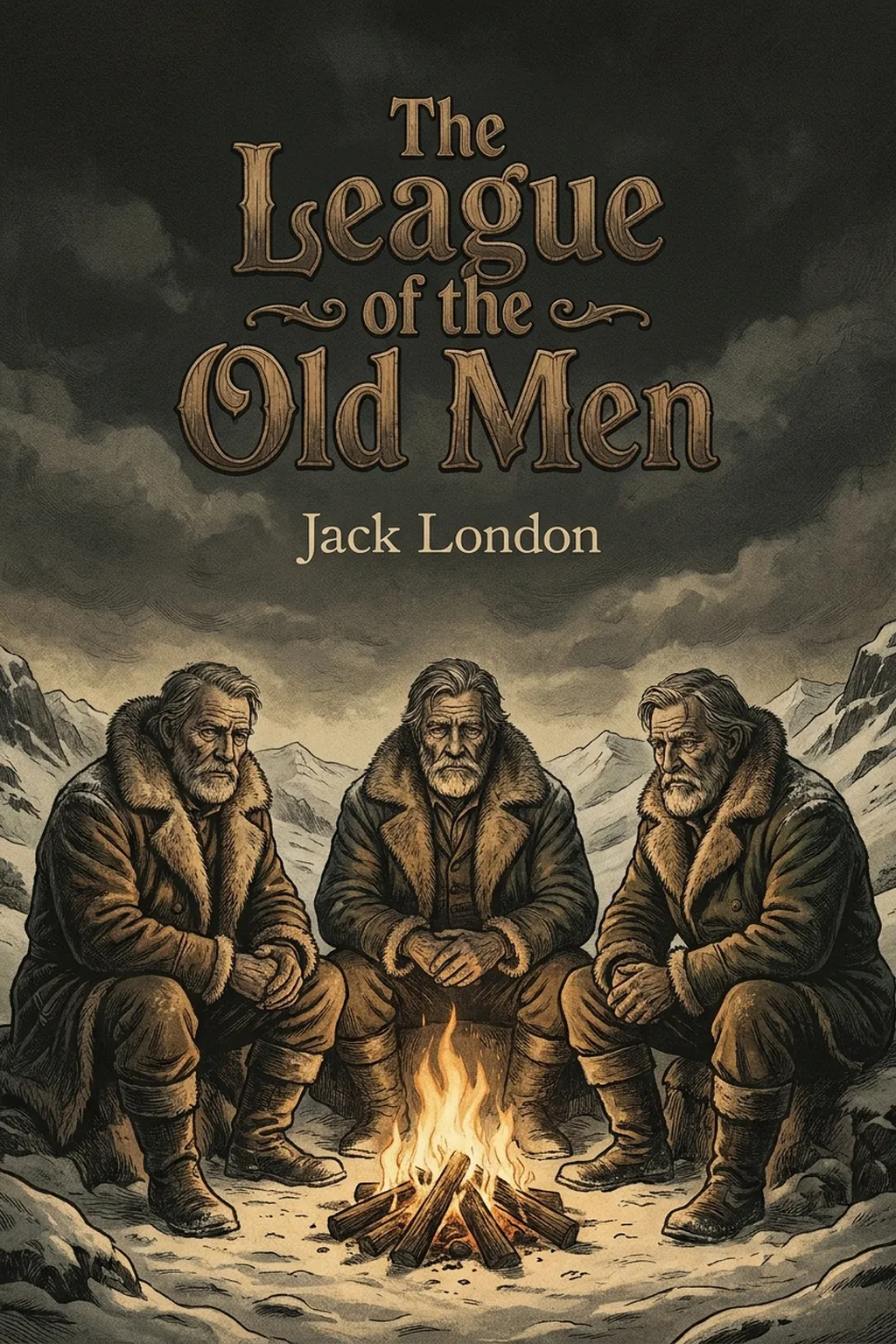
The League of the Old Men
The League of the Old Men
At the Barracks a man was being tried for his life. He was an old man, a native from the Whitefish River, which empties into the Yukon below Lake Le Barge. All Dawson was wrought up over the affair, and likewise the Yukon-dwellers for a thousand miles up and down. It has been the custom of the land-robbing and sea-robbing Anglo-Saxon to give the law to conquered peoples, and ofttimes this law is harsh. But in the case of Imber the law for once seemed inadequate and weak. In the mathematical nature of things, equity did not reside in the punishment to be accorded him. The punishment was a foregone conclusion, there could be no doubt of that; and though it was capital, Imber had but one life, while the tale against him was one of scores.
In fact, the blood of so many was upon his hands that the killings attributed to him did not permit of precise enumeration. Smoking a pipe by the trailside or lounging around the stove, men made rough estimates of the numbers that had perished at his hand. They had been whites, all of them, these poor murdered people, and they had been slain singly, in pairs, and in parties. And so purposeless and wanton had been these killings, that they had long been a mystery to the mounted police, even in the time of the captains, and later, when the creeks realized, and a governor came from the Dominion to make the land pay for its prosperity. But more mysterious still was the coming of Imber to Dawson to give himself up. It was in the late spring, when the Yukon was growling and writhing under its ice, that the old Indian climbed painfully up the bank from the river trail and stood blinking on the main street. Men who had witnessed his advent, noted that he was weak and tottery, and that he staggered over to a heap of cabin-logs and sat down. He sat there a full day, staring straight before him at the unceasing tide of white men that flooded past. Many a head jerked curiously to the side to meet his stare, and more than one remark was dropped anent the old Siwash with so strange a look upon his face. No end of men remembered afterward that they had been struck by his extraordinary figure, and forever afterward prided themselves upon their swift discernment of the unusual.
But it remained for Dickensen, Little Dickensen, to be the hero of the occasion. Little Dickensen had come into the land with great dreams and a pocketful of cash; but with the cash the dreams vanished, and to earn his passage back to the States he had accepted a clerical position with the brokerage firm of Holbrook and Mason. Across the street from the office of Holbrook and Mason was the heap of cabin-logs upon which Imber sat. Dickensen looked out of the window at him before he went to lunch; and when he came back from lunch he looked out of the window, and the old Siwash was still there.
-
Dickensen continued to look out of the window, and he, too, forever afterward prided himself upon his swiftness of discernment. He was a romantic little chap, and he likened the immobile old heathen to the genius of the Siwash race, gazing calm-eyed upon the hosts of the invading Saxon. The hours swept along, but Imber did not vary his posture, did not by a hair's-breadth move a muscle; and Dickensen remembered the man who once sat upright on a sled in the main street where men passed to and fro. They thought the man was resting, but later, when they touched him, they found him stiff and cold, frozen to death in the midst of the busy street. To undouble him, that he might fit into a coffin, they had been forced to lug him to a fire and thaw him out a bit. Dickensen shivered at the recollection.
Later on, Dickensen went out on the sidewalk to smoke a cigar and cool off; and a little later Emily Travis happened along. Emily Travis was dainty and delicate and rare, and whether in London or Klondike she gowned herself as befitted the daughter of a millionnaire mining engineer. Little Dickensen deposited his cigar on an outside window ledge where he could find it again, and lifted his hat.
··
They chatted for ten minutes or so, when Emily Travis, glancing past Dickensen's shoulder, gave a startled little scream. Dickensen turned about to see, and was startled, too. Imber had crossed the street and was standing there, a gaunt and hungry-looking shadow, his gaze riveted upon the girl.
·
"What do you want?" Little Dickensen demanded, tremulously plucky.
“”
Imber grunted and stalked up to Emily Travis. He looked her over, keenly and carefully, every square inch of her. Especially did he appear interested in her silky brown hair, and in the color of her cheek, faintly sprayed and soft, like the downy bloom of a butterfly wing. He walked around her, surveying her with the calculating eye of a man who studies the lines upon which a horse or a boat is builded. In the course of his circuit the pink shell of her ear came between his eye and the westering sun, and he stopped to contemplate its rosy transparency. Then he returned to her face and looked long and intently into her blue eyes. He grunted and laid a hand on her arm midway between the shoulder and elbow. With his other hand he lifted her forearm and doubled it back. Disgust and wonder showed in his face, and he dropped her arm with a contemptuous grunt. Then he muttered a few guttural syllables, turned his back upon her, and addressed himself to Dickensen.
·
Dickensen could not understand his speech, and Emily Travis laughed. Imber turned from one to the other, frowning, but both shook their heads. He was about to go away, when she called out:
·
"Oh, Jimmy! Come here!"
“”
Jimmy came from the other side of the street. He was a big, hulking Indian clad in approved white-man style, with an Eldorado king's sombrero on his head. He talked with Imber, haltingly, with throaty spasms. Jimmy was a Sitkan, possessed of no more than a passing knowledge of the interior dialects.
"Him Whitefish man," he said to Emily Travis. "Me savve um talk no very much. Him want to look see chief white man."
“”·“”
"The Governor," suggested Dickensen.
“”
Jimmy talked some more with the Whitefish man, and his face went grave and puzzled.
"I t'ink um want Cap'n Alexander," he explained. "Him say um kill white man, white woman, white boy, plenty kill um white people. Him want to die."
“”“”
"Insane, I guess," said Dickensen.
“”
"What you call dat?" queried Jimmy.
“”
Dickensen thrust a finger figuratively inside his head and imparted a rotary motion thereto.
"Mebbe so, mebbe so," said Jimmy, returning to Imber, who still demanded the chief man of the white men.
“”
A mounted policeman (unmounted for Klondike service) joined the group and heard Imber's wish repeated. He was a stalwart young fellow, broad-shouldered, deep-chested, legs cleanly built and stretched wide apart, and tall though Imber was, he towered above him by half a head. His eyes were cool, and gray, and steady, and he carried himself with the peculiar confidence of power that is bred of blood and tradition. His splendid masculinity was emphasized by his excessive boyishness,—he was a mere lad,—and his smooth cheek promised a blush as willingly as the cheek of a maid.
————
Imber was drawn to him at once. The fire leaped into his eyes at sight of a sabre slash that scarred his cheek. He ran a withered hand down the young fellow's leg and caressed the swelling thew. He smote the broad chest with his knuckles, and pressed and prodded the thick muscle-pads that covered the shoulders like a cuirass. The group had been added to by curious passers-by—husky miners, mountaineers, and frontiersmen, sons of the long-legged and broad-shouldered generations. Imber glanced from one to another, then he spoke aloud in the Whitefish tongue.
——
"What did he say?" asked Dickensen.
“”
"Him say um all the same one man, dat p'liceman," Jimmy interpreted.
“”
Little Dickensen was little, and what of Miss Travis, he felt sorry for having asked the question. The policeman was sorry for him and stepped into the breach. "I fancy there may be something in his story. I'll take him up to the captain for examination. Tell him to come along with me, Jimmy."
“”
Jimmy indulged in more throaty spasms, and Imber grunted and looked satisfied.
"But ask him what he said, Jimmy, and what he meant when he took hold of my arm."
“”
So spoke Emily Travis, and Jimmy put the question and received the answer.
·
"Him say you no afraid," said Jimmy.
“”
Emily Travis looked pleased.
·
"Him say you no skookum, no strong, all the same very soft like little baby. Him break you, in um two hands, to little pieces. Him t'ink much funny, very strange, how you can be mother of men so big, so strong, like dat p'liceman."
“”
Emily Travers kept her eyes up and unfaltering, but her cheeks were sprayed with scarlet. Little Dickensen blushed and was quite embarrassed. The policeman's face blazed with his boy's blood.
·
"Come along, you," he said gruffly, setting his shoulder to the crowd and forcing a way.
“”
Thus it was that Imber found his way to the Barracks, where he made full and voluntary confession, and from the precincts of which he never emerged.
Imber looked very tired. The fatigue of hopelessness and age was in his face. His shoulders drooped depressingly, and his eyes were lack-lustre. His mop of hair should have been white, but sun and weatherbeat had burned and bitten it so that it hung limp and lifeless and colorless. He took no interest in what went on around him. The courtroom was jammed with the men of the creeks and trails, and there was an ominous note in the rumble and grumble of their low-pitched voices, which came to his ears like the growl of the sea from deep caverns.
He sat close by a window, and his apathetic eyes rested now and again on the dreary scene without. The sky was overcast, and a gray drizzle was falling. It was flood-time on the Yukon. The ice was gone, and the river was up in the town. Back and forth on the main street, in canoes and poling-boats, passed the people that never rested. Often he saw these boats turn aside from the street and enter the flooded square that marked the Barracks' parade-ground. Sometimes they disappeared beneath him, and he heard them jar against the house-logs and their occupants scramble in through the window. After that came the slush of water against men's legs as they waded across the lower room and mounted the stairs. Then they appeared in the doorway, with doffed hats and dripping sea-boots, and added themselves to the waiting crowd.
And while they centred their looks on him, and in grim anticipation enjoyed the penalty he was to pay, Imber looked at them, and mused on their ways, and on their Law that never slept, but went on unceasing, in good times and bad, in flood and famine, through trouble and terror and death, and which would go on unceasing, it seemed to him, to the end of time. A man rapped sharply on a table, and the conversation droned away into silence. Imber looked at the man. He seemed one in authority, yet Imber divined the square-browed man who sat by a desk farther back to be the one chief over them all and over the man who had rapped. Another man by the same table uprose and began to read aloud from many fine sheets of paper. At the top of each sheet he cleared his throat, at the bottom moistened his fingers. Imber did not understand his speech, but the others did, and he knew that it made them angry. Sometimes it made them very angry, and once a man cursed him, in single syllables, stinging and tense, till a man at the table rapped him to silence.
For an interminable period the man read. His monotonous, sing-song utterance lured Imber to dreaming, and he was dreaming deeply when the man ceased. A voice spoke to him in his own Whitefish tongue, and he roused up, without surprise, to look upon the face of his sister's son, a young man who had wandered away years agone to make his dwelling with the whites.
"Thou dost not remember me," he said by way of greeting.
“”
"Nay," Imber answered. "Thou art Howkan who went away. Thy mother be dead."
“”“”
"She was an old woman," said Howkan.
“”
But Imber did not hear, and Howkan, with hand upon his shoulder, roused him again.
"I shall speak to thee what the man has spoken, which is the tale of the troubles thou hast done and which thou hast told, O fool, to the Captain Alexander. And thou shalt understand and say if it be true talk or talk not true. It is so commanded."
“”
Howkan had fallen among the mission folk and been taught by them to read and write. In his hands he held the many fine sheets from which the man had read aloud, and which had been taken down by a clerk when Imber first made confession, through the mouth of Jimmy, to Captain Alexander. Howkan began to read. Imber listened for a space, when a wonderment rose up in his face and he broke in abruptly.
"That be my talk, Howkan. Yet from thy lips it comes when thy ears have not heard."
“”
Howkan smirked with self-appreciation. His hair was parted in the middle. "Nay, from the paper it comes, O Imber. Never have my ears heard. From the paper it comes, through my eyes, into my head, and out of my mouth to thee. Thus it comes."
“”
"Thus it comes? It be there in the paper?" Imber's voice sank in whisperful awe as he crackled the sheets 'twixt thumb and finger and stared at the charactery scrawled thereon. "It be a great medicine, Howkan, and thou art a worker of wonders."
“”“”
"It be nothing, it be nothing," the young man responded carelessly and pridefully. He read at hazard from the document: "In that year, before the break of the ice, came an old man, and a boy who was lame of one foot. These also did I kill, and the old man made much noise—”
“”“——”
"It be true," Imber interrupted breathlessly. "He made much noise and would not die for a long time. But how dost thou know, Howkan? The chief man of the white men told thee, mayhap? No one beheld me, and him alone have I told." Howkan shook his head with impatience. "Have I not told thee it be there in the paper, O fool?"
“”“”“”
Imber stared hard at the ink-scrawled surface. "As the hunter looks upon the snow and says, Here but yesterday there passed a rabbit; and here by the willow scrub it stood and listened, and heard, and was afraid; and here it turned upon its trail; and here it went with great swiftness, leaping wide; and here, with greater swiftness and wider leapings, came a lynx; and here, where the claws cut deep into the snow, the lynx made a very great leap; and here it struck, with the rabbit under and rolling belly up; and here leads off the trail of the lynx alone, and there is no more rabbit,—as the hunter looks upon the markings of the snow and says thus and so and here, dost thou, too, look upon the paper and say thus and so and here be the things old Imber hath done?”
“——”
"Even so," said Howkan. "And now do thou listen, and keep thy woman's tongue between thy teeth till thou art called upon for speech."
“”“”
Thereafter, and for a long time, Howkan read to him the confession, and Imber remained musing and silent. At the end, he said:
"It be my talk, and true talk, but I am grown old, Howkan, and forgotten things come back to me which were well for the head man there to know. First, there was the man who came over the Ice Mountains, with cunning traps made of iron, who sought the beaver of the Whitefish. Him I slew. And there were three men seeking gold on the Whitefish long ago. Them also I slew, and left them to the wolverines. And at the Five Fingers there was a man with a raft and much meat."
“”
At the moments when Imber paused to remember, Howkan translated and a clerk reduced to writing. The courtroom listened stolidly to each unadorned little tragedy, till Imber told of a red-haired man whose eyes were crossed and whom he had killed with a remarkably long shot.
"Hell," said a man in the forefront of the onlookers. He said it soulfully and sorrowfully. He was red-haired. "Hell," he repeated. "That was my brother Bill." And at regular intervals throughout the session, his solemn "Hell" was heard in the courtroom; nor did his comrades check him, nor did the man at the table rap him to order.
“”“”“”“”
Imber's head drooped once more, and his eyes went dull, as though a film rose up and covered them from the world. And he dreamed as only age can dream upon the colossal futility of youth.
Later, Howkan roused him again, saying: "Stand up, O Imber. It be commanded that thou tellest why you did these troubles, and slew these people, and at the end journeyed here seeking the Law."
“”
Imber rose feebly to his feet and swayed back and forth. He began to speak in a low and faintly rumbling voice, but Howkan interrupted him.
"This old man, he is damn crazy," he said in English to the square-browed man. "His talk is foolish and like that of a child."
“”“”
"We will hear his talk which is like that of a child," said the square-browed man. "And we will hear it, word for word, as he speaks it. Do you understand?"
“”“”
Howkan understood, and Imber's eyes flashed, for he had witnessed the play between his sister's son and the man in authority. And then began the story, the epic of a bronze patriot which might well itself be wrought into bronze for the generations unborn. The crowd fell strangely silent, and the square-browed judge leaned head on hand and pondered his soul and the soul of his race. Only was heard the deep tones of Imber, rhythmically alternating with the shrill voice of the interpreter, and now and again, like the bell of the Lord, the wondering and meditative "Hell" of the red-haired man.
“”
"I am Imber of the Whitefish people." So ran the interpretation of Howkan, whose inherent barbarism gripped hold of him, and who lost his mission culture and veneered civilization as he caught the savage ring and rhythm of old Imber's tale. "My father was Otsbaok, a strong man. The land was warm with sunshine and gladness when I was a boy. The people did not hunger after strange things, nor hearken to new voices, and the ways of their fathers were their ways. The women found favor in the eyes of the young men, and the young men looked upon them with content. Babes hung at the breasts of the women, and they were heavy-hipped with increase of the tribe. Men were men in those days. In peace and plenty, and in war and famine, they were men.
“”“”
"At that time there was more fish in the water than now, and more meat in the forest. Our dogs were wolves, warm with thick hides and hard to the frost and storm. And as with our dogs so with us, for we were likewise hard to the frost and storm. And when the Pellys came into our land we slew them and were slain. For we were men, we Whitefish, and our fathers and our fathers' fathers had fought against the Pellys and determined the bounds of the land.
“
"As I say, with our dogs, so with us. And one day came the first white man. He dragged himself, so, on hand and knee, in the snow. And his skin was stretched tight, and his bones were sharp beneath. Never was such a man, we thought, and we wondered of what strange tribe he was, and of its land. And he was weak, most weak, like a little child, so that we gave him a place by the fire, and warm furs to lie upon, and we gave him food as little children are given food.
“
"And with him was a dog, large as three of our dogs, and very weak. The hair of this dog was short, and not warm, and the tail was frozen so that the end fell off. And this strange dog we fed, and bedded by the fire, and fought from it our dogs, which else would have killed him. And what of the moose meat and the sun-dried salmon, the man and dog took strength to themselves; and what of the strength they became big and unafraid. And the man spoke loud words and laughed at the old men and young men, and looked boldly upon the maidens. And the dog fought with our dogs, and for all of his short hair and softness slew three of them in one day.
“
"When we asked the man concerning his people, he said, 'I have many brothers,' and laughed in a way that was not good. And when he was in his full strength he went away, and with him went Noda, daughter to the chief. First, after that, was one of our bitches brought to pup. And never was there such a breed of dogs,—big-headed, thick-jawed, and short-haired, and helpless. Well do I remember my father, Otsbaok, a strong man. His face was black with anger at such helplessness, and he took a stone, so, and so, and there was no more helplessness. And two summers after that came Noda back to us with a man-child in the hollow of her arm.
“‘’——
"And that was the beginning. Came a second white man, with short-haired dogs, which he left behind him when he went. And with him went six of our strongest dogs, for which, in trade, he had given Koo-So-Tee, my mother's brother, a wonderful pistol that fired with great swiftness six times. And Koo-So-Tee was very big, what of the pistol, and laughed at our bows and arrows. 'Woman's things,' he called them, and went forth against the bald-face grizzly, with the pistol in his hand. Now it be known that it is not good to hunt the bald-face with a pistol, but how were we to know? and how was Koo-So-Tee to know? So he went against the bald-face, very brave, and fired the pistol with great swiftness six times; and the bald-face but grunted and broke in his breast like it were an egg, and like honey from a bee's nest dripped the brains of Koo-So-Tee upon the ground. He was a good hunter, and there was no one to bring meat to his squaw and children. And we were bitter, and we said, 'That which for the white men is well, is for us not well.' And this be true. There be many white men and fat, but their ways have made us few and lean.
“‘’‘’
"Came the third white man, with great wealth of all manner of wonderful foods and things. And twenty of our strongest dogs he took from us in trade. Also, what of presents and great promises, ten of our young hunters did he take with him on a journey which fared no man knew where. It is said they died in the snow of the Ice Mountains where man has never been, or in the Hills of Silence which are beyond the edge of the earth. Be that as it may, dogs and young hunters were seen never again by the Whitefish people.
“
"And more white men came with the years, and ever, with pay and presents, they led the young men away with them. And sometimes the young men came back with strange tales of dangers and toils in the lands beyond the Pellys, and sometimes they did not come back. And we said: 'If they be unafraid of life, these white men, it is because they have many lives; but we be few by the Whitefish, and the young men shall go away no more.' But the young men did go away; and the young women went also; and we were very wroth.
“‘’
"It be true, we ate flour, and salt pork, and drank tea which was a great delight; only, when we could not get tea, it was very bad and we became short of speech and quick of anger. So we grew to hunger for the things the white men brought in trade. Trade! trade! all the time was it trade! One winter we sold our meat for clocks that would not go, and watches with broken guts, and files worn smooth, and pistols without cartridges and worthless. And then came famine, and we were without meat, and two score died ere the break of spring.
“
“'Now are we grown weak,' we said; 'and the Pellys will fall upon us, and our bounds be overthrown.' But as it fared with us, so had it fared with the Pellys, and they were too weak to come against us.
“‘’
"My father, Otsbaok, a strong man, was now old and very wise. And he spoke to the chief, saying: 'Behold, our dogs be worthless. No longer are they thick-furred and strong, and they die in the frost and harness. Let us go into the village and kill them, saving only the wolf ones, and these let us tie out in the night that they may mate with the wild wolves of the forest. Thus shall we have dogs warm and strong again.'
“‘
"And his word was harkened to, and we Whitefish became known for our dogs, which were the best in the land. But known we were not for ourselves. The best of our young men and women had gone away with the white men to wander on trail and river to far places. And the young women came back old and broken, as Noda had come, or they came not at all. And the young men came back to sit by our fires for a time, full of ill speech and rough ways, drinking evil drinks and gambling through long nights and days, with a great unrest always in their hearts, till the call of the white men came to them and they went away again to the unknown places. And they were without honor and respect, jeering the old-time customs and laughing in the faces of chief and shamans.
“
"As I say, we were become a weak breed, we Whitefish. We sold our warm skins and furs for tobacco and whiskey and thin cotton things that left us shivering in the cold. And the coughing sickness came upon us, and men and women coughed and sweated through the long nights, and the hunters on trail spat blood upon the snow. And now one, and now another, bled swiftly from the mouth and died. And the women bore few children, and those they bore were weak and given to sickness. And other sicknesses came to us from the white men, the like of which we had never known and could not understand. Smallpox, likewise measles, have I heard these sicknesses named, and we died of them as die the salmon in the still eddies when in the fall their eggs are spawned and there is no longer need for them to live.
“
"And yet, and here be the strangeness of it, the white men come as the breath of death; all their ways lead to death, their nostrils are filled with it; and yet they do not die. Theirs the whiskey, and tobacco, and short-haired dogs; theirs the many sicknesses, the smallpox and measles, the coughing and mouth-bleeding; theirs the white skin, and softness to the frost and storm; and theirs the pistols that shoot six times very swift and are worthless. And yet they grow fat on their many ills, and prosper, and lay a heavy hand over all the world and tread mightily upon its peoples. And their women, too, are soft as little babes, most breakable and never broken, the mothers of men. And out of all this softness, and sickness, and weakness, come strength, and power, and authority. They be gods, or devils, as the case may be. I do not know. What do I know, I, old Imber of the Whitefish? Only do I know that they are past understanding, these white men, far-wanderers and fighters over the earth that they be.
“
"As I say, the meat in the forest became less and less. It be true, the white man's gun is most excellent and kills a long way off; but of what worth the gun, when there is no meat to kill? When I was a boy on the Whitefish there was moose on every hill, and each year came the caribou uncountable. But now the hunter may take the trail ten days and not one moose gladden his eyes, while the caribou uncountable come no more at all. Small worth the gun, I say, killing a long way off, when there be nothing to kill.
“
"And I, Imber, pondered upon these things, watching the while the Whitefish, and the Pellys, and all the tribes of the land, perishing as perished the meat of the forest. Long I pondered. I talked with the shamans and the old men who were wise. I went apart that the sounds of the village might not disturb me, and I ate no meat so that my belly should not press upon me and make me slow of eye and ear. I sat long and sleepless in the forest, wide-eyed for the sign, my ears patient and keen for the word that was to come. And I wandered alone in the blackness of night to the river bank, where was wind-moaning and sobbing of water, and where I sought wisdom from the ghosts of old shamans in the trees and dead and gone.
“
"And in the end, as in a vision, came to me the short-haired and detestable dogs, and the way seemed plain. By the wisdom of Otsbaok, my father and a strong man, had the blood of our own wolf-dogs been kept clean, wherefore had they remained warm of hide and strong in the harness. So I returned to my village and made oration to the men. 'This be a tribe, these white men,' I said. 'A very large tribe, and doubtless there is no longer meat in their land, and they are come among us to make a new land for themselves. But they weaken us, and we die. They are a very hungry folk. Already has our meat gone from us, and it were well, if we would live, that we deal by them as we have dealt by their dogs.'
“‘’‘’
"And further oration I made, counselling fight. And the men of the Whitefish listened, and some said one thing, and some another, and some spoke of other and worthless things, and no man made brave talk of deeds and war. But while the young men were weak as water and afraid, watched that the old men sat silent, and that in their eyes fires came and went. And later, when forest and made more talk. And now we were agreed, and we remembered the good young days, and the free land, and the times of plenty, and the gladness and sunshine; and we called ourselves brothers, and swore great secrecy, and a mighty oath to cleanse the land of the evil breed that had come upon it. It be plain we were fools, but how were we to know, we old men of the Whitefish?
“
"And to hearten the others, I did the first deed. I kept guard upon the Yukon till the first canoe came down. In it were two white men, and when I stood upright upon the bank and raised my hand they changed their course and drove in to me. And as the man in the bow lifted his head, so, that he might know wherefore I wanted him, my arrow sang through the air straight to his throat, and he knew. The second man, who held paddle in the stern, had his rifle half to his shoulder when the first of my three spear-casts smote him.
“
" 'These be the first,' I said, when the old men had gathered to me. 'Later we will bind together all the old men of all the tribes, and after that the young men who remain strong, and the work will become easy.'
“‘’‘’
"And then the two dead white men we cast into the river. And of the canoe, which was a very good canoe, we made a fire, and a fire, also, of the things within the canoe. But first we looked at the things, and they were pouches of leather which we cut open with our knives. And inside these pouches were many papers, like that from which thou has read, O Howkan, with markings on them which we marvelled at and could not understand. Now, I am become wise, and I know them for the speech of men as thou hast told me."
“”
A whisper and buzz went around the courtroom when Howkan finished interpreting the affair of the canoe, and one man's voice spoke up: "That was the lost '91 mail, Peter James and Delaney bringing it in and last spoken at Le Barge by Matthews going out.” The clerk scratched steadily away, and another paragraph was added to the history of the North.
“·”
"There be little more," Imber went on slowly. "It be there on the paper, the things we did. We were old men, and we did not understand. Even I, Imber, do not now understand. Secretly we slew, and continued to slay, for with our years we were crafty and we had learned the swiftness of going without haste. When white men came among us with black looks and rough words, and took away six of the young men with irons binding them helpless, we knew we must slay wider and farther. And one by one we old men departed up river and down to the unknown lands. It was a brave thing. Old we were, and unafraid, but the fear of far places is a terrible fear to men who are old.
“”“
"So we slew, without haste and craftily. On the Chilcoot and in the Delta we slew, from the passes to the sea, wherever the white men camped or broke their trails. It be true, they died, but it was without worth. Ever did they come over the mountains, ever did they grow and grow, while we, being old, became less and less. I remember, by the Caribou Crossing, the camp of a white man. He was a very little white man, and three of the old men came upon him in his sleep. And the next day I came upon the four of them. The white man alone still breathed, and there was breath in him to curse me once and well before he died.
“
"And so it went, now one old man, and now another. Sometimes the word reached us long after of how they died, and sometimes it did not reach us. And the old men of the other tribes were weak and afraid, and would not join with us. As I say, one by one, till I alone was left. I am Imber, of the Whitefish people. My father was Otsbaok, a strong man. There are no Whitefish now. Of the old men I am the last. The young men and young women are gone away, some to live with the Pellys, some with the Salmons, and more with the white men. I am very old, and very tired, and it being vain fighting the Law, as thou sayest, Howkan, I am come seeking the Law."
“”
"O Imber, thou art indeed a fool," said Howkan. But Imber was dreaming. The square-browed judge likewise dreamed, and all his race rose up before him in a mighty phantasmagoria—his steel-shod, mail-clad race, the lawgiver and world-maker among the families of men. He saw it dawn red-flickering across the dark forests and sullen seas; he saw it blaze, bloody and red, to full and triumphant noon; and down the shaded slope he saw the blood-red sands dropping into night. And through it all he observed the Law, pitiless and potent, ever unswerving and ever ordaining, greater than the motes of men who fulfilled it or were crushed by it, even as it was greater than he, his heart speaking for softness.
“”——
The Strength of the Strong
"Parables don't lie, but liars will parable."—Lip-King.
“”——
Old Long-Beard paused in his narrative, licked his greasy fingers, and wiped them on his naked sides where his one piece of ragged bearskin failed to cover him. Crouched around him, on their hams, were three young men, his grandsons, Deer-Runner, Yellow-Head, and Afraid-of-the-Dark. In appearance they were much the same. Skins of wild animals partly covered them. They were lean and meagre of build, narrow-hipped and crooked-legged, and at the same time deep-chested, with heavy arms and enormous hands. There was much hair on their chests and shoulders, and on the outsides of their arms and legs. Their heads were matted with uncut hair, long locks of which often strayed before their eyes, beady and black and glittering like the eyes of birds. They were narrow between the eyes and broad between the cheeks, while their lower jaws were projecting and massive.
It was a night of clear starlight, and below them, stretching away remotely, lay range on range of forest-covered hills. In the distance the heavens were red from the glow of a volcano. At their backs yawned the black mouth of a cave, out of which, from time to time, blew draughty gusts of wind. Immediately in front of them blazed a fire. At one side, partly devoured, lay the carcass of a bear, with about it, at a respectable distance, several large dogs, shaggy and wolf-like. Beside each man lay his bow and arrows and a huge club. In the cave-mouth a number of rude spears leaned against the rock.
"So that was how we moved from the cave to the tree," old Long-Beard spoke up.
“”
They laughed boisterously, like big children, at recollection of a previous story his words called up. Long-Beard laughed, too, the five-inch bodkin of bone, thrust midway through the cartilage of his nose, leaping and dancing and adding to his ferocious appearance. He did not exactly say the words recorded, but he made animal-like sounds with his mouth that meant the same thing.
5
"And that is the first I remember of the Sea Valley," Long-Beard went on. "We were a very foolish crowd. We did not know the secret of strength. For, behold, each family lived by itself, and took care of itself. There were thirty families, but we got no strength from one another. We were in fear of each other all the time. No one ever paid visits. In the top of our tree we built a grass house, and on the platform outside was a pile of rocks, which were for the heads of any that might chance to try to visit us. Also, we had our spears and arrows. We never walked under the trees of the other families, either. My brother did, once, under old Boo-oogh's tree, and he got his head broken and that was the end of him.
“”“
"Old Boo-oogh was very strong. It was said he could pull a grown man's head right off. I never heard of him doing it, because no man would give him a chance. Father wouldn't. One day, when father was down on the beach, Boo-oogh took after mother. She couldn't run fast, for the day before she had got her leg clawed by a bear when she was up on the mountain gathering berries. So Boo-oogh caught her and carried her up into his tree. Father never got her back. He was afraid. Old Boo-oogh made faces at him.
“
"But father did not mind. Strong-Arm was another strong man. He was one of the best fishermen. But one day, climbing after sea-gull eggs, he had a fall from the cliff. He was never strong after that. He coughed a great deal, and his shoulders drew near to each other. So father took Strong-Arm's wife. When he came around and coughed under our tree, father laughed at him and threw rocks at him. It was our way in those days. We did not know how to add strength together and become strong."
“”
"Would a brother take a brother's wife?" Deer-Runner demanded.
“”
"Yes, if he had gone to live in another tree by himself."
“”
"But we do not do such things now," Afraid-of-the-Dark objected.
“”
"It is because I have taught your fathers better." Long-Beard thrust his hairy paw into the bear meat and drew out a handful of suet, which he sucked with a meditative air. Again he wiped his hands on his naked sides and went on. "What I am telling you happened in the long ago, before we knew any better."
“”“”
"You must have been fools not to know better," was Deer-Runner's comment, Yellow-Head grunting approval.
“”
"So we were, but we became bigger fools, as you shall see. Still, we did learn better, and this was the way of it. We Fish-Eaters had not learned to add our strength until our strength was the strength of all of us. But the Meat-Eaters, who lived across the divide in the Big Valley, stood together, hunted together, fished together, and fought together. One day they came into our valley. Each family of us got into its own cave and tree. There were only ten Meat-Eaters, but they fought together, and we fought, each family by itself.”
“”
Long-Beard counted long and perplexedly on his fingers.
"There were sixty men of us," was what he managed to say with fingers and lips combined. "And we were very strong, only we did not know it. So we watched the ten men attack Boo-oogh's tree. He made a good fight, but he had no chance. We looked on. When some of the Meat-Eaters tried to climb the tree, Boo-oogh had to show himself in order to drop stones on their heads, whereupon the other Meat-Eaters, who were waiting for that very thing, shot him full of arrows. And that was the end of Boo-oogh.
“”“
"Next, the Meat-Eaters got One-Eye and his family in his cave. They built a fire in the mouth and smoked him out, like we smoked out the bear there to-day. Then they went after Six-Fingers, up his tree, and, while they were killing him and his grown son, the rest of us ran away. They caught some of our women, and killed two old men who could not run fast and several children. The women they carried away with them to the Big Valley.
“
"After that the rest of us crept back, and, somehow, perhaps because we were in fear and felt the need for one another, we talked the thing over. It was our first council—our first real council. And in that council we formed our first tribe. For we had learned the lesson. Of the ten Meat-Eaters, each man had had the strength of ten, for the ten had fought as one man. They had added their strength together. But of the thirty families and the sixty men of us, we had had the strength of but one man, for each had fought alone.
“——
"It was a great talk we had, and it was hard talk, for we did not have the words then as now with which to talk. The Bug made some of the words long afterward, and so did others of us make words from time to time. But in the end we agreed to add our strength together and to be as one man when the Meat-Eaters came over the divide to steal our women. And that was the tribe.
“
"We set two men on the divide, one for the day and one for the night, to watch if the Meat-Eaters came. These were the eyes of the tribe. Then, also, day and night, there were to be ten men awake with their clubs and spears and arrows in their hands, ready to fight. Before, when a man went after fish, or clams, or gull-eggs, he carried his weapons with him, and half the time he was getting food and half the time watching for fear some other man would get him. Now that was all changed. The men went out without their weapons and spent all their time getting food. Likewise, when the women went into the mountains after roots and berries, five of the ten men went with them to guard them. While all the time, day and night, the eyes of the tribe watched from the top of the divide.
“
"But troubles came. As usual, it was about the women. Men without wives wanted other men's wives, and there was much fighting between men, and now and again one got his head smashed or a spear through his body. While one of the watchers was on top of the divide, another man stole his wife, and he came down to fight. Then the other watcher was in fear that some one would take his wife, and he came down likewise. Also, there was trouble among the ten men who carried always their weapons, and they fought five against five, till some ran away down the coast and the others ran after them.
“
"So it was that the tribe was left without eyes or guards. We had not the strength of sixty. We had no strength at all. So we held a council and made our first laws. I was but a cub at the time, but I remember. We said that, in order to be strong, we must not fight one another, and we made a law that when a man killed another him would the tribe kill. We made another law that whoso stole another man's wife him would the tribe kill. We said that whatever man had too great strength, and by that strength hurt his brothers in the tribe, him would we kill that his strength might hurt no more. For, if we let his strength hurt, the brothers would become afraid and the tribe would fall apart, and we would be as weak as when the Meat-Eaters first came upon us and killed Boo-oogh.
“
"Knuckle-Bone was a strong man, a very strong man, and he knew not law. He knew only his own strength, and in the fullness thereof he went forth and took the wife of Three-Clams. Three-Clams tried to fight, but Knuckle-Bone clubbed out his brains. Yet had Knuckle-Bone forgotten that all the men of us had added our strength to keep the law among us, and him we killed, at the foot of his tree, and hung his body on a branch as a warning that the law was stronger than any man. For we were the law, all of us, and no man was greater than the law.
“
"Then there were other troubles, for know, O Deer-Runner, and Yellow-Head, and Afraid-of-the-Dark, that it is not easy to make a tribe. There were many things, little things, that it was a great trouble to call all the men together to have a council about. We were having councils morning, noon, and night, and in the middle of the night. We could find little time to go out and get food, because of the councils, for there was always some little thing to be settled, such as naming two new watchers to take the place of the old ones on the hill, or naming how much food should fall to the share of the men who kept their weapons always in their hands and got no food for themselves.
“”
"We stood in need of a chief man to do these things, who would be the voice of the council, and who would account to the council for the things he did. So we named Fith-Fith the chief man. He was a strong man, too, and very cunning, and when he was angry he made noises just like that, fith-fith, like a wild-cat.
“
"The ten men who guarded the tribe were set to work making a wall of stones across the narrow part of the valley. The women and large children helped, as did other men, until the wall was strong. After that, all the families came down out of their caves and trees and built grass houses behind the shelter of the wall. These houses were large and much better than the caves and trees, and everybody had a better time of it because the men had added their strength together and become a tribe. Because of the wall and the guards and the watchers, there was more time to hunt and fish and pick roots and berries; there was more food, and better food, and no one went hungry. And Three-Legs, so named because his legs had been smashed when a boy and who walked with a stick—Three-Legs got the seed of the wild corn and planted it in the ground in the valley near his house. Also, he tried planting fat roots and other things he found in the mountain valleys.
“
"Because of the safety in the Sea Valley, which was because of the wall and the watchers and the guards, and because there was food in plenty for all without having to fight for it, many families came in from the coast valleys on both sides and from the high back mountains where they had lived more like wild animals than men. And it was not long before the Sea Valley filled up, and in it were countless families. But, before this happened, the land, which had been free to all and belonged to all, was divided up. Three-Legs began it when he planted corn. But most of us did not care about the land. We thought the marking of the boundaries with fences of stone was a foolishness. We had plenty to eat, and what more did we want? I remember that my father and I built stone fences for Three-Legs and were given corn in return.
“
"So only a few got all the land, and Three-Legs got most of it. Also, others that had taken land gave it to the few that held on, being paid in return with corn and fat roots, and bear-skins, and fishes which the farmers got from the fishermen in exchange for corn. And, the first thing we knew, all the land was gone.
“
"It was about this time that Fith-Fith died and Dog-Tooth, his son, was made chief. He demanded to be made chief anyway, because his father had been chief before him. Also, he looked upon himself as a greater chief than his father. He was a good chief at first, and worked hard, so that the council had less and less to do. Then arose a new voice in the Sea Valley. It was Twisted-Lip. We had never thought much of him, until he began to talk with the spirits of the dead. Later we called him Big-Fat, because he ate over-much, and did no work, and grew round and large. One day Big-Fat told us that the secrets of the dead were his, and that he was the voice of God. He became great friends with Dog-Tooth, who commanded that we should build Big-Fat a grass house. And Big-Fat put taboos all around this house and kept God inside.
“
"More and more Dog-Tooth became greater than the council, and when the council grumbled and said it would name a new chief, Big-Fat spoke with the voice of God and said no. Also, Three-Legs and the others who held the land stood behind Dog-Tooth. Moreover, the strongest man in the council was Sea-Lion, and him the land-owners gave land to secretly, along with many bearskins and baskets of corn. So Sea-Lion said that Big-Fat's voice was truly the voice of God and must be obeyed. And soon afterward Sea-Lion was named the voice of Dog-Tooth and did most of his talking for him.
“
"Then there was Little-Belly, a little man, so thin in the middle that he looked as if he had never had enough to eat. Inside the mouth of the river, after the sand-bar had combed the strength of the breakers, he built a big fish-trap. No man had ever seen or dreamed a fish-trap before. He worked weeks on it, with his son and his wife, while the rest of us laughed at their labours. But, when it was done, the first day he caught more fish in it than could the whole tribe in a week, whereat there was great rejoicing. There was only one other place in the river for a fish-trap, but, when my father and I and a dozen other men started to make a very large trap, the guards came from the big grass-house we had built for Dog-Tooth. And the guards poked us with their spears and told us begone, because Little-Belly was going to build a trap there himself on the word of Sea-Lion, who was the voice of Dog-Tooth. "There was much grumbling, and my father called a council. But, when he rose to speak, him the Sea-Lion thrust through the throat with a spear and he died. And Dog-Tooth and Little-Belly, and Three-Legs and all that held land said it was good. And Big-Fat said it was the will of God. And after that all men were afraid to stand up in the council, and there was no more council.
“——“
"Another man, Pig-Jaw, began to keep goats. He had heard about it as among the Meat-Eaters, and it was not long before he had many flocks. Other men, who had no land and no fish-traps, and who else would have gone hungry, were glad to work for Pig-Jaw, caring for his goats, guarding them from wild dogs and tigers, and driving them to the feeding pastures in the mountains. In return, Pig-Jaw gave them goat-meat to eat and goat-skins to wear, and sometimes they traded the goat-meat for fish and corn and fat roots.
“
"It was this time that money came to be. Sea-Lion was the man who first thought of it, and he talked it over with Dog-Tooth and Big-Fat. You see, these three were the ones that got a share of everything in the Sea Valley. One basket out of every three of corn was theirs, one fish out of every three, one goat out of every three. In return, they fed the guards and the watchers, and kept the rest for themselves. Sometimes, when a big haul of fish was made they did not know what to do with all their share. So Sea-Lion set the women to making money out of shell—little round pieces, with a hole in each one, and all made smooth and fine. These were strung on strings, and the strings were called money.
“——
"Each string was of the value of thirty fish, or forty fish, but the women, who made a string a day, were given two fish each. The fish came out of the shares of Dog-Tooth, Big-Fat, and Sea-Lion, which they three did not eat. So all the money belonged to them. Then they told Three-Legs and the other land-owners that they would take their share of corn and roots in money, Little-Belly that they would take their share of fish in money, Pig-Jaw that they would take their share of goats and cheese in money. Thus, a man who had nothing, worked for one who had, and was paid in money. With this money he bought corn, and fish, and meat, and cheese. And Three-Legs and all owners of things paid Dog-Tooth and Sea-Lion and Big-Fat their share in money. And they paid the guards and watchers in money, and the guards and watchers bought their food with the money. And, because money was cheap, Dog-Tooth made many more men into guards. And, because money was cheap to make, a number of men began to make money out of shell themselves. But the guards stuck spears in them and shot them full of arrows, because they were trying to break up the tribe. It was bad to break up the tribe, for then the Meat-Eaters would come over the divide and kill them all.
“
"Big-Fat was the voice of God, but he took Broken-Rib and made him into a priest, so that he became the voice of Big-Fat and did most of his talking for him. And both had other men to be servants to them. So, also, did Little-Belly and Three-Legs and Pig-Jaw have other men to lie in the sun about their grass houses and carry messages for them and give commands. And more and more were men taken away from work, so that those that were left worked harder than ever before. It seemed that men desired to do no work and strove to seek out other ways whereby men should work for them. Crooked-Eyes found such a way. He made the first fire-brew out of corn. And thereafter he worked no more, for he talked secretly with Dog-Tooth and Big-Fat and the other masters, and it was agreed that he should be the only one to make fire-brew. But Crooked-Eyes did no work himself. Men made the brew for him, and he paid them in money. Then he sold the fire-brew for money, and all men bought. And many strings of money did he give Dog-Tooth and Sea-Lion and all of them.
“
"Big-Fat and Broken-Rib stood by Dog-Tooth when he took his second wife, and his third wife. They said Dog-Tooth was different from other men and second only to God that Big-Fat kept in his taboo house, and Dog-Tooth said so, too, and wanted to know who were they to grumble about how many wives he took. Dog-Tooth had a big canoe made, and, many more men he took from work, who did nothing and lay in the sun, save only when Dog-Tooth went in the canoe, when they paddled for him. And he made Tiger-Face head man over all the guards, so that Tiger-Face became his right arm, and when he did not like a man Tiger-Face killed that man for him. And Tiger-Face, also, made another man to be his right arm, and to give commands, and to kill for him.
“
"But this was the strange thing: as the days went by we who were left worked harder and harder, and yet did we get less and less to eat.”
“”
"But what of the goats and the corn and the fat roots and the fish-trap?" spoke up Afraid-of-the-Dark, "what of all this? Was there not more food to be gained by man's work?"
“”“”
"It is so," Long-Beard agreed. "Three men on the fish-trap got more fish than the whole tribe before there was a fish-trap. But have I not said we were fools? The more food we were able to get, the less food did we have to eat.”
“”“”
"But was it not plain that the many men who did not work ate it all up?" Yellow-Head demanded. Long-Beard nodded his head sadly.
“”
"Dog-Tooth's dogs were stuffed with meat, and the men who lay in the sun and did no work were rolling in fat, and, at the same time, there were little children crying themselves to sleep with hunger biting them with every wail."
“”
Deer-Runner was spurred by the recital of famine to tear out a chunk of bear-meat and broil it on a stick over the coals. This he devoured with smacking lips, while Long-Beard went on:
"When we grumbled Big-Fat arose, and with the voice of God said that God had chosen the wise men to own the land and the goats and the fish-trap, and the fire-brew, and that without these wise men we would all be animals, as in the days when we lived in trees.
“
"And there arose one who became a singer of songs for the king. Him they called the Bug, because he was small and ungainly of face and limb and excelled not in work or deed. He loved the fattest marrow bones, the choicest fish, the milk warm from the goats, the first corn that was ripe, and the snug place by the fire. And thus, becoming singer of songs to the king, he found a way to do nothing and be fat. And when the people grumbled more and more, and some threw stones at the king's grass house, the Bug sang a song of how good it was to be a Fish-Eater. In his song he told that the Fish-Eaters were the chosen of God and the finest men God had made. He sang of the Meat-Eaters as pigs and crows, and sang how fine and good it was for the Fish-Eaters to fight and die doing God's work, which was the killing of Meat-Eaters. The words of his song were like fire in us, and we clamoured to be led against the Meat-Eaters. And we forgot that we were hungry, and why we had grumbled, and were glad to be led by Tiger-Face over the divide, where we killed many Meat-Eaters and were content.
“
"But things were no better in the Sea Valley. The only way to get food was to work for Three-Legs or Little-Belly or Pig-Jaw; for there was no land that a man might plant with corn for himself. And often there were more men than Three-Legs and the others had work for. So these men went hungry, and so did their wives and children and their old mothers. Tiger-Face said they could become guards if they wanted to, and many of them did, and thereafter they did no work except to poke spears in the men who did work and who grumbled at feeding so many idlers.
“
"And when we grumbled, ever the Bug sang new songs. He said that Three-Legs and Pig-Jaw and the rest were strong men, and that that was why they had so much. He said that we should be glad to have strong men with us, else would we perish of our own worthlessness and the Meat-Eaters. Therefore, we should be glad to let such strong men have all they could lay hands on. And Big-Fat and Pig-Jaw and Tiger-Face and all the rest said it was true.
“
“'All right,' said Long-Fang, 'then will I, too, be a strong man.' And he got himself corn, and began to make fire-brew and sell it for strings of money. And, when Crooked-Eyes complained, Long-Fang said that he was himself a strong man, and that if Crooked-Eyes made any more noise he would bash his brains out for him. Whereat Crooked-Eyes was afraid and went and talked with Three-Legs and Pig-Jaw. And all three went and talked to Dog-Tooth. And Dog-Tooth spoke to Sea-Lion, and Sea-Lion sent a runner with a message to Tiger-Face. And Tiger-Face sent his guards, who burned Long-Fang's house along with the fire-brew he had made. Also, they killed him and all his family. And Big-Fat said it was good, and the Bug sang another song about how good it was to observe the law, and what a fine land the Sea Valley was, and how every man who loved the Sea Valley should go forth and kill the bad Meat-Eaters. And again his song was as fire to us, and we forgot to grumble.
“‘’‘’
"It was very strange. When Little-Belly caught too many fish, so that it took a great many to sell for a little money, he threw many of the fish back into the sea, so that more money would be paid for what was left. And Three-Legs often let many large fields lie idle so as to get more money for his corn. And the women, making so much money out of shell that much money was needed to buy with, Dog-Tooth stopped the making of money. And the women had no work, so they took the places of the men. I worked on the fish-trap, getting a string of money every five days. But my sister now did my work, getting a string of money for every ten days. The women worked cheaper, and there was less food, and Tiger-Face said we should become guards. Only I could not become a guard because I was lame of one leg and Tiger-Face would not have me. And there were many like me. We were broken men and only fit to beg for work or to take care of the babies while the women worked.”
“”
Yellow-Head, too, was made hungry by the recital and broiled a piece of bear-meat on the coals. 2
"But why didn't you rise up, all of you, and kill Three-Legs and Pig-Jaw and Big-Fat and the rest and get enough to eat?" Afraid-in-the-Dark demanded. "Because we could not understand," Long-Beard answered. "There was too much to think about, and, also, there were the guards sticking spears into us, and Big-Fat talking about God, and the Bug singing new songs. And when any man did think right, and said so, Tiger-Face and the guards got him, and he was tied out to the rocks at low tide so that the rising waters drowned him.
“”“”“
"It was a strange thing—the money. It was like the Bug's songs. It seemed all right, but it wasn't, and we were slow to understand. Dog-Tooth began to gather the money in. He put it in a big pile, in a grass house, with guards to watch it day and night. And the more money he piled in the house the dearer money became, so that a man worked a longer time for a string of money than before. Then, too, there was always talk of war with the Meat-Eaters, and Dog-Tooth and Tiger-Face filled many houses with corn, and dried fish, and smoked goat-meat, and cheese. And with the food, piled there in mountains the people had not enough to eat. But what did it matter? Whenever the people grumbled too loudly the Bug sang a new song, and Big-Fat said it was God's word that we should kill Meat-Eaters, and Tiger-Face led us over the divide to kill and be killed. I was not good enough to be a guard and lie fat in the sun, but, when we made war, Tiger-Face was glad to take me along. And when we had eaten, all the food stored in the houses we stopped fighting and went back to work to pile up more food.”
“
"Then were you all crazy," commented Deer-Runner.
“”
"Then were we indeed all crazy," Long-Beard agreed. "It was strange, all of it. There was Split-Nose. He said everything was wrong. He said it was true that we grew strong by adding our strength together. And he said that, when we first formed the tribe, it was right that the men whose strength hurt the tribe should be shorn of their strength—men who bashed their brothers' heads and stole their brothers' wives. And now, he said, the tribe was not getting stronger, but was getting weaker, because there were men with another kind of strength that were hurting the tribe—men who had the strength of the land, like Three-Legs; who had the strength of the fish-trap, like Little-Belly; who had the strength of all the goat-meat, like Pig-Jaw. The thing to do, Split-Nose said, was to shear these men of their evil strength; to make them go to work, all of them, and to let no man eat who did not work.
“”“————
"And the Bug sang another song about men like Split-Nose, who wanted to go back, and live in trees.
“
"Yet Split-Nose said no; that he did not want to go back, but ahead; that they grew strong only as they added their strength together; and that, if the Fish-Eaters would add their strength to the Meat-Eaters, there would be no more fighting and no more watchers and no more guards, and that, with all men working, there would be so much food that each man would have to work not more than two hours a day. "Then the Bug sang again, and he sang that Split-Nose was lazy, and he sang also the 'Song of the Bees.' It was a strange song, and those who listened were made mad, as from the drinking of strong fire-brew. The song was of a swarm of bees, and of a robber wasp who had come in to live with the bees and who was stealing all their honey. The wasp was lazy and told them there was no need to work; also, he told them to make friends with the bears, who were not honey-stealers but only very good friends. And the Bug sang in crooked words, so that those who listened knew that the swarm was the Sea Valley tribe, that the bears were the Meat-Eaters, and that the lazy wasp was Split-Nose. And when the Bug sang that the bees listened to the wasp till the swarm was near to perishing, the people growled and snarled, and when the Bug sang that at last the good bees arose and stung the wasp to death, the people picked up stones from the ground and stoned Split-Nose to death till there was naught to be seen of him but the heap of stones they had flung on top of him. And there were many poor people who worked long and hard and had not enough to eat that helped throw the stones on Split-Nose.
““‘’
"And, after the death of Split-Nose, there was but one other man that dared rise up and speak his mind, and that man was Hair-Face. 'Where is the strength of the strong?' he asked. 'We are the strong, all of us, and we are stronger than Dog-Tooth and Tiger-Face and Three-Legs and Pig-Jaw and all the rest who do nothing and eat much and weaken us by the hurt of their strength which is bad strength. Men who are slaves are not strong. If the man who first found the virtue and use of fire had used his strength we would have been his slaves, as we are the slaves to-day of Little-Belly, who found the virtue and use of the fish-trap; and of the men who found the virtue and use of the land, and the goats, and the fire-brew. Before, we lived in trees, my brothers, and no man was safe. But we fight no more with one another. We have added our strength together. Then let us fight no more with the Meat-Eaters. Let us add our strength and their strength together. Then will we be indeed strong. And then we will go out together, the Fish-Eaters and the Meat-Eaters, and we will kill the tigers and the lions and the wolves and the wild dogs, and we will pasture our goats on all the hill-sides and plant our corn and fat roots in all the high mountain valleys. In that day we will be so strong that all the wild animals will flee before us and perish. And nothing will withstand us, for the strength of each man will be the strength of all men in the world.'
“‘’‘’
"So said Hair-Face, and they killed him, because, they said, he was a wild man and wanted to go back and live in a tree. It was very strange. Whenever a man arose and wanted to go forward all those that stood still said he went backward and should be killed. And the poor people helped stone him, and were fools. We were all fools, except those who were fat and did no work. The fools were called wise, and the wise were stoned. Men who worked did not get enough to eat, and the men who did not work ate too much.
“
"And the tribe went on losing strength. The children were weak and sickly. And, because we ate not enough, strange sicknesses came among us and we died like flies. And then the Meat-Eaters came upon us. We had followed Tiger-Face too often over the divide and killed them. And now they came to repay in blood. We were too weak and sick to man the big wall. And they killed us, all of us, except some of the women, which they took away with them. The Bug and I escaped, and I hid in the wildest places, and became a hunter of meat and went hungry no more. I stole a wife from the Meat-Eaters, and went to live in the caves of the high mountains where they could not find me. And we had three sons, and each son stole a wife from the Meat-Eaters. And the rest you know, for are you not the sons of my sons?”
“”
"But the Bug?" queried Deer-Runner. "What became of him?"
“”“”
"He went to live with the Meat-Eaters and to be a singer of songs to the king. He is an old man now, but he sings the same old songs; and, when a man rises up to go forward, he sings that that man is walking backward to live in a tree.”
“”
Long-Beard dipped into the bear-carcass and sucked with toothless gums at a fist of suet.
"Some day," he said, wiping his hands on his sides, "all the fools will be dead and then all live men will go forward. The strength of the strong will be theirs, and they will add their strength together, so that, of all the men in the world, not one will fight with another. There will be no guards nor watchers on the walls. And all the hunting animals will be killed, and, as Hair-Face said, all the hill-sides will be pastured with goats and all the high mountain valleys will be planted with corn and fat roots. And all men will be brothers, and no man will lie idle in the sun and be fed by his fellows. And all that will come to pass in the time when the fools are dead, and when there will be no more singers to stand still and sing the 'Song of the Bees.' Bees are not men."
“”“‘’”
For work background, reading notes, and source credits, see the book introduction.