Section 1
Bridge Bilingual Classics
Jack London's Short Stories (Vol. VI)
·
Animals of Feeling
Jack London
·
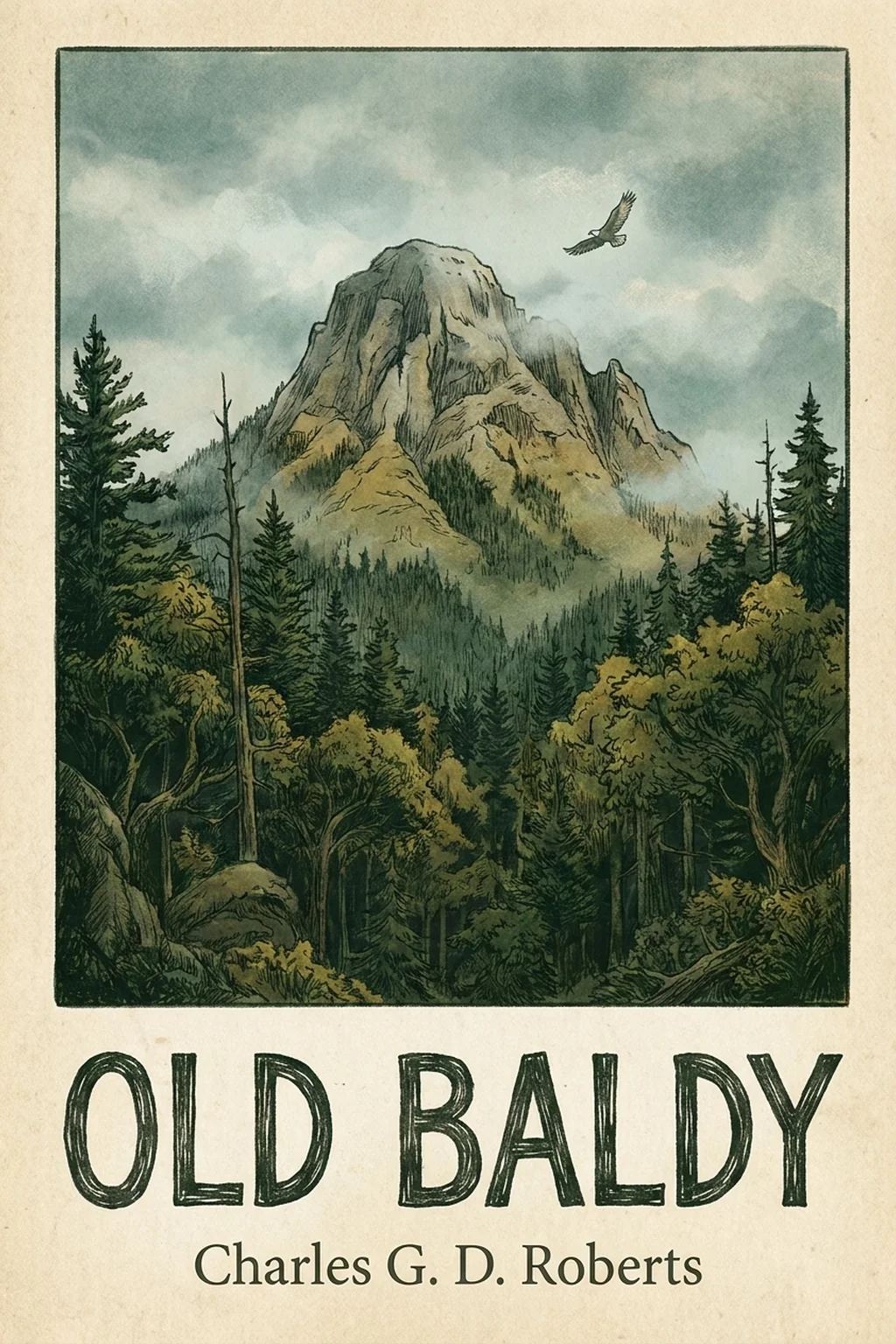
Old Baldy
Old Baldy
"I declare! so the deacon's goin' to try his hand on Old Baldy, eh?" Jim Wheeler chuckled gleefully at the news, and rubbed his hands. "Wall, mebbe somethin' 'll happen," he went on, "an mebbe it won't, but I sha'n't be a mite s'prised if Old Baldy comes out a-top.”
“”·“,”“”
"The deacon's got a right powerful will," Sim Grimes suggested dubiously. "An' so has Baldy—powerful'st will in the country, bar none. But critters is critters and—” And Grimes was just preparing to unload his mind of certain ideas concerning man's primacy in the physical world, when the other cut him short.
“”·“……”
"Now jest look here, Sim Grimes! Have you ever hearn tell of one man what limbered up Old Baldy when Old Baldy wa'n't so minded? There's Tucker an' Smith an' Johnson, an' Olsen, an' Ordway an' Wellman—didn't the whole caboodle try their luck at breakin' Old Baldy's sperrit, an' didn't the whole caboodle give it up? Jest tell me this, Sim Grimes—did you ever in yer born days hear on one man or passel of men gittin' Old Baldy on his feet when he took it into his head to lay down?"
“·——·——”
"Mebbe yer right," Sim Grimes assented mildly, then his old faith in Deacon Barnes returning, "But the deacon's got a right powerful will."
“”·“”
"But Deacon Barnes jined a Prevention of Cruelty to Animals society, didn't he?" Grimes nodded. "An he don't b'lieve in whippin' dumb brutes?"
“”“”
"Nope."
“”
"Then how in the land of Goshen kin he make Old Baldy git up when he ain't in the mood?"
“”
"It's more'n I kin tell," Grimes answered, at the same time starting up his horses. But before he was out of earshot he turned and called back, "But the deacon's got a powerful will!"
“”“”
The farmers of Selbyville had little use for Old Baldy, and less regard; yet he was one of the finest oxen in the county, and perhaps the largest in the state. A good worker and a splendid yoke-animal, a stranger might have wondered at the celerity with which his various owners rid themselves of him, after having been inveigled into buying him. The same stranger might have worked him a week before he discovered why, and again an hour would have sufficed to unearth the secret. Old Baldy had but one fault—he was stubborn. And he manifested this stubbornness in but one way. Whenever things did not exactly go to suit him, he simply lay down in his tracks, there and then, consulting neither his own nor his master's convenience. And there he would stay. Nothing could move him. Force was useless; persuasion as bad. The heavens might roll up as a scroll, or the stars fall from their seats in the sky, but there Old Baldy would stay until of his own free will he decided to get up and move along. Never from the time yoke was first put upon him had a man succeeded in budging him against his will. It was asserted that he had caused more gray hairs to grow in the heads of the Selbyville farmers than all the mortgages of the past three generations. He always went absurdly cheap, and man after man had bought him in the fond hope of conquering him, and winning not only the approbation of his fellows, but a very good bargain. And man after man sold him for little or nothing, insanely happy at being rid of so much vexation of spirit.
——
"As stubborn as Old Baldy" became a figure of speech, the common property of the community. Fathers conjured obedience from their sons by its use; the schoolmaster employed it on his stiff-necked pupils; and even the minister, calling sinners to repentance, blanched the cheek of the most unregenerate with its brand. But in the language Deacon Barnes alone, it had no place. It was his wont to smile and chuckle when others made use of the phrase, till people remarked it would be a blessing if he only got the tough old ox once in his hands. And now, after Old Baldy had become thoroughly set in the iniquity of his ways, the deacon had bought him off Joe Westfield for a song. Selbyville looked forward to the struggle with great interest, and sly grins and open skepticism were the order of the day whenever the topic was mentioned. They knew the deacon had a will of iron, but they also knew Old Baldy; and their collective opinion was that the deacon, like everybody else who had tried their hand at it, was bound to get the worst of the bargain.
“”·
Deacon Barnes and Old Baldy were coming down the last furrow of the ten-acre patch back of the pasture. Five rods more of the plow and it would be ready for the harrow. Old Baldy had been behaving splendidly and the deacon was jubilant. Besides, Bob, his promising eldest-born, had just run half way across the pasture and shouted that dinner was ready and waiting.
"Comin'!" he shouted back, no more dreaming that he would fail to reach the end of the furrow than that the dinner call was the trumps of judgment. Just then Old Baldy stopped. The deacon looked surprised. Baldy sighed contently. "Get up!" he shouted, and Baldy, with a hurt expression on his bovine countenance, proceeded to lie down.
“”“”
Deacon Barnes stepped around where he could look into his face, and talked nicely to him, with persuasion and pathos mixed; for he feared greatly for Old Baldy's well being. Not that he intended whipping him brutally or anything like that, but—well, he was Deacon Barnes, with the ripened will of all the male Barnes that had gone before, and he hadn't the slightest intention of being beaten by a stubborn old ox. So they just looked each other in the eyes, he talking midly and Baldy listening with complacent interest till Bob shouted a second time across the pasture that dinner was waiting.
——
"Look here, Baldy," the deacon said, rising to his feet; "if you want to lay there so mighty bad, 'tain't in me to stop you. Only give you fair warnin'—the sweets of life do cloy, and you kin git too much of a good thing. Layin' down in the furrer ain't what it's cracked up to be, an' you'll git a-mighty sick on it before yer done with me.” Baldy gazed at him with stolid impudence, saying as plainly as though he spoke, "Well, what are you going to do about it?"
“”“——”“”
But the deacon never lost his temper. "I'm goin' to git a bite to eat," he went on, turning away; "an' when I come back I'll give you one more chance. But mark my words, Baldy, it'll be yer last."
“”“”
At the table, Deacon Barnes, instead of being at all irritated, radiated even more geniality than was his wont, and this in the face of the fact that Mrs. Barnes had a mild attack of tantrums because he had kept dinner waiting. Afterwards, when he went out on the porch, he saw Jim Wheeler had pulled up his horses where he could look over the fence at the victorious Baldy. When he passed the house he waved his hand and smiled knowingly at the deacon, and went on to spread the news that the deacon and Old Baldy were "at it."
·“”
But there was a certain unusual exhilaration in the deacon's face and step as he led off to the barn with Bob following in his footsteps. There he proceeded to load up his eldest-born with numerous iron and wooden pegs and old pieces of chain and rope. Then, with his ax in hand, he headed across the pasture to the scene of mutiny. "Come! Git up, Baldy!" he commanded. "It's high time we got this furrer finished."
“”“”
Baldy regarded him passively, with half-veiled, lazy eyes. "Reckon it be more comfortable where you are, eh? B'lieve in takin' it easy, eh? All right. You can't say Deacon Barnes is a hard master." As he talked, he worked, driving pegs all about the stubborn animal. Then from the pegs he stretched ropes and chains, passing them across Baldy till that worthy was hard and fast to mother earth—so hard and fast that it would have required a steam derrick to get him to his feet. "Jest enjoy yourself, Baldy," the deacon called, as he started away. "I'll come up to-morrer after breakfast an' see how you be."
“”——“”“”
True to his word, in the morning the deacon paid his promised visit. But Baldy was yet strong in his will, and he behaved sullenly as animals well know how. He even tried to let on that it was real nice lying out there with nothing to do, and that the deacon worried him with his chatter, and had better go away. But Deacon Barnes stayed a full quarter of an hour, talking pleasantly, with a cheery, whole-souled ring to his voice which vexed Baldy greatly.
In the evening, after supper, he made another visit, Old Baldy was feeling stiff and sore from lying in one position all day with the hot sun beating down upon him. He even betrayed anxiety and interest when he heard his master's steps approaching, and there was a certain softening and appeal in his eyes. But the deacon made out he didn't see it, and after talking nicely for a few minutes went home again. In the morning Baldy received another visit. By this time he was not only sore, but hungry and thirsty as well. He was no longer indifferent to his owner's presence, and he begged so eloquently with his eyes that the deacon was touched, but he hardened his heart and went back to the house again. He had made up his mind to do what all Selbyville during a number of years had failed to accomplish, and now that he had started he was going to do it thoroughly.
When he came out again after dinner, Baldy was abject in his humility. His pleading eyes followed his master about unceasingly, and once, when the deacon turned as though to go away, he actually groaned. "Sweets do cloy, eh?" Deacon Barnes said, coming back. "Even lyin' in the furrer is vanity and vexation, eh? Well, I guess we'll finish this furrer now. What d'you say Baldy? And after that you kin have somethin' to eat an' a couple o' buckets of water. Eh? What d'you say?"
“”“”
It can never be known for a fact as to whether Baldy understood his master's words or not, but he showed by his actions that he thoroughly understood when the ropes and chains were loosened and removed. "Kind o' cramped, eh?" the deacon remarked as he helped him to his feet. "Well, g'long now, le's finish this furrer."
“”“”
Baldy finished that furrow, and after that there was never a furrow he commenced that he did not finish. And as for lying down—well, he manifested a new kind of stubborness. He couldn't be persuaded or bullied into lying down. No sir, he wouldn't have it. he'd finish the furrow first, and all the furrows all day long. He grew real stubborn when it came to lying down. But the deacon didn't mind. And all Selbyville marveled, and a year afterward more than one farmer, including Jim Wheeler, was offering the deacon far more for Old Baldy than he had paid. But Deacon Barnes knew a bargain when he had got it, and he was just as stubborn in refusing to sell as Old Baldy was in refusing to lie down.
——·
Brown Wolf
She had delayed, because of the dew-wet grass, in order to put on her overshoes, and when she emerged from the house found her waiting husband absorbed in the wonder of a bursting almond-bud. She sent a questing glance across the tall grass and in and out among the orchard trees.
"Where's Wolf?" she asked.
“”
"He was here a moment ago." Walt Irvine drew himself away with a jerk from the metaphysics and poetry of the organic miracle of blossom, and surveyed the landscape. "He was running a rabbit the last I saw of him."
“”·——“”
"Wolf! Wolf! Here Wolf!" she called, as they left the clearing and took the trail that led down through the waxen-belled manzanita jungle to the county road.
“”
Irvine thrust between his lips the little finger of each hand and lent to her efforts a shrill whistling.
She covered her ears hastily and made a wry grimace.
"My! for a poet, delicately attuned and all the rest of it, you can make unlovely noises. My ear-drums are pierced. You outwhistle—”
“……”
"Orpheus."
“”
"I was about to say a street-arab," she concluded severely.
“”
"Poesy does not prevent one from being practical—at least it doesn't prevent ME. Mine is no futility of genius that can't sell gems to the magazines."
“——”
He assumed a mock extravagance, and went on:
"I am no attic singer, no ballroom warbler. And why? Because I am practical. Mine is no squalor of song that cannot transmute itself, with proper exchange value, into a flower-crowned cottage, a sweet mountain-meadow, a grove of red-woods, an orchard of thirty-seven trees, one long row of blackberries and two short rows of strawberries, to say nothing of a quarter of a mile of gurgling brook. I am a beauty-merchant, a trader in song, and I pursue utility, dear Madge. I sing a song, and thanks to the magazine editors I transmute my song into a waft of the west wind sighing through our redwoods, into a murmur of waters over mossy stones that sings back to me another song than the one I sang and yet the same song wonderfully—er—transmuted.”
“”
"O that all your song-transmutations were as successful!" she laughed.
“”
"Name one that wasn't."
“”
"Those two beautiful sonnets that you transmuted into the cow that was accounted the worst milker in the township."
“”
"She was beautiful—” he began,
“……”
"But she didn't give milk," Madge interrupted.
“”
"But she WAS beautiful, now, wasn't she?" he insisted.
“”
"And here's where beauty and utility fall out," was her reply. "And there's the Wolf!"
“”“”
From the thicket-covered hillside came a crashing of underbrush, and then, forty feet above them, on the edge of the sheer wall of rock, appeared a wolf's head and shoulders. His braced fore paws dislodged a pebble, and with sharp-pricked ears and peering eyes he watched the fall of the pebble till it struck at their feet. Then he transferred his gaze and with open mouth laughed down at them.
"You Wolf, you!" and "You blessed Wolf!" the man and woman called out to him.
“”“”
The ears flattened back and down at the sound, and the head seemed to snuggle under the caress of an invisible hand.
They watched him scramble backward into the thicket, then proceeded on their way. Several minutes later, rounding a turn in the trail where the descent was less precipitous, he joined them in the midst of a miniature avalanche of pebbles and loose soil. He was not demonstrative. A pat and a rub around the ears from the man, and a more prolonged caressing from the woman, and he was away down the trail in front of them, gliding effortlessly over the ground in true wolf fashion.
In build and coat and brush he was a huge timber-wolf; but the lie was given to his wolfhood by his color and marking. There the dog unmistakably advertised itself. No wolf was ever colored like him. He was brown, deep brown, red-brown, an orgy of browns. Back and shoulders were a warm brown that paled on the sides and underneath to a yellow that was dingy because of the brown that lingered in it. The white of the throat and paws and the spots over the eyes was dirty because of the persistent and ineradicable brown, while the eyes themselves were twin topazes, golden and brown.
The man and woman loved the dog very much; perhaps this was because it had been such a task to win his love. It had been no easy matter when he first drifted in mysteriously out of nowhere to their little mountain cottage. Footsore and famished, he had killed a rabbit under their very noses and under their very windows, and then crawled away and slept by the spring at the foot of the blackberry bushes. When Walt Irvine went down to inspect the intruder, he was snarled at for his pains, and Madge likewise was snarled at when she went down to present, as a peace-offering, a large pan of bread and milk.
·
A most unsociable dog he proved to be, resenting all their advances, refusing to let them lay hands on him, menacing them with bared fangs and bristling hair. Nevertheless he remained, sleeping and resting by the spring, and eating the food they gave him after they set it down at a safe distance and retreated. His wretched physical condition explained why he lingered; and when he had recuperated, after several days' sojourn, he disappeared.
And this would have been the end of him, so far as Irvine and his wife were concerned, had not Irvine at that particular time been called away into the northern part of the state. Riding along on the train, near to the line between California and Oregon, he chanced to look out of the window and saw his unsociable guest sliding along the wagon road, brown and wolfish, tired yet tireless, dust-covered and soiled with two hundred miles of travel.
Now Irvine was a man of impulse, a poet. He got off the train at the next station, bought a piece of meat at a butcher shop, and captured the vagrant on the outskirts of the town. The return trip was made in the baggage car, and so Wolf came a second time to the mountain cottage. Here he was tied up for a week and made love to by the man and woman. But it was very circumspect love-making. Remote and alien as a traveller from another planet, he snarled down their soft-spoken love-words. He never barked. In all the time they had him he was never known to bark.
To win him became a problem. Irvine liked problems. He had a metal plate made, on which was stamped: RETURN TO WALT IRVINE, GLEN ELLEN, SONOMA COUNTY, CALIFORNIA. This was riveted to a collar and strapped about the dog's neck. Then he was turned loose, and promptly he disappeared. A day later came a telegram from Mendocino County. In twenty hours he had made over a hundred miles to the north, and was still going when captured.
·
He came back by Wells Fargo Express, was tied up three days, and was loosed on the fourth and lost. This time he gained southern Oregon before he was caught and returned. Always, as soon as he received his liberty, he fled away, and always he fled north. He was possessed of an obsession that drove him north. The homing instinct, Irvine called it, after he had expended the selling price of a sonnet in getting the animal back from northern Oregon.
“”
Another time the brown wanderer succeeded in traversing half the length of California, all of Oregon, and most of Washington, before he was picked up and returned "Collect." A remarkable thing was the speed with which he travelled. Fed up and rested, as soon as he was loosed he devoted all his energy to getting over the ground. On the first day's run he was known to cover as high as a hundred and fifty miles, and after that he would average a hundred miles a day until caught. He always arrived back lean and hungry and savage, and always departed fresh and vigorous, cleaving his way northward in response to some prompting of his being that no one could understand.
But at last, after a futile year of flight, he accepted the inevitable and elected to remain at the cottage where first he had killed the rabbit and slept by the spring. Even after that, a long time elapsed before the man and woman succeeded in patting him. It was a great victory, for they alone were allowed to put hands on him. He was fastidiously exclusive, and no guest at the cottage ever succeeded in making up to him. A low growl greeted such approach; if any one had the hardihood to come nearer, the lips lifted, the naked fangs appeared, and the growl became a snarl—a snarl so terrible and malignant that it awed the stoutest of them, as it likewise awed the farmers' dogs that knew ordinary dog-snarling, but had never seen wolf-snarling before.
——
He was without antecedents. His history began with Walt and Madge. He had come up from the south, but never a clew did they get of the owner from whom he had evidently fled. Mrs. Johnson, their nearest neighbor and the one who supplied them with milk, proclaimed him a Klondike dog. Her brother was burrowing for frozen pay-streaks in that far country, and so she constituted herself an authority on the subject.
But they did not dispute her. There were the tips of Wolf's ears, obviously so severely frozen at some time that they would never quite heal again. Besides, he looked like the photographs of the Alaskan dogs they saw published in magazines and newspapers. They often speculated over his past, and tried to conjure up (from what they had read and heard) what his northland life had been. That the northland still drew him, they knew; for at night they sometimes heard him crying softly; and when the north wind blew and the bite of frost was in the air, a great restlessness would come upon him and he would lift a mournful lament which they knew to be the long wolf-howl. Yet he never barked. No provocation was great enough to draw from him that canine cry.
Long discussion they had, during the time of winning him, as to whose dog he was. Each claimed him, and each proclaimed loudly any expression of affection made by him. But the man had the better of it at first, chiefly because he was a man. It was patent that Wolf had had no experience with women. He did not understand women. Madge's skirts were something he never quite accepted. The swish of them was enough to set him a-bristle with suspicion, and on a windy day she could not approach him at all.
On the other hand, it was Madge who fed him; also it was she who ruled the kitchen, and it was by her favor, and her favor alone, that he was permitted to come within that sacred precinct. It was because of these things that she bade fair to overcome the handicap of her garments. Then it was that Walt put forth special effort, making it a practice to have Wolf lie at his feet while he wrote, and, between petting and talking, losing much time from his work. Walt won in the end, and his victory was most probably due to the fact that he was a man, though Madge averred that they would have had another quarter of a mile of gurgling brook, and at least two west winds sighing through their redwoods, had Wait properly devoted his energies to song-transmutation and left Wolf alone to exercise a natural taste and an unbiassed judgment.
"It's about time I heard from those triolets", Walt said, after a silence of five minutes, during which they had swung steadily down the trail. "There'll be a check at the post-office, I know, and we'll transmute it into beautiful buckwheat flour, a gallon of maple syrup, and a new pair of overshoes for you."
“”
"And into beautiful milk from Mrs. Johnson's beautiful cow," Madge added. "To-morrow's the first of the month, you know."
“”“”
Walt scowled unconsciously; then his face brightened, and he clapped his hand to his breast pocket.
"Never mind. I have here a nice beautiful new cow, the best milker in California."
“”
"When did you write it?" she demanded eagerly. Then, reproachfully, "And you never showed it to me."
“”“”
"I saved it to read to you on the way to the post-office, in a spot remarkably like this one," he answered, indicating, with a wave of his hand, a dry log on which to sit.
“”
A tiny stream flowed out of a dense fern-brake, slipped down a mossy-lipped stone, and ran across the path at their feet. From the valley arose the mellow song of meadow-larks, while about them, in and out, through sunshine and shadow, fluttered great yellow butterflies.
Up from below came another sound that broke in upon Walt reading softly from his manuscript. It was a crunching of heavy feet, punctuated now and again by the clattering of a displaced stone. As Walt finished and looked to his wife for approval, a man came into view around the turn of the trail. He was bare-headed and sweaty. With a handkerchief in one hand he mopped his face, while in the other hand he carried a new hat and a wilted starched collar which he had removed from his neck. He was a well-built man, and his muscles seemed on the point of bursting out of the painfully new and ready-made black clothes he wore.
"Warm day," Walt greeted him. Walt believed in country democracy, and never missed an opportunity to practise it.
“”
The man paused and nodded.
"I guess I ain't used much to the warm," he vouchsafed half apologetically. "I'm more accustomed to zero weather."
“”“”
"You don't find any of that in this country," Walt laughed.
“”
"Should say not," the man answered. "An' I ain't here a-lookin' for it neither. I'm tryin' to find my sister. Mebbe you know where she lives. Her name's Johnson, Mrs. William Johnson."
“”“·”
"You're not her Klondike brother!" Madge cried, her eyes bright with interest, "about whom we've heard so much?"
“”“”
"Yes'm, that's me," he answered modestly. "My name's Miller, Skiff Miller. I just thought I'd s'prise her."
“”“·”
"You are on the right track then. Only you've come by the foot-path.” Madge stood up to direct him, pointing up the canyon a quarter of a mile. "You see that blasted redwood? Take the little trail turning off to the right. It's the short cut to her house. You can't miss it."
“”“”
"Yes'm, thank you, ma'am," he said. He made tentative efforts to go, but seemed awkwardly rooted to the spot. He was gazing at her with an open admiration of which he was quite unconscious, and which was drowning, along with him, in the rising sea of embarrassment in which he floundered.
“”
"We'd like to hear you tell about the Klondike," Madge said. "Mayn't we come over some day while you are at your sister's? Or, better yet, won't you come over and have dinner with us?"
“”“”
"Yes'm, thank you, ma'am," he mumbled mechanically. Then he caught himself up and added: "I ain't stoppin' long. I got to be pullin' north again. I go out on to-night's train. You see, I've got a mail contract with the government."
“”“”
When Madge had said that it was too bad, he made another futile effort to go. But he could not take his eyes from her face. He forgot his embarrassment in his admiration, and it was her turn to flush and feel uncomfortable.
It was at this juncture, when Walt had just decided it was time for him to be saying something to relieve the strain, that Wolf, who had been away nosing through the brush, trotted wolf-like into view.
Skiff Miller's abstraction disappeared. The pretty woman before him passed out of his field of vision. He had eyes only for the dog, and a great wonder came into his face.
·
"Well, I'll be damned!" he enunciated slowly and solemnly.
“”
He sat down ponderingly on the log, leaving Madge standing. At the sound of his voice, Wolf's ears had flattened down, then his mouth had opened in a laugh. He trotted slowly up to the stranger and first smelled his hands, then licked them with his tongue.
Skiff Miller patted the dog's head, and slowly and solemnly repeated, "Well, I'll be damned!"
·“”
"Excuse me, ma'am," he said the next moment "I was just s'prised some, that was all."
“”“”
"We're surprised, too," she answered lightly. "We never saw Wolf make up to a stranger before."
“”“”
"Is that what you call him—Wolf?" the man asked.
“——”
Madge nodded. "But I can't understand his friendliness toward you—unless it's because you're from the Klondike. He's a Klondike dog, you know."
“——”
"Yes'm," Miller said absently. He lifted one of Wolf's fore legs and examined the foot-pads, pressing them and denting them with his thumb. "Kind of SOFT," he remarked. "He ain't been on trail for a long time."
“”“”“”
"I say," Walt broke in, "it is remarkable the way he lets you handle him."
“”“”
Skiff Miller arose, no longer awkward with admiration of Madge, and in a sharp, businesslike manner asked, "How long have you had him?"
·“”
But just then the dog, squirming and rubbing against the newcomer's legs, opened his mouth and barked. It was an explosive bark, brief and joyous, but a bark.
"That's a new one on me," Skiff Miller remarked.
“”·
Walt and Madge stared at each other. The miracle had happened. Wolf had barked.
"It's the first time he ever barked," Madge said.
“”
"First time I ever heard him, too," Miller volunteered.
“”
Madge smiled at him. The man was evidently a humorist.
"Of course," she said, "since you have only seen him for five minutes."
“”“”
Skiff Miller looked at her sharply, seeking in her face the guile her words had led him to suspect.
·
"I thought you understood," he said slowly. "I thought you'd tumbled to it from his makin' up to me. He's my dog. His name ain't Wolf. It's Brown."
“”“”
"Oh, Walt!" was Madge's instinctive cry to her husband.
“”
Walt was on the defensive at once.
"How do you know he's your dog?" he demanded.
“”
"Because he is," was the reply.
“”
"Mere assertion," Walt said sharply.
“”
In his slow and pondering way, Skiff Miller looked at him, then asked, with a nod of his head toward Madge:
"How d'you know she's your wife? You just say, 'Because she is,' and I'll say it's mere assertion. The dog's mine. I bred 'm an' raised 'm, an' I guess I ought to know. Look here. I'll prove it to you."
“‘’”
Skiff Miller turned to the dog. "Brown!" His voice rang out sharply, and at the sound the dog's ears flattened down as to a caress. "Gee!" The dog made a swinging turn to the right. "Now mush-on!” And the dog ceased his swing abruptly and started straight ahead, halting obediently at command.
·“”“”“”
"I can do it with whistles", Skiff Miller said proudly. "He was my lead dog."
“”·“”
"But you are not going to take him away with you?" Madge asked tremulously.
“”
The man nodded.
"Back into that awful Klondike world of suffering?"
“”
He nodded and added: "Oh, it ain't so bad as all that. Look at me. Pretty healthy specimen, ain't I?"
“”
"But the dogs! The terrible hardship, the heart-breaking toil, the starvation, the frost! Oh, I've read about it and I know."
“”
"I nearly ate him once, over on Little Fish River," Miller volunteered grimly. "If I hadn't got a moose that day was all that saved 'm."
“”“”
"I'd have died first!" Madge cried.
“”
"Things is different down here", Miller explained. "You don't have to eat dogs. You think different just about the time you're all in. You've never ben all in, so you don't know anything about it."
“”“”
"That's the very point," she argued warmly. "Dogs are not eaten in California. Why not leave him here? He is happy. He'll never want for food—you know that. He'll never suffer from cold and hardship. Here all is softness and gentleness. Neither the human nor nature is savage. He will never know a whip-lash again. And as for the weather—why, it never snows here.”
“”“——”
"But it's all-fired hot in summer, beggin' your pardon," Skiff Miller laughed.
“”·
"But you do not answer," Madge continued passionately. "What have you to offer him in that northland life?"
“”“”
"Grub, when I've got it, and that's most of the time," came the answer.
“”
"And the rest of the time?"
“”
"No grub."
“”
"And the work?"
“”
"Yes, plenty of work," Miller blurted out impatiently. "Work without end, an' famine, an' frost, an all the rest of the miseries—that's what he'll get when he comes with me. But he likes it. He is used to it. He knows that life. He was born to it an' brought up to it. An' you don't know anything about it. You don't know what you're talking about. That's where the dog belongs, and that's where he'll be happiest."
“”“——”
"The dog doesn't go," Walt announced in a determined voice. "So there is no need of further discussion."
“”“”
"What's that?" Skiff Miller demanded, his brows lowering and an obstinate flush of blood reddening his forehead.
“”·
"I said the dog doesn't go, and that settles it. I don't believe he's your dog. You may have seen him sometime. You may even sometime have driven him for his owner. But his obeying the ordinary driving commands of the Alaskan trail is no demonstration that he is yours. Any dog in Alaska would obey you as he obeyed. Besides, he is undoubtedly a valuable dog, as dogs go in Alaska, and that is sufficient explanation of your desire to get possession of him. Anyway, you've got to prove property."
“”
Skiff Miller, cool and collected, the obstinate flush a trifle deeper on his forehead, his huge muscles bulging under the black cloth of his coat, carefully looked the poet up and down as though measuring the strength of his slenderness.
·
The Klondiker's face took on a contemptuous expression as he said finally, "I reckon there's nothin' in sight to prevent me takin' the dog right here an' now."
“”
Walt's face reddened, and the striking-muscles of his arms and shoulders seemed to stiffen and grow tense. His wife fluttered apprehensively into the breach.
"Maybe Mr. Miller is right", she said. "I am afraid that he is. Wolf does seem to know him, and certainly he answers to the name of 'Brown.' He made friends with him instantly, and you know that's something he never did with anybody before. Besides, look at the way he barked. He was just bursting with joy Joy over what? Without doubt at finding Mr. Miller."
“”“‘’”
Walt's striking-muscles relaxed, and his shoulders seemed to droop with hopelessness.
"I guess you're right, Madge," he said. "Wolf isn't Wolf, but Brown, and he must belong to Mr. Miller."
“”“”
"Perhaps Mr. Miller will sell him," she suggested. "We can buy him."
“”“”
Skiff Miller shook his head, no longer belligerent, but kindly, quick to be generous in response to generousness.
·
"I had five dogs," he said, casting about for the easiest way to temper his refusal. "He was the leader. They was the crack team of Alaska. Nothin' could touch 'em. In 1898 I refused five thousand dollars for the bunch. Dogs was high, then, anyway; but that wasn't what made the fancy price. It was the team itself. Brown was the best in the team. That winter I refused twelve hundred for 'm. I didn't sell 'm then, an' I ain't a-sellin' 'm now. Besides, I think a mighty lot of that dog. I've ben lookin' for 'm for three years. It made me fair sick when I found he'd ben stole—not the value of him, but the—well, I liked 'm like hell, that's all, beggin' your pardon. I couldn't believe my eyes when I seen 'm just now. I thought I was dreamin'. It was too good to be true. Why, I was his wet-nurse. I put 'm to bed, snug every night. His mother died, and I brought 'm up on condensed milk at two dollars a can when I couldn't afford it in my own coffee. He never knew any mother but me. He used to suck my finger regular, the darn little cuss—that finger right there!”
“”“————”
And Skiff Miller, too overwrought for speech, held up a fore finger for them to see.
·
"That very finger," he managed to articulate, as though it somehow clinched the proof of ownership and the bond of affection.
“”
He was still gazing at his extended finger when Madge began to speak.
"But the dog," she said. "You haven't considered the dog."
“”“”
Skiff Miller looked puzzled.
·
"Have you thought about him?" she asked.
“”
"Don't know what you're drivin' at," was the response.
“”
"Maybe the dog has some choice in the matter," Madge went on. "Maybe he has his likes and desires. You have not considered him. You give him no choice. It has never entered your mind that possibly he might prefer California to Alaska. You consider only what you like. You do with him as you would with a sack of potatoes or a bale of hay."
“”“”
This was a new way of looking at it, and Miller was visibly impressed as he debated it in his mind. Madge took advantage of his indecision.
"If you really love him, what would be happiness to him would be your happiness also," she urged.
“”
Skiff Miller continued to debate with himself, and Madge stole a glance of exultation to her husband, who looked back warm approval.
·
"What do you think?" the Klondiker suddenly demanded.
“”
It was her turn to be puzzled. "What do you mean?" she asked.
“”
"D'ye think he'd sooner stay in California?"
“”
She nodded her head with positiveness. "I am sure of it."
“”
Skiff Miller again debated with himself, though this time aloud, at the same time running his gaze in a judicial way over the mooted animal.
·
"He was a good worker. He's done a heap of work for me. He never loafed on me, an' he was a joe-dandy at hammerin' a raw team into shape. He's got a head on him. He can do everything but talk. He knows what you say to him. Look at 'm now. He knows we're talkin' about him."
“”
The dog was lying at Skiff Miller's feet, head close down on paws, ears erect and listening, and eyes that were quick and eager to follow the sound of speech as it fell from the lips of first one and then the other.
·
"An' there's a lot of work in 'm yet. He's good for years to come. An' I do like him. I like him like hell."
“”
Once or twice after that Skiff Miller opened his mouth and closed it again without speaking. Finally he said:
·
"I'll tell you what I'll do. Your remarks, ma'am, has some weight in them. The dog's worked hard, and maybe he's earned a soft berth an' has got a right to choose. Anyway, we'll leave it up to him. Whatever he says, goes. You people stay right here settin' down. I'll say good-by and walk off casual-like. If he wants to stay, he can stay. If he wants to come with me, let 'm come. I won't call 'm to come an' don't you call 'm to come back."
“”
He looked with sudden suspicion at Madge, and added, "Only you must play fair. No persuadin' after my back is turned."
“”
"We'll play fair," Madge began, but Skiff Miller broke in on her assurances.
“”·
"I know the ways of women," he announced. "Their hearts is soft. When their hearts is touched they're likely to stack the cards, look at the bottom of the deck, an' lie like the devil—beggin' your pardon, ma'am. I'm only discoursin' about women in general."
“”“——”
"I don't know how to thank you," Madge quavered.
“”
"I don't see as you've got any call to thank me," he replied. "Brown ain't decided yet. Now you won't mind if I go away slow? It's no more'n fair, seein' I'll be out of sight inside a hundred yards." —Madge agreed, and added, "And I promise you faithfully that we won't do anything to influence him."
“”“”“”
"Well, then, I might as well be gettin' along," Skiff Miller said in the ordinary tones of one departing.
“”·
At this change in his voice, Wolf lifted his head quickly, and still more quickly got to his feet when the man and woman shook hands. He sprang up on his hind legs, resting his fore paws on her hip and at the same time licking Skiff Miller's hand. When the latter shook hands with Walt, Wolf repeated his act, resting his weight on Walt and licking both men's hands.
·
"It ain't no picnic, I can tell you that," were the Klondiker's last words, as he turned and went slowly up the trail.
“”
For the distance of twenty feet Wolf watched him go, himself all eagerness and expectancy, as though waiting for the man to turn and retrace his steps. Then, with a quick low whine, Wolf sprang after him, overtook him, caught his hand between his teeth with reluctant tenderness, and strove gently to make him pause.
Failing in this, Wolf raced back to where Walt Irvine sat, catching his coat-sleeve in his teeth and trying vainly to drag him after the retreating man.
·
Wolf's perturbation began to wax. He desired ubiquity. He wanted to be in two places at the same time, with the old master and the new, and steadily the distance between them was increasing. He sprang about excitedly, making short nervous leaps and twists, now toward one, now toward the other, in painful indecision, not knowing his own mind, desiring both and unable to choose, uttering quick sharp whines and beginning to pant.
He sat down abruptly on his haunches, thrusting his nose upward, the mouth opening and closing with jerking movements, each time opening wider. These jerking movements were in unison with the recurrent spasms that attacked the throat, each spasm severer and more intense than the preceding one. And in accord with jerks and spasms the larynx began to vibrate, at first silently, accompanied by the rush of air expelled from the lungs, then sounding a low, deep note, the lowest in the register of the human ear. All this was the nervous and muscular preliminary to howling.
But just as the howl was on the verge of bursting from the full throat, the wide-opened mouth was closed, the paroxysms ceased, and he looked long and steadily at the retreating man. Suddenly Wolf turned his head, and over his shoulder just as steadily regarded Walt. The appeal was unanswered. Not a word nor a sign did the dog receive, no suggestion and no clew as to what his conduct should be.
A glance ahead to where the old master was nearing the curve of the trail excited him again. He sprang to his feet with a whine, and then, struck by a new idea, turned his attention to Madge. Hitherto he had ignored her, but now, both masters failing him, she alone was left. He went over to her and snuggled his head in her lap, nudging her arm with his nose—an old trick of his when begging for favors. He backed away from her and began writhing and twisting playfully, curvetting and prancing, half rearing and striking his fore paws to the earth, struggling with all his body, from the wheedling eyes and flattening ears to the wagging tail, to express the thought that was in him and that was denied him utterance.
——
This, too, he soon abandoned. He was depressed by the coldness of these humans who had never been cold before. No response could he draw from them, no help could he get. They did not consider him. They were as dead.
He turned and silently gazed after the old master. Skiff Miller was rounding the curve. In a moment he would be gone from view. Yet he never turned his head, plodding straight onward, slowly and methodically, as though possessed of no interest in what was occurring behind his back.
·
And in this fashion he went out of view. Wolf waited for him to reappear. He waited a long minute, silently, quietly, without movement, as though turned to stone—withal stone quick with eagerness and desire. He barked once, and waited. Then he turned and trotted back to Walt Irvine. He sniffed his hand and dropped down heavily at his feet, watching the trail where it curved emptily from view.
——·
The tiny stream slipping down the mossy-lipped stone seemed suddenly to increase the volume of its gurgling noise. Save for the meadow-larks, there was no other sound. The great yellow butterflies drifted silently through the sunshine and lost themselves in the drowsy shadows. Madge gazed triumphantly at her husband.
A few minutes later Wolf got upon his feet. Decision and deliberation marked his movements. He did not glance at the man and woman. His eyes were fixed up the trail. He had made up his mind. They knew it. And they knew, so far as they were concerned, that the ordeal had just begun.
He broke into a trot, and Madge's lips pursed, forming an avenue for the caressing sound that it was the will of her to send forth. But the caressing sound was not made. She was impelled to look at her husband, and she saw the sternness with which he watched her. The pursed lips relaxed, and she sighed inaudibly.
——
Wolf's trot broke into a run. Wider and wider were the leaps he made. Not once did he turn his head, his wolf's brush standing out straight behind him. He cut sharply across the curve of the trail and was gone.
For work background, reading notes, and source credits, see the book introduction.