Section 1
Bridge Bilingual Classics
Jack London's Short Stories (Vol. XI)
·
Self-interest
Jack London
·
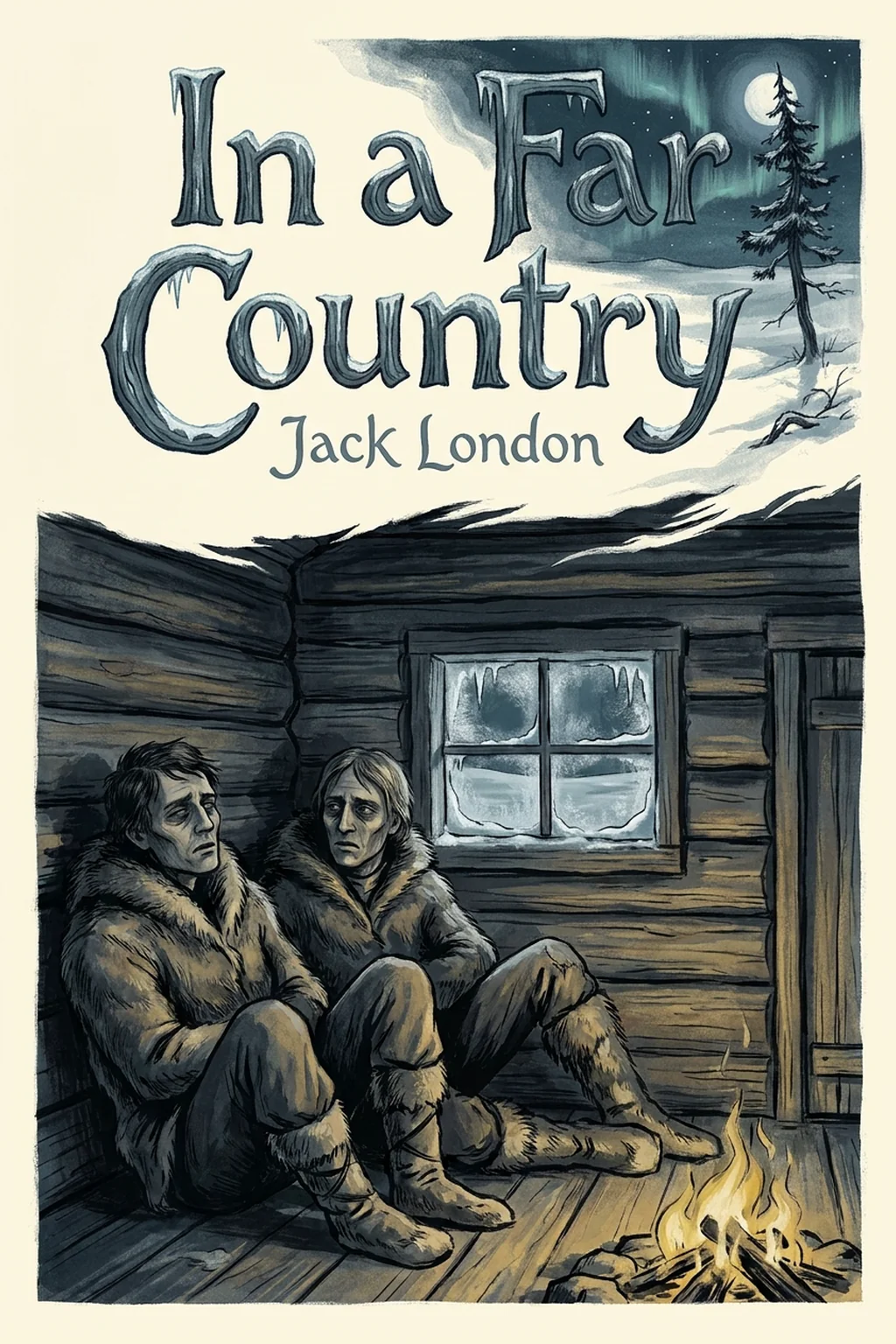
In a Far Country
In a Far Country
When a man journeys into a far country, he must be prepared to forget many of the things he has learned, and to acquire such customs as are inherent with existence in the new land; he must abandon the old ideals and the old gods, and oftentimes he must reverse the very codes by which his conduct has hitherto been shaped. To those who have the protean faculty of adaptability, the novelty of such change may even be a source of pleasure; but to those who happen to be hardened to the ruts in which they were created, the pressure of the altered environment is unbearable, and they chafe in body and in spirit under the new restrictions which they do not understand. This chafing is bound to act and react, producing divers evils and leading to various misfortunes. It were better for the man who cannot fit himself to the new groove to return to his own country; if he delay too long, he will surely die.
The man who turns his back upon the comforts of an elder civilization, to face the savage youth, the primordial simplicity of the North, may estimate success at an inverse ratio to the quantity and quality of his hopelessly fixed habits. He will soon discover, if he be a fit candidate, that the material habits are the less important. The exchange of such things as a dainty menu for rough fare, of the stiff leather shoe for the soft, shapeless moccasin, of the feather bed for a couch in the snow, is after all a very easy matter. But his pinch will come in learning properly to shape his mind's attitude toward all things, and especially toward his fellow man. For the courtesies of ordinary life, he must substitute unselfishness, forbearance, and tolerance. Thus, and thus only, can he gain that pearl of great price,—true comradeship. He must not say "Thank you;" he must mean it without opening his mouth, and prove it by responding in kind. In short, he must substitute the deed for the word, the spirit for the letter.
“”
When the world rang with the tale of Arctic gold, and the lure of the North gripped the heartstrings of men, Carter Weatherbee threw up his snug clerkship, turned the half of his savings over to his wife, and with the remainder bought an outfit. There was no romance in his nature,—the bondage of commerce had crushed all that; he was simply tired of the ceaseless grind, and wished to risk great hazards in view of corresponding returns. Like many another fool, disdaining the old trails used by the Northland pioneers for a score of years, he hurried to Edmonton in the spring of the year; and there, unluckily for his soul's welfare, he allied himself with a party of men.
·——
There was nothing unusual about this party, except its plans. Even its goal, like that of all other parties, was the Klondike. But the route it had mapped out to attain that goal took away the breath of the hardiest native, born and bred to the vicissitudes of the Northwest. Even Jacques Baptiste, born of a Chippewa woman and a renegade voyageur (having raised his first whimpers in a deerskin lodge north of the sixty-fifth parallel, and had the same hushed by blissful sucks of raw tallow), was surprised. Though he sold his services to them and agreed to travel even to the never-opening ice, he shook his head ominously whenever his advice was asked.
·————
Percy Cuthfert's evil star must have been in the ascendant, for he, too, joined this company of argonauts. He was an ordinary man, with a bank account as deep as his culture, which is saying a good deal. He had no reason to embark on such a venture,—no reason in the world, save that he suffered from an abnormal development of sentimentality. He mistook this for the true spirit of romance and adventure. Many another man has done the like, and made as fatal a mistake.
·
The first break-up of spring found the party following the ice-run of Elk River. It was an imposing fleet, for the outfit was large, and they were accompanied by a disreputable contingent of half-breed voyageurs with their women and children. Day in and day out, they labored with the bateaux and canoes, fought mosquitoes and other kindred pests, or sweated and swore at the portages. Severe toil like this lays a man naked to the very roots of his soul, and ere Lake Athabasca was lost in the south, each member of the party had hoisted his true colors.
The two shirks and chronic grumblers were Carter Weatherbee and Percy Cuthfert. The whole party complained less of its aches and pains than did either of them. Not once did they volunteer for the thousand and one petty duties of the camp. A bucket of water to be brought, an extra armful of wood to be chopped, the dishes to be washed and wiped, a search to be made through the outfit for some suddenly indispensable article,—and these two effete scions of civilization discovered sprains or blisters requiring instant attention. They were the first to turn in at night, with a score of tasks yet undone; the last to turn out in the morning, when the start should be in readiness before the breakfast was begun. They were the first to fall to at meal-time, the last to have a hand in the cooking; the first to dive for a slim delicacy, the last to discover they had added to their own another man's share. If they toiled at the oars, they slyly cut the water at each stroke and allowed the boat's momentum to float up the blade. They thought nobody noticed; but their comrades swore under their breaths and grew to hate them, while Jacques Baptiste sneered openly and damned them from morning till night. But Jacques Baptiste was no gentleman.
····
At the Great Slave, Hudson Bay dogs were purchased, and the fleet sank to the guards with its added burden of dried fish and pemmican. Then canoe and bateau answered to the swift current of the Mackenzie, and they plunged into the Great Barren Ground. Every likely-looking "feeder" was prospected, but the elusive "pay-dirt" danced ever to the north. At the Great Bear, overcome by the common dread of the Unknown Lands, their voyageurs began to desert, and Fort of Good Hope saw the last and bravest bending to the tow-lines as they bucked the current down which they had so treacherously glided. Jacques Baptiste alone remained. Had he not sworn to travel even to the never-opening ice?
“”“”·
The lying charts, compiled in main from hearsay, were now constantly consulted. And they felt the need of hurry, for the sun had already passed its northern solstice and was leading the winter south again. Skirting the shores of the bay, where the Mackenzie disembogues into the Arctic Ocean, they entered the mouth of the Little Peel River. Then began the arduous up-stream toil, and the two Incapables fared worse than ever. Tow-line and pole, paddle and tump-line, rapids and portages,—such tortures served to give the one a deep digust for great hazards, and printed for the other a fiery text on the true romance of adventure. One day they waxed mutinous, and being vilely cursed by Jacques Baptiste, turned, as worms sometimes will. But the half-breed thrashed the twain, and sent them, bruised and bleeding, about their work. It was the first time either had been man-handled.
·
Abandoning their river craft at the head-waters of the Little Peel, they consumed the rest of the summer in the great portage over the Mackenzie watershed to the West Rat. This little stream fed the Porcupine, which in turn joined the Yukon where that mighty highway of the North countermarches on the Arctic Circle. But they had lost in the race with winter, and one day they tied their rafts to the thick eddy-ice and hurried their goods ashore. That night the river jammed and broke several times; the following morning it had fallen asleep for good.
"We can't be more 'n four hundred miles from the Yukon," concluded Sloper, multiplying his thumb nails by the scale of the map. The council, in which the two Incapables had whined to excellent disadvantage, was drawing to a close. "Hudson Bay Post, long time ago. No use um now." Jacques Baptiste's father had made the trip for the Fur Company in the old days, incidentally marking the trail with a couple of frozen toes.
“”“”·
"Sufferin' cracky!" cried another of the party. "No whites?"
“”“”
"Nary white," Sloper sententiously affirmed; "but it's only five hundred more up the Yukon to Dawson. Call it a rough thousand from here.”
“”“”
Weatherbee and Cuthfert groaned in chorus.
"How long'll that take, Baptiste?”
“”
The half-breed figured for a moment. "Workum like hell, no man play out, ten—twenty—forty—fifty days. Um babies come" (designating the Incapables), "no can tell. Mebbe when hell freeze over; mebbe not then."
“”“”
The manufacture of snowshoes and moccasins ceased. Somebody called the name of an absent member, who came out of an ancient cabin at the edge of the camp-fire and joined them. The cabin was one of the many mysteries which lurk in the vast recesses of the North. Built when and by whom, no man could tell. Two graves in the open, piled high with stones, perhaps contained the secret of those early wanderers. But whose hand had piled the stones?
The moment had come. Jacques Baptiste paused in the fitting of a harness and pinned the struggling dog in the snow. The cook made mute protest for delay, threw a handful of bacon into a noisy pot of beans, then came to attention. Sloper rose to his feet. His body was a ludicrous contrast to the healthy physiques of the Incapables. Yellow and weak, fleeing from a South American fever-hole, he had not broken his flight across the zones, and was still able to toil with men. His weight was probably ninety pounds, with the heavy hunting-knife thrown in, and his grizzled hair told of a prime which had ceased to be. The fresh young muscles of either Weatherbee or Cuthfert were equal to ten times the endeavor of his; yet he could walk them into the earth in a day's journey. And all this day he had whipped his stronger comrades into venturing a thousand miles of the stiffest hardship man can conceive. He was the incarnation of the unrest of his race, and the old Teutonic stubbornness, dashed with the quick grasp and action of the Yankee, held the flesh in the bondage of the spirit.
·
"All those in favor of going on with the dogs as soon as the ice sets, say ay."
“‘’”
"Ay!" rang out eight voices,—voices destined to string a trail of oaths along many a hundred miles of pain.
“”
"Contrary minded?"
“”
"No!" For the first time the Incapables were united without some compromise of personal interests.
“”
"And what are you going to do about it?" Weatherbee added belligerently.
“”
"Majority rule! Majority rule!" clamored the rest of the party.
“”
"I know the expedition is liable to fall through if you don't come," Sloper replied sweetly; "but I guess, if we try real hard, we can manage to do without you. What do you say, boys?"
“”“”
The sentiment was cheered to the echo.
"But I say, you know," Cuthfert ventured apprehensively; "what's a chap like me to do?”
“”“”
"Ain't you coming with us?”
“”
"No-o.”
“”
"Then do as you damn well please. We won't have nothing to say.”
“”
"Kind o' calkilate yuh might settle it with that canoodlin' pardner of yourn," suggested a heavy-going Westerner from the Dakotas, at the same time pointing out Weatherbee. "He'll be shore to ask yuh what yur a-goin' to do when it comes to cookin' an' gatherin' the wood.”
“”“”
"Then we'll consider it all arranged," concluded Sloper. "We'll pull out to-morrow, if we camp within five miles,—just to get everything in running order and remember if we 've forgotten anything.”
“”“——”
The sleds groaned by on their steel-shod runners, and the dogs strained low in the harnesses in which they were born to die. Jacques Baptiste paused by the side of Sloper to get a last glimpse of the cabin. The smoke curled up pathetically from the Yukon stove-pipe. The two Incapables were watching them from the doorway.
·
Sloper laid his hand on the other's shoulder.
"Jacques Baptiste, did you ever hear of the Kilkenny cats?"
“·”
The half-breed shook his head.
"Well, my friend and good comrade, the Kilkenny cats fought till neither hide, nor hair, nor yowl, was left. You understand?—till nothing was left. Very good. Now, these two men don't like work. They won't work. We know that. They'll be all alone in that cabin all winter,—a mighty long, dark winter. Kilkenny cats,—well?”
“——”
The Frenchman in Baptiste shrugged his shoulders, but the Indian in him was silent. Nevertheless, it was an eloquent shrug, pregnant with prophecy.
Things prospered in the little cabin at first. The rough badinage of their comrades had made Weatherbee and Cuthfert conscious of the mutual responsibility which had devolved upon them; besides, there was not so much work after all for two healthy men. And the removal of the cruel whip-hand, or in other words the bulldozing half-breed, had brought with it a joyous reaction. At first, each strove to outdo the other, and they performed petty tasks with an unction which would have opened the eyes of their comrades who were now wearing out bodies and souls on the Long Trail.
“”
All care was banished. The forest, which shouldered in upon them from three sides, was an inexhaustible woodyard. A few yards from their door slept the Porcupine, and a hole through its winter robe formed a bubbling spring of water, crystal clear and painfully cold. But they soon grew to find fault with even that. The hole would persist in freezing up, and thus gave them many a miserable hour of ice-chopping. The unknown builders of the cabin had extended the side-logs so as to support a cache at the rear. In this was stored the bulk of the party's provisions. Food there was, without stint, for three times the men who were fated to live upon it. But the most of it was of the kind which built up brawn and sinew, but did not tickle the palate. True, there was sugar in plenty for two ordinary men; but these two were little else than children. They early discovered the virtues of hot water judiciously saturated with sugar, and they prodigally swam their flapjacks and soaked their crusts in the rich, white syrup. Then coffee and tea, and especially the dried fruits, made disastrous inroads upon it. The first words they had were over the sugar question. And it is a really serious thing when two men, wholly dependent upon each other for company, begin to quarrel.
Weatherbee loved to discourse blatantly on politics, while Cuthfert, who had been prone to clip his coupons and let the commonwealth jog on as best it might, either ignored the subject or delivered himself of startling epigrams. But the clerk was too obtuse to appreciate the clever shaping of thought, and this waste of ammunition irritated Cuthfert. He had been used to blinding people by his brilliancy, and it worked him quite a hardship, this loss of an audience. He felt personally aggrieved and unconsciously held his mutton-head companion responsible for it.
Save existence, they had nothing in common,—came in touch on no single point. Weatherbee was a clerk who had known naught but clerking all his life; Cuthfert was a master of arts, a dabbler in oils, and had written not a little. The one was a lower-class man who considered himself a gentleman, and the other was a gentleman who knew himself to be such. From this it may be remarked that a man can be a gentleman without possessing the first instinct of true comradeship. The clerk was as sensuous as the other was aesthetic, and his love adventures, told at great length and chiefly coined from his imagination, affected the supersensitive master of arts in the same way as so many whiffs of sewer gas. He deemed the clerk a filthy, uncultured brute, whose place was in the muck with the swine, and told him so; and he was reciprocally informed that he was a milk-and-water sissy and a cad. Weatherbee could not have defined "cad" for his life; but it satisfied its purpose, which after all seems the main point in life.
——“”
Weatherbee flatted every third note and sang such songs as "The Boston Burglar" and "The Handsome Cabin Boy," for hours at a time, while Cuthfert wept with rage, till he could stand it no longer and fled into the outer cold. But there was no escape. The intense frost could not be endured for long at a time, and the little cabin crowded them—beds, stove, table, and all—into a space of ten by twelve. The very presence of either became a personal affront to the other, and they lapsed into sullen silences which increased in length and strength as the days went by. Occasionally, the flash of an eye or the curl of a lip got the better of them, though they strove to wholly ignore each other during these mute periods. And a great wonder sprang up in the breast of each, as to how God had ever come to create the other.
————
With little to do, time became an intolerable burden to them. This naturally made them still lazier. They sank into a physical lethargy which there was no escaping, and which made them rebel at the performance of the smallest chore. One morning when it was his turn to cook the common breakfast, Weatherbee rolled out of his blankets, and to the snoring of his companion, lighted first the slush-lamp and then the fire. The kettles were frozen hard, and there was no water in the cabin with which to wash. But he did not mind that. Waiting for it to thaw, he sliced the bacon and plunged into the hateful task of bread-making. Cuthfert had been slyly watching through his half-closed lids. Consequently there was a scene, in which they fervently blessed each other, and agreed, thenceforth, that each do his own cooking. A week later, Cuthfert neglected his morning ablutions, but none the less complacently ate the meal which he had cooked. Weatherbee grinned. After that the foolish custom of washing passed out of their lives.
As the sugar-pile and other little luxuries dwindled, they began to be afraid they were not getting their proper shares, and in order that they might not be robbed, they fell to gorging themselves. The luxuries suffered in this gluttonous contest, as did also the men. In the absence of fresh vegetables and exercise, their blood became impoverished, and a loathsome, purplish rash crept over their bodies. Yet they refused to heed the warning. Next, their muscles and joints began to swell, the flesh turning black, while their mouths, gums, and lips took on the color of rich cream. Instead of being drawn together by their misery, each gloated over the other's symptoms as the scurvy took its course.
They lost all regard for personal appearance, and for that matter, common decency. The cabin became a pigpen, and never once were the beds made or fresh pine boughs laid underneath. Yet they could not keep to their blankets, as they would have wished; for the frost was inexorable, and the fire box consumed much fuel. The hair of their heads and faces grew long and shaggy, while their garments would have disgusted a ragpicker. But they did not care. They were sick, and there was no one to see; besides, it was very painful to move about.
To all this was added a new trouble,—the Fear of the North. This Fear was the joint child of the Great Cold and the Great Silence, and was born in the darkness of December, when the sun dipped below the southern horizon for good. It affected them according to their natures. Weatherbee fell prey to the grosser superstitions, and did his best to resurrect the spirits which slept in the forgotten graves. It was a fascinating thing, and in his dreams they came to him from out of the cold, and snuggled into his blankets, and told him of their toils and troubles ere they died. He shrank away from the clammy contact as they drew closer and twined their frozen limbs about him, and when they whispered in his ear of things to come, the cabin rang with his frightened shrieks. Cuthfert did not understand,—for they no longer spoke,—and when thus awakened he invariably grabbed for his revolver. Then he would sit up in bed, shivering nervously, with the weapon trained on the unconscious dreamer. Cuthfert deemed the man going mad, and so came to fear for his life.
————
His own malady assumed a less concrete form. The mysterious artisan who had laid the cabin, log by log, had pegged a wind-vane to the ridge-pole. Cuthfert noticed it always pointed south, and one day, irritated by its steadfastness of purpose, he turned it toward the east. He watched eagerly, but never a breath came by to disturb it. Then he turned the vane to the north, swearing never again to touch it till the wind did blow. But the air frightened him with its unearthly calm, and he often rose in the middle of the night to see if the vane had veered,—ten degrees would have satisfied him. But no, it poised above him as unchangeable as fate. His imagination ran riot, till it became to him a fetich. Sometimes he followed the path it pointed across the dismal dominions, and allowed his soul to become saturated with the Fear. He dwelt upon the unseen and the unknown till the burden of eternity appeared to be crushing him. Everything in the Northland had that crushing effect,—the absence of life and motion; the darkness; the infinite peace of the brooding land; the ghastly silence, which made the echo of each heart-beat a sacrilege; the solemn forest which seemed to guard an awful, inexpressible something, which neither word nor thought could compass.
————
The world he had so recently left, with its busy nations and great enterprises, seemed very far away. Recollections occasionally obtruded,—recollections of marts and galleries and crowded thoroughfares, of evening dress and social functions, of good men and dear women he had known,—but they were dim memories of a life he had lived long centuries agone, on some other planet. This phantasm was the Reality. Standing beneath the wind-vane, his eyes fixed on the polar skies, he could not bring himself to realize that the Southland really existed, that at that very moment it was a-roar with life and action. There was no Southland, no men being born of women, no giving and taking in marriage. Beyond his bleak sky-line there stretched vast solitudes, and beyond these still vaster solitudes. There were no lands of sunshine, heavy with the perfume of flowers. Such things were only old dreams of paradise. The sunlands of the West and the spicelands of the East, the smiling Arcadias and blissful Islands of the Blest,—ha! ha! His laughter split the void and shocked him with its unwonted sound. There was no sun. This was the Universe, dead and cold and dark, and he its only citizen. Weatherbee? At such moments Weatherbee did not count. He was a Caliban, a monstrous phantom, fettered to him for untold ages, the penalty of some forgotten crime.
——
He lived with Death among the dead, emasculated by the sense of his own insignificance, crushed by the passive mastery of the slumbering ages. The magnitude of all things appalled him. Everything partook of the superlative save himself,—the perfect cessation of wind and motion, the immensity of the snow-covered wilderness, the height of the sky and the depth of the silence. That wind-vane,—if it would only move. If a thunderbolt would fall, or the forest flare up in flame. The rolling up of the heavens as a scroll, the crash of Doom—anything, anything! But no, nothing moved; the Silence crowded in, and the Fear of the North laid icy fingers on his heart.
————
Once, like another Crusoe, by the edge of the river he came upon a track,—the faint tracery of a snowshoe rabbit on the delicate snow-crust. It was a revelation. There was life in the Northland. He would follow it, look upon it, gloat over it. He forgot his swollen muscles, plunging through the deep snow in an ecstasy of anticipation. The forest swallowed him up, and the brief midday twilight vanished; but he pursued his quest till exhausted nature asserted itself and laid him helpless in the snow. There he groaned and cursed his folly, and knew the track to be the fancy of his brain; and late that night he dragged himself into the cabin on hands and knees, his cheeks frozen and a strange numbness about his feet. Weatherbee grinned malevolently, but made no offer to help him. He thrust needles into his toes and thawed them out by the stove. A week later mortification set in.
But the clerk had his own troubles. The dead men came out of their graves more frequently now, and rarely left him, waking or sleeping. He grew to wait and dread their coming, never passing the twin cairns without a shudder. One night they came to him in his sleep and led him forth to an appointed task. Frightened into inarticulate horror, he awoke between the heaps of stones and fled wildly to the cabin. But he had lain there for some time, for his feet and cheeks were also frozen.
Sometimes he became frantic at their insistent presence, and danced about the cabin, cutting the empty air with an axe, and smashing everything within reach. During these ghostly encounters, Cuthfert huddled into his blankets and followed the madman about with a cocked revolver, ready to shoot him if he came too near. But, recovering from one of these spells, the clerk noticed the weapon trained upon him. His suspicions were aroused, and thenceforth he, too, lived in fear of his life. They watched each other closely after that, and faced about in startled fright whenever either passed behind the other's back. This apprehensiveness became a mania which controlled them even in their sleep. Through mutual fear they tacitly let the slush-lamp burn all night, and saw to a plentiful supply of bacon-grease before retiring. The slightest movement on the part of one was sufficient to arouse the other, and many a still watch their gazes countered as they shook beneath their blankets with fingers on the trigger-guards. What with the Fear of the North, the mental strain, and the ravages of the disease, they lost all semblance of humanity, taking on the appearance of wild beasts, hunted and desperate. Their cheeks and noses, as an aftermath of the freezing, had turned black. Their frozen toes had begun to drop away at the first and second joints. Every movement brought pain, but the fire box was insatiable, wringing a ransom of torture from their miserable bodies. Day in, day out, it demanded its food,—a veritable pound of flesh,—and they dragged themselves into the forest to chop wood on their knees. Once, crawling thus in search of dry sticks, unknown to each other they entered a thicket from opposite sides. Suddenly, without warning, two peering death's-heads confronted each other. Suffering had so transformed them that recognition was impossible. They sprang to their feet, shrieking with terror, and dashed away on their mangled stumps; and falling at the cabin door, they clawed and scratched like demons till they discovered their mistake.
——
Occasionally they lapsed normal, and during one of these sane intervals, the chief bone of contention, the sugar, had been divided equally between them. They guarded their separate sacks, stored up in the cache, with jealous eyes; for there were but a few cupfuls left, and they were totally devoid of faith in each other. But one day Cuthfert made a mistake. Hardly able to move, sick with pain, with his head swimming and eyes blinded, he crept into the cache, sugar canister in hand, and mistook Weatherbee's sack for his own.
————
January had been born but a few days when this occurred. The sun had some time since passed its lowest southern declination, and at meridian now threw flaunting streaks of yellow light upon the northern sky. On the day following his mistake with the sugar-bag, Cuthfert found himself feeling better, both in body and in spirit. As noontime drew near and the day brightened, he dragged himself outside to feast on the evanescent glow, which was to him an earnest of the sun's future intentions. Weatherbee was also feeling somewhat better, and crawled out beside him. They propped themselves in the snow beneath the moveless wind-vane, and waited.
The stillness of death was about them. In other climes, when nature falls into such moods, there is a subdued air of expectancy, a waiting for some small voice to take up the broken strain. Not so in the North. The two men had lived seeming aeons in this ghostly peace. They could remember no song of the past; they could conjure no song of the future. This unearthly calm had always been,—the tranquil silence of eternity.
Their eyes were fixed upon the north. Unseen, behind their backs, behind the towering mountains to the south, the sun swept toward the zenith of another sky than theirs. Sole spectators of the mighty canvas, they watched the false dawn slowly grow. A faint flame began to glow and smoulder. It deepened in intensity, ringing the changes of reddish-yellow, purple, and saffron. So bright did it become that Cuthfert thought the sun must surely be behind it,—a miracle, the sun rising in the north! Suddenly, without warning and without fading, the canvas was swept clean. There was no color in the sky. The light had gone out of the day. They caught their breaths in half-sobs. But lo! the air was a-glint with particles of scintillating frost, and there, to the north, the wind-vane lay in vague outline on the snow. A shadow! A shadow! It was exactly midday. They jerked their heads hurriedly to the south. A golden rim peeped over the mountain's snowy shoulder, smiled upon them an instant, then dipped from sight again.
——
There were tears in their eyes as they sought each other. A strange softening came over them. They felt irresistibly drawn toward each other. The sun was coming back again. It would be with them to-morrow, and the next day, and the next. And it would stay longer every visit, and a time would come when it would ride their heaven day and night, never once dropping below the sky-line. There would be no night. The ice-locked winter would be broken; the winds would blow and the forests answer; the land would bathe in the blessed sunshine, and life renew. Hand in hand, they would quit this horrid dream and journey back to the Southland. They lurched blindly forward, and their hands met,—their poor maimed hands, swollen and distorted beneath their mittens.
——
But the promise was destined to remain unfulfilled. The Northland is the Northland, and men work out their souls by strange rules, which other men, who have not journeyed into far countries, cannot come to understand.
An hour later, Cuthfert put a pan of bread into the oven, and fell to speculating on what the surgeons could do with his feet when he got back. Home did not seem so very far away now. Weatherbee was rummaging in the cache. Of a sudden, he raised a whirlwind of blasphemy, which in turn ceased with startling abruptness. The other man had robbed his sugar-sack. Still, things might have happened differently, had not the two dead men come out from under the stones and hushed the hot words in his throat. They led him quite gently from the cache, which he forgot to close. That consummation was reached; that something they had whispered to him in his dreams was about to happen. They guided him gently, very gently, to the woodpile, where they put the axe in his hands. Then they helped him shove open the cabin door, and he felt sure they shut it after him,—at least he heard it slam and the latch fall sharply into place. And he knew they were waiting just without, waiting for him to do his task.
"Carter! I say, Carter!"
“”
Percy Cuthfert was frightened at the look on the clerk's face, and he made haste to put the table between them.
·
Carter Weatherbee followed, without haste and without enthusiasm. There was neither pity nor passion in his face, but rather the patient, stolid look of one who has certain work to do and goes about it methodically.
·
"I say, what's the matter?”
“”
The clerk dodged back, cutting off his retreat to the door, but never opening his mouth.
"I say, Carter, I say; let's talk. There's a good chap.”
“”
The master of arts was thinking rapidly, now, shaping a skillful flank movement on the bed where his Smith&Wesson lay. Keeping his eyes on the madman, he rolled backward on the bunk, at the same time clutching the pistol.
"Carter!"
“”
The powder flashed full in Weatherbee's face, but he swung his weapon and leaped forward. The axe bit deeply at the base of the spine, and Percy Cuthfert felt all consciousness of his lower limbs leave him. Then the clerk fell heavily upon him, clutching him by the throat with feeble fingers. The sharp bite of the axe had caused Cuthfert to drop the pistol, and as his lungs panted for release, he fumbled aimlessly for it among the blankets. Then he remembered. He slid a hand up the clerk's belt to the sheath-knife; and they drew very close to each other in that last clinch.
·
Percy Cuthfert felt his strength leave him. The lower portion of his body was useless. The inert weight of Weatherbee crushed him,—crushed him and pinned him there like a bear under a trap. The cabin became filled with a familiar odor, and he knew the bread to be burning. Yet what did it matter? He would never need it. And there were all of six cupfuls of sugar in the cache,—if he had foreseen this he would not have been so saving the last several days. Would the wind-vane ever move? It might even be veering now. Why not? Had he not seen the sun to-day? He would go and see. No; it was impossible to move. He had not thought the clerk so heavy a man.
·
How quickly the cabin cooled! The fire must be out. The cold was forcing in. It must be below zero already, and the ice creeping up the inside of the door. He could not see it, but his past experience enabled him to gauge its progress by the cabin's temperature. The lower hinge must be white ere now. Would the tale of this ever reach the world? How would his friends take it? They would read it over their coffee, most likely, and talk it over at the clubs. He could see them very clearly. "Poor Old Cuthfert," they murmured; "not such a bad sort of a chap, after all." He smiled at their eulogies, and passed on in search of a Turkish bath. It was the same old crowd upon the streets. Strange, they did not notice his moosehide moccasins and tattered German socks! He would take a cab. And after the bath a shave would not be bad. No; he would eat first. Steak, and potatoes, and green things,—how fresh it all was! And what was that? Squares of honey, streaming liquid amber! But why did they bring so much? Ha! ha! he could never eat it all. Shine! Why certainly. He put his foot on the box. The bootblack looked curiously up at him, and he remembered his moosehide moccasins and went away hastily.
“”“”——
Hark! The wind-vane must be surely spinning. No; a mere singing in his ears. That was all,—a mere singing. The ice must have passed the latch by now. More likely the upper hinge was covered. Between the moss-chinked roof-poles, little points of frost began to appear. How slowly they grew! No; not so slowly. There was a new one, and there another. Two—three—four; they were coming too fast to count. There were two growing together. And there, a third had joined them. Why, there were no more spots. They had run together and formed a sheet.
Well, he would have company. If Gabriel ever broke the silence of the North, they would stand together, hand in hand, before the great White Throne. And God would judge them, God would judge them!
Then Percy Cuthfert closed his eyes and dropped off to sleep.
·
Just Meat
He strolled to the corner and glanced up and down the intersecting street, but saw nothing save the oases of light shed by the street lamps at the successive crossings. Then he strolled back the way he had come. He was a shadow of a man sliding noiselessly and without undue movement through the semi-darkness. Also he was very alert, like a wild animal in the jungle, keenly perceptive and receptive. The movement of another in the darkness about him would need to have been more shadowy than he to have escaped him.
In addition to the running advertisement of the state of affairs carried to him by his senses, he had a subtler perception, a feel, of the atmosphere around him. He knew that the house in front of which he paused for a moment contained children. Yet by no willed effort of perception did he have this knowledge. For that matter, he was not even aware that he knew, so occult was the impression. Yet, did a moment arise in which action, in relation to that house, were imperative, he would have acted on the assumption that it contained children. He was not aware of all that he knew about the neighborhood.
In the same way, he knew not how, he knew that no danger threatened in the footfalls that came up the cross street. Before he saw the walker, he knew him for a belated pedestrian hurrying home. The walker came into view at the crossing and disappeared on up the street. The man that watched noted a light that flared up in the window of a house on the corner, and as it died down he knew it for an expiring match. This was conscious identification of familiar phenomena, and through his mind flitted the thought, "Wanted to know what time." In another house one room was lighted. The light burned dimly and steadily and he had the feel that it was a sick-room.
“”
He was especially interested in a house across the street in the middle of the block. To this house he paid most attention. No matter what way he looked, nor what way he walked, his looks and his steps always returned to it. Except for an open window above the porch, there was nothing unusual about the house. Nothing came in nor out. Nothing happened. There were no lighted windows, nor had lights appeared and disappeared in any of the windows. Yet it was the central point of his consideration. He rallied to it each time after a divination of the state of the neighborhood.
Despite his feel of things, he was not confident. He was supremely conscious of the precariousness of his situation. Though unperturbed by the footfalls of the chance pedestrian, he was as keyed up and sensitive and ready to be startled as any timorous deer. He was aware of the possibility of other intelligences prowling about in the darkness—intelligences similar to his own in movement, perception, and divination.
——
Far down the street he caught a glimpse of something that moved. And he knew it was no late home-goer, but menace and danger. He whistled twice to the house across the street, then faded away shadow-like to the corner and around the corner. Here he paused and looked about him carefully. Reassured, he peered back around the corner and studied the object that moved and that was coming nearer. He had divined aright. It was a policeman.
The man went down the cross street to the next corner, from the shelter of which he watched the corner he had just left. He saw the policeman pass by, going straight on up the street. He paralleled the policeman's course, and from the next corner again watched him go by; then he returned the way he had come. He whistled once to the house across the street, and after a time whistled once again. There was reassurance in the whistle, just as there had been warning in the previous double whistle.
He saw a dark bulk outline itself on the roof of the porch and slowly descend a pillar. Then it came down the steps, passed through the small iron gate, and went down the sidewalk, taking on the form of a man. He that watched kept on his own side the street and moved on abreast to the corner, where he crossed over and joined the other. He was quite small alongside the man he accosted.
"How'd you make out, Matt?" he asked.
“”
The other grunted indistinctly, and walked on in silence a few steps.
"I reckon I landed the goods," he said.
“”
Jim chuckled in the darkness, and waited for further information. The blocks passed by under their feet, and he grew impatient.
"Well, how about them goods?" he asked. "What kind of a haul you make, anyway?"
“”“”
"I was too busy to figger it out, but it's fat. I can tell you that much Jim, it's fat. I don't cast to think how fat it is. Wait till we get to the room.”
“”
Jim looked at him keenly under the street lamp of the next crossing and saw that his face was a trifle grim and that he carried his left arm peculiarly.
"What's the matter with your arm?" he demanded.
“”
"The little cuss bit me. Hope I don't get hydrophoby. Folks gets hydrophoby from manbite sometimes, don't they?”
“”
"Gave you a fight, eh?" Jim asked encouragingly.
“”
The other grunted.
"You're harder'n hell to get information from," Jim burst out irritably. "Tell us about it. You ain't goin' to lose money just a-tellin' a guy.”
“”“”
"I guess I choked him some," came the answer. Then, by way of explanation, "He woke up on me."
“”“”
"You did it neat. I never heard a sound."
“”
"Jim," the other said with seriousness, "it's a hangin' matter. I fixed 'm. I had to. He woke up on me. You an' me's got to do some layin' low for a spell.”
“”“”
Jim gave a low whistle of comprehension.
"Did you hear me whistle?" he asked suddenly.
“”
"Sure. I was all done. I was just comin' out.”
“”
"It was a bull. But he wasn't on a little bit. Went right by an' kept a-paddin' the hoof out a sight. Then I come back an' gave you the whitle. What made you take so long after that?”
“”
"I was waitin' to make sure," Matt explained. "I was mighty glad when I heard you whistle again. It's hard work waitin’. I just sat there an' thought an' thought… oh, all kinds of things. It's remarkable what a fellow'll think about. And then there was a darn cat that kept movin' around the house an' botherin' me with its noises.”
“”“……”
"An' it's fat!" Jim exclaimed irrelevantly and with joy.
“”
"I'm sure tellin' you, Jim, it's fat. I'm plum' anxious for another look at 'em.”
“”
Unconsciously the two men quickened their pace. Yet they did not relax from their caution. Twice they changed their course in order to avoid policemen, and they made very sure that they were not obvious when they dived into the dark hallway of a cheap rooming house down town.
Not until they had gained their own room on the top floor did they scratch a match. While Jim lighted a lamp, Matt locked the door and throw the bolts into place. As he turned, he noticed that his partner was waiting expectantly. Matt smiled to himself at the other's eagerness.
"Them search-lights is all right," he said, drawing forth a small pocket electric lamp and examining it. "But we got to get a new battery. It's runnin' pretty weak. I thought once or twice it'd leave me in the dark. Funny arrangements in that house. I near got lost. His room was on the left, an' that fooled me some.”
“”“”
"I told you it was on the left," Jim interrupted.
“”
"You told me it was on the right," Matt went on. "I guess I know what you told me, an' there's the map you drew.”
“”“”
Fumbling in his vest pocket, he drew out a folded slip of paper. As he unfoIded it, Jim bent over and looked.
"I did make a mistake," he confessed.
“”
"You sure did. It got me guessin' some for a while.”
“”
"But it don't matter now," Jim cried. "Let's see what you got.”
“”“”
"It does matter," Matt retorted. "It matters a lot… to me. I've got to run all the risk. I put my head in the trap while you stay on the street. You got to get on to yourself an' be more careful. All right, I'll show you.”
“”“……”
He dipped loosely into his trousers pocket and brought out a handful of small diamonds. He spilled them out in a blazing stream on the greasy table. Jim let out a great oath.
"That's nothing," Matt said with triumphant complacence. "I ain't begun yet.”
“”“”
From one pocket after another he continued bringing forth the spoil. There were many diamonds wrapped in chamois skin that were larger than those in the first handful. From one pocket he brought out a handful of very small cut gems.
"Sun dust," he remarked, as he spilled them on the table in a space by themselves.
“”
Jim examined them.
"Just the same, they retail for a couple of dollars each," he said. "Is that all?"
“”“”
"Ain't it enough?" the other demanded in an aggrieved tone.
“”
"Sure it is," Jim answered with unqualified approval. "Better'n I expected. I wouldn't take a cent less than ten thousan' for the bunch.”
“”“”
"Ten thousan'," Matt sneered. "They're worth twic't that, an' I don't know anything about joolery, either. Look at that big boy!”
“”“”
He picked it out from the sparkling heap and held it near to the lamp with the air of an expert, weighing and judging.
"Worth a thousan' all by its lonely," was Jim's quicker judgment.
“”
"A thousan' your grandmother," was Matt's scornful rejoinder. "You couldn't buy it for three.”
“”“”
"Wake me up! I'm dreamin'!” The sparkle of the gems was in Jim's eyes, and he began sorting out the larger diamonds and examining them. "We're rich men, Matt—we'll be regular swells.”
“”“——”
"It'll take years to get rid of 'em," was Matt's more practical thought.
“”
"But think how we'll live! Nothin' to do but spend the money an go on gettin' rid of 'cm.”
“”
Matt's eyes were beginning to sparkle, though sombrely, as his phlegmatic nature woke up.
"I told you I didn't cast think how fat it was," he murmured in a low voice.
“”
"What a killin'! What a killin'!” was the other's more ecstatic utterance.
“”
"I almost forgot," Matt said, thrusting his hand into his inside coat pocket.
“”
A string of large pearls emerged from wrappings of tissue paper and chamois skin. Jim scarcely glanced at them.
"They're worth money," he said, and returned to the diamonds.
“”
A silence fell on the two men. Jim played with the gems, running them through his fingers, sorting them into piles, and spreading them out flat and wide. He was a slender, wizened man, nervous, irritable, high-strung, and anaemic—a typical child of the gutter, with unbeautiful twisted features, small-eyed, with face and mouth perpetually and feverishly hungry, brutish in a catlike way, stamped to the core with degeneracy.
——
Matt did not finger the diamonds. He sat with chin on hands and elbows on table, blinking heavily at the blazing array. He was in every way a contrast to the other. No city had bred him. He was heavy-muscled and hairy, gorilla-like in strength and aspect. For him there was no unseen world. His eyes were full and wide apart, and there seemed in them a certain bold brotherliness. They inspired confidence. But a closer inspection would have shown that his eyes were just a trifle too full, just a shade too wide apart. He exceeded, spilled over the limits of normality, and his features told lies about the man beneath.
"The bunch is worth fifty thousan'," Jim remarked suddenly.
“”
"A hundred thousan'," Matt said.
“”
The silence returned and endured a long time, to be broken again by him.
"What in hell was he coin' with 'em all at the house?—that's what I want to know. I'd a-thought he'd kept 'em in the safe down at the store.”
“——”
Matt had just been considering the vision of the throttled man as he had last looked upon him in the dim light of the electric lantern; but he did not start at the mention of him.
"There's no tellin’," he answered. "He might a-ben gettin' ready to chuck his pardner. He might a-pulled out in the mornin' for parts unknown, if we hadn't happened along. I guess there's just as many thieves among honest men as there is among thieves. You read about such things in the papers, Jim. Pardners is always knifin' each other.”
“”“”
A queer, nervous look came in the other's eyes. Matt did not betray that he noted it, though he said:—
"What was you thinkin' about, Jim?”
“”
Jim was a trifle awkward for the moment.
"Nothin'," he answered. "Only I was thinkin' just how funny it was—all them jools at his house. What made you ask?”
“”“——”
"Nothin'. I was just wonderin’, that was all.”
“”
The silence settled down, broken by an occasional low and nervous giggle on the part of Jim. He was overcome by the spread of gems. It was not that he felt their beauty. He was unaware that they were beautiful in themselves. But in them his swift imagination visioned the joys of life they would buy, and all the desires and appetites of his diseased mind and sickly flesh were tickled by the promise they extended. He builded wondrous, orgy-haunted castles out of their brilliant fires, and was appalled at what he builded. Then it was that he giggled. It was all too impossible to be real. And yet there they blazed on the table before him, fanning the flame of the lust of him, and he giggled again.
"I guess we might as well count 'em," Matt said suddenly, tearing himself away from his own visions. "You watch me an' see that it's square, because you an' me has got to be on the square, Jim. Understand?”
“”“”
Jim did not like this, and betrayed it in his eyes, while Matt did not like what he saw in his partner's eyes.
"Understand?" Matt repeated, almost menancingly.
“”
"Ain't we always teen square?" the other replied, on the defensive, what of the treachery already whispering in him.
“”
"It don't cost nothin’, bein' square in hard times," Matt retorted. "It's bein' square in prosperity that counts. When we ain't got nothing we can't help bein' square. We're prosperous now, an' we've got to be business men—honest business men. Understand?”
“”“——”
"That's the talk for me," Jim approved, but deep down in the meagre soul of him,—and in spite of him,—wanton and lawless thoughts were stirring like chained beasts.
“”————
Matt stepped to the food shelf behind the two-burner kerosene cooking stove. He emptied the tea from a paper bag, and from a second bag emptied some red peppers. Returning to the table with the bags, he put into them the two sizes of small diamonds. Then he counted the large gems and wrapped them in their tissue paper and chamois skin.
"Hundred an' forty-seven good-sized ones," was his inventory "twenty real big ones; two big boys and one whopper; an' a couple of fistfuls of teeny ones an' dust.”
“”“”
He looked at Jim.
"Correct," was the response.
“”
He wrote the count out on a slip of memorandum paper, and made a copy of it, giving one slip to his partner and retaining the other.
"Just for reference," he said.
“”
Again he had recourse to the food shelf, where he emptied the sugar from a large paper bag. Into this he thrust the diamonds, large small, wrapped it up in a bandana handkerchief, and stowed it away under his pillow. Then he sat down on the edge of the bed and took off his shoes.
"An' you think they're worth a hundred thousan'?” Jim asked, pausing and looking up from the unlacing of his shoe.
“”
"Sure," was the answer. "I seen a dance-house girl down in Arizona once, with some big sparklers on her. They wasn't real. She said if they was she wouldn't be dancin’. Said they'd be worth all of fifty thousan’, an' she didn't have a dozen of 'em all told.”
“”“”
"Who'd work for a livin'?” Jim triumphantly demanded. "Pick an' shovel work!" he sneered. "Work like a dog all my life, an' save all my wages, an' I wouldn't have half as much as we got to-night.”
“”“”“”
"Dish washin's about your measure, an' you couldn't get more'n twenty a month an' board. Your figgers is 'way off, but your point is well taken. Let them that likes it, work. I rode range for thirty a month when I was young an' foolish. Well, I'm older, an' I ain't ridin' range.”
“”
He got into bed on one side. Jim put out the light and followed him in the other side.
"How's your arm feel?" Jim queried amiably.
“”
Such concern was unusual, and Matt noted it, and replied:—
"I guess there's no danger of hydrophoby. What made you ask?”
“”
Jim felt in himself a guilty stir, and under his breath he cursed the other's way of asking disagreeable questions; but aloud he answered:—
"Nothin', only you seemed scared of it at first. What are you goin' to do with your share, Matt?”
“”
"Buy a cattle ranch in Arizona an' set down an' pay other men to ride range for me. There's some several I'd like to see askin' for a job from me, damn them! An' now you shut your face, Jim. It'll be some time before I buy that ranch. Just now I'm goin' to sleep.”
“”
But Jim lay long awake, nervous and twitching, rolling about restlessly and rolling himself wide awake every time he dozed. The diamonds still blazed under his eyelids, and the fire of them hurt. Matt, in spite of his heavy nature, slept lightly, like a wild animal alert in its sleep; and Jim noticed, every time he moved, that his partner's body moved sufficiently to show that it had received the impression and that it was trembling on the verge of awakening. For that matter, Jim did not know whether or not, frequently, the other was awake. Once, quietly, betokening complete consciousness, Matt said to him: "Aw, go to sleep, Jim. Don't worry about them jools. They'll keep.” And Jim had thought that at that particular moment Matt had been surely asleep.
“”
In the late morning Matt was awake with Jim's first movement, and thereafter he awoke and dozed with him until midday, when they got up together and began dressing.
"I'm goin' out to get a paper an' some bread," Matt said. "You boil the coffee."
“”“”
As Jim listened, unconsciously his gaze left Matt's face and roved to the pillow, beneath which was the bundle wrapped in the bandana handkerchief. On the instant Matt's face became like a wild beast's.
"Look here, Jim," he snarled. "You've got to play square. If you do me dirt, I'll fix you. Understand? I'd eat you, Jim. You know that. I'd bite right into your throat an' eat you like that much beefsteak.”
“”“”
His sunburned skin was black with the surge of blood in it, and his tobacco-stained teeth were exposed by the snarling lips. Jim shivered and involuntarily cowered. There was death in the man he looked at. Only the night before that black-faced man had killed another with his hands, and it had not hurt his sleep. And in his own heart Jim was aware of a sneaking guilt, of a train of thought that merited all that was threatened.
Matt passed out, leaving him still shivering. Then a hatred twisted his own face, and he softly hurled savage curses at the door. He remembered the jewels, and hastened to the bed, feeling under the pillow for the bandana bundle. He crushed it with his fingers to make certain that it still contained the diamonds. Assured that Matt had not carried them away, he looked toward the kerosene stove with a guilty start. Then he hurriedly lighted it, filled the coffee-pot at the sink, and put it over the flame.
The coffee was boiling when Matt returned, and while the latter cut the bread and put a slice of butter on the table, Jim poured out the coffee. It was not until he sat down and had taken a few sips of the coffee, that Matt pulled out the morning paper from his pocket.
"We was way off," he said. "I told you I didn't dast figger out how fat it was. Look at that.”
“”“”
He pointed to the head-lines on the first page.
"SWIFT NEMESIS ON BUJANNOFF'S TRACK," they read. "MURDERED IN HIS SLEEP AFTER ROBBING HIS PARTNER."
“”“”
"There you have it!" Matt cried. "He robbed his partner—robbed him like a dirty thief.”
“”“——”
"Half a million of jewels missin'," Jim read aloud. He put the paper down and stared at Matt. "That's what I told you," the latter said. "What in hell do we know about jools? Half a million!—an' the best I could figger it was a hundred thousan’. Go on an' read the rest of it.”
“”“”“——”
They read on silently, their heads side by side, the untouched coffee growing cold; and ever and anon one or the other burst forth with some salient printed fact.
"I'd like to seen Metzner's face when he opened the safe at the store this mornin’," Jim gloated.
“”
"He hit the high places right away for Bujannoff's house," Matt explained. "Go on an' read.”
“”“”
"Was to have sailed last night at ten on the Sajoda for the South Seas—steamship delayed by extra freight—”
“————”
"That's why we caught 'm in bed," Matt interrupted. "It was just luck—like pickin' a fifty-to-one winner.”
“”“——”
"Sajoda sailed at six this mornin'—”
“——”
He didn't catch her," Matt said. "I saw his alarm-clock was set at five. That'd given 'm plenty of time...only I come along an' put the kibosh on his time. Go on.”
“”“……”
"Adolph Metzner in despair—the famous Haythorne pearl necklace—magnificently assorted pearls—valued by experts at from fifty to seventy thousan' dollars.”
“·——————”
Jim broke off to swear vilely and solemnly, concluding with, "Those damn oyster-eggs worth all that money!”
“”
He licked his lips and added, "They was beauties an' no mistake.”
“”
"Big Brazilian gem," he read on. "Eighty thousan' dollars—many valuable gems of the first water—several thousan' small diamonds well worth forty thousan’.”
“”“————”
"What you don't know about jools is worth knowin’,’’ Matt smiled good-humoredly.
“”
"Theory of the sleuths," Jim read. "Thieves must have known—cleverly kept watch on Bujannoff's actions—must have learned his plan and trailed him to his house with the fruits of his robbery—”
“”“——————”
"Clever—hell!" Matt broke out. "That's the way reputations is made...in the noospapers. How'd we know he was robbin' his pardner?”
“——”“……”
"Anyway, we've got the goods," Jim grinned. "Let's look at 'em again.”
“”“”
He assured himself that the door was locked and bolted, while Matt brought out the bundle in the bandana and opened it on the table.
"Ain't they beauties, though!” Jim exclaimed at sight of the pearls; and for a time he had eyes only for them. "Accordin' to the experts, worth from fifty to seventy thousan' dollars.”
“”“”
"An' women like them things," Matt commented. "An' they'll do everything to get 'em—sell themselves, commit murder, anything.”
“”“——”
"Just like you an' me.”
“”
"Not on your life," Matt retorted. "I'll commit murder for 'em, but nor their own sakes, but for sake of what they'll get me. That's the difference. Women want the jools for themselves, an' I want the jools for the women an' such things they'll get me.”
“”“”
"Lucky that men an' women don't want the same things," Jim remarked.
“”
"That's what makes commerce," Matt agreed; "people wantin' different things.”
“”“”
In the middle of the afternoon Jim went out to buy food. While he was gone, Matt cleared the table of the jewels, wrapping them up as before and putting them under the pillow. Then he lighted the kerosene stove and started to boil water for the coffee. A few minutes later Jim returned.
"Most surprising," he remarked. "Streets, an' stores, an' people just like they always was. Nothin' changed. An' me walkin' along through it all a millionnaire. Nobody looked at me an' guessed it.”
“”“”
Matt grunted unsympathetically. He had little comprehension of the lighter whims and fancies of his partner's imagination.
"Did you get a porterhouse?" he demanded.
“”
"Sure, en' en inch thick. It's a peach. Look at it.”
“”
He unwrapped the steak and held it up for the other's inspection. Then he made the coffee and set the table, while Matt fried the steak.
"Don't put on too much of them red peppers," Jim warned. "I ain't used to your Mexican cookin’. You always season too hot.”
“”“”
Matt grunted a laugh and went on with his cooking. Jim poured out the coffee, but first, into the nicked china cup, he emptied a powder he had carried in his vest pocket wrapped in a rice-paper. He had turned his back for the moment on his partner, but he did not dare to glance around at him. Matt placed a newspaper on the table, and on the newspaper set the hot frying-pan. He cut the steak in half, and served Jim and himself.
"Eat her while she's hot," he counselled, and with knife and fork set the example.
“”
"She's a dandy," was Jim's judgment, after his first mouthful. "But I tell you one thing straight. I'm never goin' to visit you on that Arizona ranch, so you needn't ask me.”
“”“”
"What's the matter now?" Matt asked.
“”
"Hell's the matter," was the answer. "The Mexican cookin' on your ranch'd be too much for me. If I've got hell a-comin' in the next life, I'm not goin' to torment my insides in this one. Damned peppers!”
“”“”
He smiled, expelled his breath forcibly to cool his burning mouth, drank some coffee, and went on eating the steak.
"What do you think about the next life anyway, Matt?" he asked a little later, while secretly he wondered why the other had not yet touched his coffee.
“”
"Ain't no next life," Matt answered, pausing from the steak to take his first sip of coffee. "Nor heaven nor hell, nor nothin'. You get all that's comin' right here in this life.”
“”“”
"An' afterward?” Jim queried out of his morbid curiosity, for he knew that he looked upon a man that was soon to die. "An' afterward?" he repeated.
“”“”
"Did you ever see a man two weeks dead?" the other asked.
“”
Jim shook his head.
"Well, I have. He was like this beefsteak you an' me is eatin’. It was once steer cavortin' over the landscape. But now it's just meat. That's all, just meat. An' that's what you an' me an' all people come to—meat.”
“——”
Matt gulped down the whole cup of coffee, and refilled the cup.
"Are you scared to die?" he asked.
“”
Jim shook his head. "What's the use? I don't die anyway. I pass on an' live again—”
“——”
To go stealin’, an' Iyin' an' snivellin' through another life, an' go on that way forever an' ever an' ever?" Matt sneered.
“”
"Maybe I'll improve," Jim suggested hopefully. "Maybe stealin' won't be necessary in the life to come.”
“”“”
He ceased abruptly, and stared straight before him, a frightened expression on his face.
"What's the matter?" Matt demanded.
“”
"Nothin'. I was just wonderin’”—Jim returned to himself with an effort—"about this dyin', that was all.”
“——”“”
But he could not shake off the fright that had startled him. It was as if an unseen thing of gloom had passed him by, casting upon him the intangible shadow of its presence. He was aware of a feeling of foreboding. Something ominous was about to happen. Calamity hovered in the air. He gazed fixedly across the table at the other man. He could not understand. Was it that he had blundered and poisoned himself? No Matt had the nicked cup, and he had certainly put the poison in the nicked cup.
It was all his own imagination, was his next thought. It had played him tricks before. Fool! Of course it was. Of course something was about to happen, but it was about to happen to Matt. Had not Matt drunk the whole cup of coffee?
Jim brightened up and finished his steak, sopping bread in the gravy when the meat was gone.
"When I was a kid—” he began, but broke off abruptly.
“——”
Again the unseen thing of gloom had fluttered, and his being was vibrant with premonition of impending misfortune. He felt a disruptive influence at work in the flesh of him, and in all his muscles there was a seeming that they were about to begin to twitch. He sat back suddenly, and as suddenly leaned forward with his elbows on the table. A tremor ran dimly through the muscles of his body. It was like the first rustling of leaves before the oncoming of wind. He clenched his teeth. It came again, a spasmodic tensing of his muscles. He knew panic at the revolt within his being. His muscles no longer recognized his mastery over them. Again they spasmodically tensed, despite the will of him, for he had willed that they should not tense. This was revolution within himself, this was anarchy; and the terror of impotence rushed up in him as his flesh gripped and seemed to seize him in a clutch, chills running up and down his back and sweat starting on his brow. He glanced about the room, and all the details of it smote him with a strange sense of familiarity. It was as though he had just returned from a long journey. He looked across the table at his partner. Matt was watching him and smiling. An expression of horror spread over Jim's face.
"My God, Matt!" he screamed. "You ain't doped me?”
“”“”
Matt smiled and continued to watch him. In the paroxysm that followed, Jim did not become unconscious. His muscles tensed and twitched and knotted, hurting him and crushing him in their savage grip. And in the midst of it all, it came to him that Matt was acting queerly. He was travelling the same road. The smile had gone from his face, and there was on it an intent expression, as if he were listening to some inner tale of himself and trying to divine the message. Matt got up and walked across the room and back again, then sat down.
"You did this, Jim," he said quietly.
“”
"But I didn't think you'd try to fix me," Jim answered reproachfully.
“”
"Oh, I fixed you all right," Matt said, with teeth close together and shivering body. "What did you give me?"
“”“”
"Strychnine."
“”
"Same as I gave you," Matt volunteered. "It's a hell of a mess, ain't it?”
“”“”
"You're lyin’, Matt," Jim pleaded. "You ain't doped me, have you?”
“”“”
"I sure did, Jim; an' I didn't overdose you, neither. I cooked it in as neat as you please in your half the porterhouse.—Hold on! Where're you goin'?”
“——”
Jim had made a dash for the door, and was throwing back the bolts. Matt sprang in between and shoved him away.
"Drug store," Jim panted. "Drug store."
“”“”
"No you don't. You'll stay right here. There ain't goin' to be any runnin' out an' makin' a poison play on the street—not with all them jools reposin' under the pillow. Savve? Even if you didn't die, you'd be in the hands of the police with a whole lot of explanations comin’. Emeetics is the stuff for poison. I'm just as bad bit as you, an' I'm goin' to take a emetic. That's all they'd give you at a drug store, anyway.”
“——”
He thrust Jim back into the middle of the room and shot the bolts into place. As he went across the floor to the food shelf, he passed one hand over his brow and flung off the beaded sweat. It spattered audibly on the floor. Jim watched agonizedly as Matt got the mustard-can and a cup and ran for the sink. He stirred a cupful of mustard and water and drank it down. Jim had followed him and was reaching with trembling hands for the empty cup. Again Matt shoved him away. As he mixed a second cupful, he demanded:—
"D'you think one cup'll do for me? You can wait till I'm done.”
“”
Jim started to totter toward the door, but Matt checked him.
"If you monkey with that door, I'll twist your neck. Savve? You can take yours when I'm done. An' if it saves you, I'll twist your neck, anyway. You ain't got no chance, nowhow. I told you many times what you'd get if you did me dirt.”
“”
"But you did me dirt, too," Jim articulated with an effort.
“”
Matt was drinking the second cupful, and did not answer. The sweat had got into Jim's eyes, and he could scarcely see his way to the table, where he got a cup for himself. But Matt was mixing a third cupful, and, as before, thrust him away.
"I told you to wait till I was done," Matt growled. "Get outa my way."
“”“”
And Jim supported his twitching body by holding on to the sink, the while he yearned toward the yellowish concoction that stood for life. It was by sheer will that he stood and clung to the sink. His flesh strove to double him up and bring him to the floor. Matt drank the third cupful, and with difficulty managed to get to a chair and sit down. His first paroxysm was passing. The spasms that afflicted him were dying away. This good effect he ascribed to the mustard and water. He was safe, at any rate. He wiped the sweat from his face, and, in the interval of calm, found room for curiosity. He looked at his partner.
A spasm had shaken the mustard can out of Jim's hands, and the contents were spilled upon the floor. He stooped to scoop some of the mustard into the cup, and the succeeding spasm doubled him upon the floor. Matt smiled.
"Stay with it," he encouraged. "It's the stuff all right. It's fixed me up.”
“”“”
Jim heard him and turned toward him a stricken face, twisted with suffering and pleading. Spasm now followed spasm till he was in convulsions, rolling on the floor and yellowing his face and hair in mustard.
Matt laughed hoarsely at the sight, but the laugh broke midway. A tremor had run through his body. A new paroxysm was beginning. He arose and staggered across to the sink, where, with probing forefinger, he vainly strove to assist the action of the emetic. In the end, he clung to the sink as Jim had clung, filled with the horror of going down to the floor.
The other's paroxysm had passed, and he sat up, weak and fainting, too weak to rise, his forehead dripping, his lips flecked with a foam made yellow by the mustard in which he had rolled. He rubbed his eyes with his knuckles, and groans that were like whines came from his throat.
"What are you snifflin' about?" Matt demanded out of his agony. "All you got to do is die. An' when you die you're dead.”
“”“”
"I...ain't...snifflin’...it's...the...mustard...stingin' my...eyes," Jim panted with desperate slowness.
“…………………………”
It was his last successful attempt at speech. Thereafter he babbled incoherently, pawing the air with shaking arms till a fresh convulsion stretched him on the floor.
Matt struggled back to the chair, and, doubled up on it, with his arms clasped about his knees, he fought with his disintegrating flesh. He came out of the convulsion cool and weak. He looked to see how it went with the other, and saw him lying motionless.
He tried to soliloquize, to be facetious, to have his last grim laugh at life, but his lips made only incoherent sounds. The thought came to him that the emetic had failed, and that nothing remained but the drugstore. He looked toward the door and drew himself to his feet. There he saved himself from falling by clutching the chair. Another paroxysm had begun. And in the midst of the paroxysm, with his body and all the parts of it flying apart and writhing and twisting back again into knots, he clung to the chair and shoved it before him across the floor. The last shreds of his will were leaving him when he gained the door. He turned the key and shot back one bolt. He fumbled for the second bolt, but failed. Then he leaned his weight against the door and slid down gently to the floor.
Winged Blackmail
Peter Winn lay back comfortably in a library chair, with closed eyes, deep in the cogitation of a scheme of campaign destined in the near future to make a certain coterie of hostile financiers sit up. The central idea had come to him the night before, and he was now reveling in the planning of the remoter, minor details. By obtaining control of a certain up-country bank, two general stores, and several logging camps, he could come into control of a certain dinky jerkwater line which shall here be nameless, but which, in his hands, would prove the key to a vastly larger situation involving more main-line mileage almost than there were spikes in the aforesaid dinky jerkwater. It was so simple that he had almost laughed aloud when it came to him. No wonder those astute and ancient enemies of his had passed it by.
·
The library door opened, and a slender, middle-aged man, weak-eyed and eye glassed, entered. In his hands was an envelope and an open letter. As Peter Winn's secretary it was his task to weed out, sort, and classify his employer's mail.
·
"This came in the morning post," he ventured apologetically and with the hint of a titter. "Of course it doesn't amount to anything, but I thought you would like to see it.”
“”“”
"Read it," Peter Winn commanded, without opening his eyes.
“”·
The secretary cleared his throat.
"It is dated July seventeenth, but is without address. Postmark San Francisco. It is also quite illiterate. The spelling is atrocious. Here it is:
“717
Mr. Peter Winn, SIR: I send you respectfully by express a pigeon worth good money. She's a loo-loo—”
·——”
"What is a loo-loo?" Peter Winn interrupted.
“”·
The secretary tittered.
"I'm sure I don't know, except that it must be a superlative of some sort. The letter continues:
“
Please freight it with a couple of thousand-dollar bills and let it go. If you do I wont never annoy you no more. If you dont you will be sorry.
"That is all. It is unsigned. I thought it would amuse you."
“”
"Has the pigeon come?" Peter Winn demanded.
“”·
"I'm sure I never thought to enquire.”
“”
"Then do so."
“”
In five minutes the secretary was back.
"Yes, sir. It came this morning."
“”
"Then bring it in."
“”
The secretary was inclined to take the affair as a practical joke, but Peter Winn, after an examination of the pigeon, thought otherwise.
·
"Look at it," he said, stroking and handling it. "See the length of the body and that elongated neck. A proper carrier. I doubt if I've ever seen a finer specimen. Powerfully winged and muscled. As our unknown correspondent remarked, she is a loo-loo. It's a temptation to keep her.”
“”“”
The secretary tittered.
"Why not? Surely you will not let it go back to the writer of that letter."
“”
Peter Winn shook his head.
·
"I'll answer. No man can threaten me, even anonymously or in foolery.”
“”
On a slip of paper he wrote the succinct message, "Go to hell," signed it, and placed it in the carrying apparatus with which the bird had been thoughtfully supplied.
“”
"Now we'll let her loose. Where's my son? I'd like him to see the flight.”
“”
"He's down in the workshop. He slept there last night, and had his breakfast sent down this morning.”
“”
"He'll break his neck yet," Peter Winn remarked, half-fiercely, half-proudly, as he led the way to the veranda.
“”·
Standing at the head of the broad steps, he tossed the pretty creature outward and upward. She caught herself with a quick beat of wings, fluttered about undecidedly for a space, then rose in the air.
Again, high up, there seemed indecision; then, apparently getting her bearings, she headed east, over the oak-trees that dotted the park-like grounds.
"Beautiful, beautiful," Peter Winn murmured. "I almost wish I had her back."
“”·“”
But Peter Winn was a very busy man, with such large plans in his head and with so many reins in his hands that he quickly forgot the incident. Three nights later the left wing of his country house was blown up. It was not a heavy explosion, and nobody was hurt, though the wing itself was ruined. Most of the windows of the rest of the house were broken, and there was a deal of general damage. By the first ferry boat of the morning half a dozen San Francisco detectives arrived, and several hours later the secretary, in high excitement, erupted on Peter Winn.
··
"It's come!" the secretary gasped, the sweat beading his forehead and his eyes bulging behind their glasses.
“”
"What has come?" Peter demanded. "It—the—the loo-loo bird.”
“”“——”
Then the financier understood.
"Have you gone over the mail yet?"
“”
"I was just going over it, sir."
“”
"Then continue, and see if you can find another letter from our mysterious friend, the pigeon fancier."
“”
The letter came to light. It read:
Mr. Peter Winn, HONORABLE SIR: Now dont be a fool. If you'd came through, your shack would not have blew up—I beg to inform you respectfully, am sending same pigeon. Take good care of same, thank you. Put five one thousand dollar bills on her and let her go. Dont feed her. Dont try to follow bird. She is wise to the way now and makes better time. If you dont come through, watch out.
·——
Peter Winn was genuinely angry. This time he indited no message for the pigeon to carry. Instead, he called in the detectives, and, under their advice, weighted the pigeon heavily with shot. Her previous flight having been eastward toward the bay, the fastest motor-boat in Tiburon was commissioned to take up the chase if it led out over the water.
·
But too much shot had been put on the carrier, and she was exhausted before the shore was reached. Then the mistake was made of putting too little shot on her, and she rose high in the air, got her bearings and started eastward across San Francisco Bay. She flew straight over Angel Island, and here the motor-boat lost her, for it had to go around the island.
That night, armed guards patrolled the grounds. But there was no explosion. Yet, in the early morning Peter Winn learned by telephone that his sister's home in Alameda had been burned to the ground.
·
Two days later the pigeon was back again, coming this time by freight in what had seemed a barrel of potatoes. Also came another letter:
Mr. Peter Winn, RESPECTABLE SIR: It was me that fixed yr sisters house. You have raised hell, aint you. Send ten thousand now. Going up all the time. Dont put any more handicap weights on that bird. You sure cant follow her, and its cruelty to animals.
·
Peter Winn was ready to acknowledge himself beaten. The detectives were powerless, and Peter did not know where next the man would strike—perhaps at the lives of those near and dear to him. He even telephoned to San Francisco for ten thousand dollars in bills of large denomination. But Peter had a son, Peter Winn, Junior, with the same firm-set jaw as his fathers, and the same knitted, brooding determination in his eyes. He was only twenty-six, but he was all man, a secret terror and delight to the financier, who alternated between pride in his son's aeroplane feats and fear for an untimely and terrible end.
·——··26
"Hold on, father, don't send that money," said Peter Winn, Junior. "Number Eight is ready, and I know I've at last got that reefing down fine. It will work, and it will revolutionize flying. Speed—that's what's needed, and so are the large sustaining surfaces for getting started and for altitude. I've got them both. Once I'm up I reef down. There it is. The smaller the sustaining surface, the higher the speed. That was the law discovered by Langley. And I've applied it. I can rise when the air is calm and full of holes, and I can rise when its boiling, and by my control of my plane areas I can come pretty close to making any speed I want. Especially with that new Sangster-Endholm engine.”
“”·“——-”
"You'll come pretty close to breaking your neck one of these days," was his father's encouraging remark.
“”
"Dad, I'll tell you what I'll come pretty close to—ninety miles an hour—Yes, and a hundred. Now listen! I was going to make a trial tomorrow. But it won't take two hours to start today. I'll tackle it this afternoon. Keep that money. Give me the pigeon and I'll follow her to her loft where ever it is. Hold on, let me talk to the mechanics.”
“————”
He called up the workshop, and in crisp, terse sentences gave his orders in a way that went to the older man's heart. Truly, his one son was a chip off the old block, and Peter Winn had no meek notions concerning the intrinsic value of said old block.
·
Timed to the minute, the young man, two hours later, was ready for the start. In a holster at his hip, for instant use, cocked and with the safety on, was a large-caliber automatic pistol. With a final inspection and overhauling he took his seat in the aeroplane. He started the engine, and with a wild burr of gas explosions the beautiful fabric darted down the launching ways and lifted into the air. Circling, as he rose, to the west, he wheeled about and jockeyed and maneuvered for the real start of the race.
This start depended on the pigeon. Peter Winn held it. Nor was it weighted with shot this time. Instead, half a yard of bright ribbon was firmly attached to its leg—this the more easily to enable its flight being followed. Peter Winn released it, and it arose easily enough despite the slight drag of the ribbon. There was no uncertainty about its movements. This was the third time it had made particular homing passage, and it knew the course.
·——·
At an altitude of several hundred feet it straightened out and went due cast. The aeroplane swerved into a straight course from its last curve and followed. The race was on. Peter Winn, looking up, saw that the pigeon was outdistancing the machine. Then he saw something else. The aeroplane suddenly and instantly became smaller. It had reefed. Its high-speed plane-design was now revealed. Instead of the generous spread of surface with which it had taken the air, it was now a lean and hawklike monoplane balanced on long and exceedingly narrow wings.
·
When young Winn reefed down so suddenly, he received a surprise. It was his first trial of the new device, and while he was prepared for increased speed he was not prepared for such an astonishing increase. It was better than he dreamed, and, before he knew it, he was hard upon the pigeon. That little creature, frightened by this, the most monstrous hawk it had ever seen, immediately darted upward, after the manner of pigeons that strive always to rise above a hawk.
In great curves the monoplane followed upward, higher and higher into the blue. It was difficult, from underneath to see the pigeon. and young Winn dared not lose it from his sight. He even shook out his reefs in order to rise more quickly. Up, up they went, until the pigeon, true to its instinct, dropped and struck at what it to be the back of its pursuing enemy. Once was enough, for, evidently finding no life in the smooth cloth surface of the machine, it ceased soaring and straightened out on its eastward course.
A carrier pigeon on a passage can achieve a high rate of speed, and Winn reefed again. And again, to his satisfaction, be found that he was beating the pigeon. But this time he quickly shook out a portion of his reefed sustaining surface and slowed down in time. From then on he knew he had the chase safely in hand, and from then on a chant rose to his lips which he continued to sing at intervals, and unconsciously, for the rest of the passage. It was: "Going some; going some; what did I tell you—going some.”
“——”
Even so, it was not all plain sailing. The air is an unstable medium at best, and quite without warning, at an acute angle, he entered an aerial tide which he recognized as the gulf stream of wind that poured through the drafty-mouthed Golden Gate. His right wing caught it first—a sudden, sharp puff that lifted and tilted the monoplane and threatened to capsize it. But he rode with a sensitive "loose curb," and quickly, but not too quickly, he shifted the angles of his wing-tips, depressed the front horizontal rudder, and swung over the rear vertical rudder to meet the tilting thrust of the wind. As the machine came back to an even keel, and he knew that he was now wholly in the invisible stream, he readjusted the wing-tips, rapidly away from him during the several moments of his discomfiture.
——
The pigeon drove straight on for the Alameda County shore, and it was near this shore that Winn had another experience. He fell into an air-hole. He had fallen into air-holes before, in previous flights, but this was a far larger one than he had ever encountered. With his eyes strained on the ribbon attached to the pigeon, by that fluttering bit of color he marked his fall. Down he went, at the pit of his stomach that old sink sensation which he had known as a boy he first negotiated quick-starting elevators. But Winn, among other secrets of aviation, had learned that to go up it was sometimes necessary first to go down. The air had refused to hold him. Instead of struggling futilely and perilously against this lack of sustentation, he yielded to it. With steady head and hand, he depressed the forward horizontal rudder—just recklessly enough and not a fraction more—and the monoplane dived head foremost and sharply down the void. It was falling with the keenness of a knife-blade. Every instant the speed accelerated frightfully. Thus he accumulated the momentum that would save him. But few instants were required, when, abruptly shifting the double horizontal rudders forward and astern, he shot upward on the tense and straining plane and out of the pit.
————
At an altitude of five hundred feet, the pigeon drove on over the town of Berkeley and lifted its flight to the Contra Costa hills. Young Winn noted the campus and buildings of the University of California—his university—as he rose after the pigeon.
——
Once more, on these Contra Costa hills, he early came to grief. The pigeon was now flying low, and where a grove of eucalyptus presented a solid front to the wind, the bird was suddenly sent fluttering wildly upward for a distance of a hundred feet. Winn knew what it meant. It had been caught in an air-surf that beat upward hundreds of feet where the fresh west wind smote the upstanding wall of the grove. He reefed hastily to the uttermost, and at the same time depressed the angle of his flight to meet that upward surge. Nevertheless, the monoplane was tossed fully three hundred feet before the danger was left astern.
Two or more ranges of hills the pigeon crossed, and then Winn saw it dropping down to a landing where a small cabin stood in a hillside clearing. He blessed that clearing. Not only was it good for alighting, but, on account of the steepness of the slope, it was just the thing for rising again into the air.
A man, reading a newspaper, had just started up at the sight of the returning pigeon, when he heard the burr of Winn's engine and saw the huge monoplane, with all surfaces set, drop down upon him, stop suddenly on an air-cushion manufactured on the spur of the moment by a shift of the horizontal rudders, glide a few yards, strike ground, and come to rest not a score of feet away from him. But when he saw a young man, calmly sitting in the machine and leveling a pistol at him, the man turned to run. Before he could make the corner of the cabin, a bullet through the leg brought him down in a sprawling fall.
"What do you want!" he demanded sullenly, as the other stood over him.
“”
"I want to take you for a ride in my new machine," Winn answered. "Believe me, she is a loo-loo.”
“”“”
The man did not argue long, for this strange visitor had most convincing ways. Under Winn's instructions, covered all the time by the pistol, the man improvised a tourniquet and applied it to his wounded leg. Winn helped him to a seat in the machine, then went to the pigeon-loft and took possession of the bird with the ribbon still fast to its leg.
A very tractable prisoner, the man proved. Once up in the air, he sat close, in an ecstasy of fear. An adept at winged blackmail, he had no aptitude for wings himself, and when he gazed down at the flying land and water far beneath him, he did not feel moved to attack his captor, now defenseless, both hands occupied with flight.
Instead, the only way the man felt moved was to sit closer.
Peter Winn, Senior, scanning the heavens with powerful glasses, saw the monoplane leap into view and grow large over the rugged backbone of Angel Island. Several minutes later he cried out to the waiting detectives that the machine carried a passenger. Dropping swiftly and piling up an abrupt air-cushion, the monoplane landed.
·
"That reefing device is a winner!" young Winn cried, as he climbed out. "Did you see me at the start? I almost ran over the pigeon. Going some, dad! Going some! What did I tell you? Going some!"
“”“”
"But who is that with you?" his father demanded.
“”
The young man looked back at his prisoner and remembered.
"Why, that's the pigeon-fancier," he said. "I guess the officers can take care of him."
“”“‘’”
Peter Winn gripped his son's hand in grim silence, and fondled the pigeon which his son had passed to him. Again he fondled the pretty creature. Then he spoke.
·
"Exhibit A, for the People," he said.
“”
The Unexpected
It is a simple matter to see the obvious, to do the expected. The tendency of the individual life is to be static rather than dynamic, and this tendency is made into a propulsion by civilization, where the obvious only is seen, and the unexpected rarely happens. When the unexpected does happen, however, and when it is of sufficiently grave import, the unfit perish. They do not see what is not obvious, are unable to do the unexpected, are incapable of adjusting their well-grooved lives to other and strange grooves. In short, when they come to the end of their own groove, they die.
On the other hand, there are those that make toward survival, the fit individuals who escape from the rule of the obvious and the expected and adjust their lives to no matter what strange grooves they may stray into, or into which they may be forced. Such an individual was Edith Whittlesey. She was born in a rural district of England, where life proceeds by rule of thumb and the unexpected is so very unexpected that when it happens it is looked upon as an immorality. She went into service early, and while yet a young woman, by rule-of-thumb progression, she became a lady's maid.
·
The effect of civilization is to impose human law upon environment until it becomes machine-like in its regularity. The objectionable is eliminated, the inevitable is foreseen. One is not even made wet by the rain nor cold by the frost; while death, instead of stalking about grewsome and accidental, becomes a prearranged pageant, moving along a well-oiled groove to the family vault, where the hinges are kept from rusting and the dust from the air is swept continually away.
Such was the environment of Edith Whittlesey. Nothing happened. It could scarcely be called a happening, when, at the age of twenty-five, she accompanied her mistress on a bit of travel to the United States. The groove merely changed its direction. It was still the same groove and well oiled. It was a groove that bridged the Atlantic with uneventfulness, so that the ship was not a ship in the midst of the sea, but a capacious, many-corridored hotel that moved swiftly and placidly, crushing the waves into submission with its colossal bulk until the sea was a mill-pond, monotonous with quietude. And at the other side the groove continued on over the land—a well-disposed, respectable groove that supplied hotels at every stopping-place, and hotels on wheels between the stopping-places.
·——
In Chicago, while her mistress saw one side of social life, Edith Whittlesey saw another side; and when she left her lady's service and became Edith Nelson, she betrayed, perhaps faintly, her ability to grapple with the unexpected and to master it. Hans Nelson, immigrant, Swede by birth and carpenter by occupation, had in him that Teutonic unrest that drives the race ever westward on its great adventure. He was a large-muscled, stolid sort of a man, in whom little imagination was coupled with immense initiative, and who possessed, withal, loyalty and affection as sturdy as his own strength.
···
"When I have worked hard and saved me some money, I will go to Colorado," he had told Edith on the day after their wedding. A year later they were in Colorado, where Hans Nelson saw his first mining and caught the mining-fever himself. His prospecting led him through the Dakotas, Idaho, and eastern Oregon, and on into the mountains of British Columbia. In camp and on trail, Edith Nelson was always with him, sharing his luck, his hardship, and his toil. The short step of the house-reared woman she exchanged for the long stride of the mountaineer. She learned to look upon danger clear-eyed and with understanding, losing forever that panic fear which is bred of ignorance and which afflicts the city-reared, making them as silly as silly horses, so that they await fate in frozen horror instead of grappling with it, or stampede in blind self-destroying terror which clutters the way with their crushed carcasses.
“”··
Edith Nelson met the unexpected at every turn of the trail, and she trained her vision so that she saw in the landscape, not the obvious, but the concealed. She, who had never cooked in her life, learned to make bread without the mediation of hops, yeast, or baking-powder, and to bake bread, top and bottom, in a frying-pan before an open fire. And when the last cup of flour was gone and the last rind of bacon, she was able to rise to the occasion, and of moccasins and the softer-tanned bits of leather in the outfit to make a grub-stake substitute that somehow held a man's soul in his body and enabled him to stagger on. She learned to pack a horse as well as a man,—a task to break the heart and the pride of any city-dweller, and she knew how to throw the hitch best suited for any particular kind of pack. Also, she could build a fire of wet wood in a downpour of rain and not lose her temper. In short, in all its guises she mastered the unexpected. But the Great Unexpected was yet to come into her life and put its test upon her.
·——
The gold-seeking tide was flooding northward into Alaska, and it was inevitable that Hans Nelson and his wife should he caught up by the stream and swept toward the Klondike. The fall of 1897 found them at Dyea, but without the money to carry an outfit across Chilcoot Pass and float it down to Dawson. So Hans Nelson worked at his trade that winter and helped rear the mushroom outfitting-town of Skaguay.
··
He was on the edge of things, and throughout the winter he heard all Alaska calling to him. Latuya Bay called loudest, so that the summer of 1898 found him and his wife threading the mazes of the broken coast-line in seventy-foot Siwash canoes. With them were Indians, also three other men. The Indians landed them and their supplies in a lonely bight of land a hundred miles or so beyond Latuya Bay, and returned to Skaguay; but the three other men remained, for they were members of the organized party. Each had put an equal share of capital into the outfitting, and the profits were to he divided equally. In that Edith Nelson undertook to cook for the outfit, a man's share was to be her portion.
·
First, spruce trees were cut down and a three-room cabin constructed. To keep this cabin was Edith Nelson's task. The task of the men was to search for gold, which they did; and to find gold, which they likewise did. It was not a startling find, merely a low-pay placer where long hours of severe toil earned each man between fifteen and twenty dollars a day. The brief Alaskan summer protracted itself beyond its usual length, and they took advantage of the opportunity, delaying their return to Skaguay to the last moment. And then it was too late. Arrangements had been made to accompany the several dozen local Indians on their fall trading trip down the coast. The Siwashes had waited on the white people until the eleventh hour, and then departed. There was no course left the party but to wait for chance transportation. In the meantime the claim was cleaned up and firewood stocked in.
·
The Indian summer had dreamed on and on, and then, suddenly, with the sharpness of bugles, winter came. It came in a single night, and the miners awoke to howling wind, driving snow, and freezing water. Storm followed storm, and between the storms there was the silence, broken only by the boom of the surf on the desolate shore, where the salt spray rimmed the beach with frozen white.
All went well in the cabin. Their gold-dust had weighed up something like eight thousand dollars, and they could not but be contented. The men made snowshoes, hunted fresh meat for the larder, and in the long evenings played endless games of whist and pedro. Now that the mining had ceased, Edith Nelson turned over the fire-building and the dish-washing to the men, while she darned their socks and mended their clothes.
·
There was no grumbling, no bickering, nor petty quarrelling in the little cabin, and they often congratulated one another on the general happiness of the party. Hans Nelson was stolid and easy-going, while Edith had long before won his unbounded admiration by her capacity for getting on with people. Harkey, a long, lank Texan, was unusually friendly for one with a saturnine disposition, and, as long as his theory that gold grew was not challenged, was quite companionable. The fourth member of the party, Michael Dennin, contributed his Irish wit to the gayety of the cabin. He was a large, powerful man, prone to sudden rushes of anger over little things, and of unfailing good-humor under the stress and strain of big things. The fifth and last member, Dutchy, was the willing butt of the party. He even went out of his way to raise a laugh at his own expense in order to keep things cheerful. His deliberate aim in life seemed to be that of a maker of laughter. No serious quarrel had ever vexed the serenity of the party; and, now that each had sixteen hundred dollars to show for a short summer's work, there reigned the well-fed, contented spirit of prosperity.
··
And then the unexpected happened. They had just sat down to the breakfast table. Though it was already eight o'clock (late breakfasts had followed naturally upon cessation of the steady work at mining) a candle in the neck of a bottle lighted the meal. Edith and Hans sat at each end of the table. On one side, with their backs to the door, sat Harkey and Dutchy. The place on the other side was vacant. Dennin had not yet come in.
Hans Nelson looked at the empty chair, shook his head slowly, and, with a ponderous attempt at humor, said: "Always is he first at the grub. It is very strange. Maybe he is sick."
·“”
"Where is Michael?" Edith asked.
“”
"Got up a little ahead of us and went outside," Harkey answered.
“”
Dutchy's face beamed mischievously. He pretended knowledge of Dennin's absence, and affected a mysterious air, while they clamored for information. Edith, after a peep into the men's bunk-room, returned to the table. Hans looked at her, and she shook her head.
"He was never late at meal-time before," she remarked.
“”
"I cannot understand," said Hans. "Always has he the great appetite like the horse."
“”“”
"It is too bad," Dutchy said, with a sad shake of his head.
“”
They were beginning to make merry over their comrade's absence.
"It is a great pity!" Dutchy volunteered.
“”
"What?" they demanded in chorus.
“”
"Poor Michael," was the mournful reply.
“”
"Well, what's wrong with Michael?” Harkey asked.
“”
"He is not hungry no more," wailed Dutchy. "He has lost der appetite. He do not like der grub."
“”“”
"Not from the way he pitches into it up to his ears," remarked Harkey.
“”
"He does dot shust to be politeful to Mrs. Nelson," was Dutchy's quick retort. "I know, I know, and it is too pad. Why is he not here? Pecause he haf gone out. Why haf he gone out? For der defelopment of der appetite. How does he defelop der appetite? He walks barefoots in der snow. Ach! don't I know? It is der way der rich peoples chases after der appetite when it is no more and is running away. Michael haf sixteen hundred dollars. He is rich peoples. He haf no appetite. Derefore, pecause, he is chasing der appetite. Shust you open der door und you will see his barefoots in der snow. No, you will not see der appetite. Dot is shust his trouble. When he sees der appetite he will catch it und come to preak-fast.”
“”“”
They burst into loud laughter at Dutchy's nonsense. The sound had scarcely died away when the door opened and Dennin came in. All turned to look at him. He was carrying a shot-gun. Even as they looked, he lifted it to his shoulder and fired twice. At the first shot Dutchy sank upon the table, overturning his mug of coffee, his yellow mop of hair dabbling in his plate of mush. His forehead, which pressed upon the near edge of the plate, tilted the plate up against his hair at an angle of forty-five degrees. Harkey was in the air, in his spring to his feet, at the second shot, and he pitched face down upon the floor, his "My God!" gurgling and dying in his throat.
“”
It was the unexpected. Hans and Edith were stunned. They sat at the table with bodies tense, their eyes fixed in a fascinated gaze upon the murderer. Dimly they saw him through the smoke of the powder, and in the silence nothing was to be heard save the drip-drip of Dutchy's spilled coffee on the floor. Dennin threw open the breech of the shot-gun, ejecting the empty shells. Holding the gun with one hand, he reached with the other into his pocket for fresh shells.
He was thrusting the shells into the gun when Edith Nelson was aroused to action. It was patent that he intended to kill Hans and her. For a space of possibly three seconds of time she had been dazed and paralysed by the horrible and inconceivable form in which the unexpected had made its appearance. Then she rose to it and grappled with it. She grappled with it concretely, making a cat-like leap for the murderer and gripping his neck-cloth with both her hands. The impact of her body sent him stumbling backward several steps. He tried to shake her loose and still retain his hold on the gun. This was awkward, for her firm-fleshed body had become a cat's. She threw herself to one side, and with her grip at his throat nearly jerked him to the floor. He straightened himself and whirled swiftly. Still faithful to her hold, her body followed the circle of his whirl so that her feet left the floor, and she swung through the air fastened to his throat by her hands. The whirl culminated in a collision with a chair, and the man and woman crashed to the floor in a wild struggling fall that extended itself across half the length of the room.
·
Hans Nelson was half a second behind his wife in rising to the unexpected. His nerve processed and mental processes were slower than hers. His was the grosser organism, and it had taken him half a second longer to perceive, and determine, and proceed to do. She had already flown at Dennin and gripped his throat, when Hans sprang to his feet. But her coolness was not his. He was in a blind fury, a Berserker rage. At the instant he sprang from his chair his mouth opened and there issued forth a sound that was half roar, half bellow. The whirl of the two bodies had already started, and still roaring, or bellowing, he pursued this whirl down the room, overtaking it when it fell to the floor.
·
Hans hurled himself upon the prostrate man, striking madly with his fists. They were sledge-like blows, and when Edith felt Dennin's body relax she loosed her grip and rolled clear. She lay on the floor, panting and watching. The fury of blows continued to rain down. Dennin did not seem to mind the blows. He did not even move. Then it dawned upon her that he was unconscious. She cried out to Hans to stop. She cried out again. But he paid no heed to her voice. She caught him by the arm, but her clinging to it merely impeded his effort.
It was no reasoned impulse that stirred her to do what she then did. Nor was it a sense of pity, nor obedience to the "Thou shalt not" of religion. Rather was it some sense of law, an ethic of her race and early environment, that compelled her to interpose her body between her husband and the helpless murderer. It was not until Hans knew he was striking his wife that he ceased. He allowed himself to be shoved away by her in much the same way that a ferocious but obedient dog allows itself to be shoved away by its master. The analogy went even farther. Deep in his throat, in an animal-like way, Hans's rage still rumbled, and several times he made as though to spring back upon his prey and was only prevented by the woman's swiftly interposed body.
“”
Back and farther back Edith shoved her husband. She had never seen him in such a condition, and she was more frightened of him than she had been of Dennin in the thick of the struggle. She could not believe that this raging beast was her Hans, and with a shock she became suddenly aware of a shrinking, instinctive fear that he might snap her hand in his teeth like any wild animal. For some seconds, unwilling to hurt her, yet dogged in his desire to return to the attack, Hans dodged back and forth. But she resolutely dodged with him, until the first glimmerings of reason returned and he gave over.
Both crawled to their feet. Hans staggered back against the wall, where he leaned, his face working, in his throat the deep and continuous rumble that died away with the seconds and at last ceased. The time for the reaction had come. Edith stood in the middle of the floor, wringing her hands, panting and gasping, her whole body trembling violently.
Hans looked at nothing, but Edith's eyes wandered wildly from detail to detail of what had taken place. Dennin lay without movement. The overturned chair, hurled onward in the mad whirl, lay near him. Partly under him lay the shot-gun, still broken open at the breech. Spilling out of his right hand were the two cartridges which he had failed to put into the gun and which he had clutched until consciousness left him. Harkey lay on the floor, face downward, where he had fallen; while Dutchy rested forward on the table, his yellow mop of hair buried in his mush-plate, the plate itself still tilted at an angle of forty-five degrees. This tilted plate fascinated her. Why did it not fall down? It was ridiculous. It was not in the nature of things for a mush-plate to up-end itself on the table, even if a man or so had been killed.
She glanced back at Dennin, but her eyes returned to the tilted plate. It was so ridiculous! She felt a hysterical impulse to laugh. Then she noticed the silence, and forgot the plate in a desire for something to happen. The monotonous drip of the coffee from the table to the floor merely emphasized the silence. Why did not Hans do something? say something? She looked at him and was about to speak, when she discovered that her tongue refused its wonted duty. There was a peculiar ache in her throat, and her mouth was dry and furry. She could only look at Hans, who, in turn, looked at her.
Suddenly the silence was broken by a sharp, metallic clang. She screamed, jerking her eyes back to the table. The plate had fallen down. Hans sighed as though awakening from sleep. The clang of the plate had aroused them to life in a new world. The cabin epitomized the new world in which they must thenceforth live and move. The old cabin was gone forever. The horizon of life was totally new and unfamiliar. The unexpected had swept its wizardry over the face of things, changing the perspective, juggling values, and shuffling the real and the unreal into perplexing confusion.
"My God, Hans!" was Edith's first speech.
“”
He did not answer, but stared at her with horror. Slowly his eyes wandered over the room, for the first time taking in its details. Then he put on his cap and started for the door.
"Where are you going?" Edith demanded, in an agony of apprehension.
“”
His hand was on the door-knob, and he half turned as he answered, "To dig some graves."
“”
"Don't leave me, Hans, with—”her eyes swept the room—"with this."
“——”
"The graves must be dug sometime," he said.
“”
"But you do not know how many," she objected desperately. She noted his indecision, and added, "Besides, I'll go with you and help.”
“”“”
Hans stepped back to the table and mechanically snuffed the candle. Then between them they made the examination. Both Harkey and Dutchy were dead—frightfully dead, because of the close range of the shot-gun. Hans refused to go near Dennin, and Edith was forced to conduct this portion of the investigation by herself.
"He isn't dead," she called to Hans.
“”
He walked over and looked down at the murderer.
"What did you say?" Edith demanded, having caught the rumble of inarticulate speech in her husband's throat.
“”
"I said it was a damn shame that he isn't dead," came the reply.
“”
Edith was bending over the body.
"Leave him alone," Hans commanded harshly, in a strange voice.
“”
She looked at him in sudden alarm. He had picked up the shot-gun dropped by Dennin and was thrusting in the shells.
"What are you going to do?" she cried, rising swiftly from her bending position.
“”
Hans did not answer, but she saw the shot-gun going to his shoulder. She grasped the muzzle with her hand and threw it up.
"Leave me alone!" he cried hoarsely.
“”
He tried to jerk the weapon away from her, but she came in closer and clung to him.
"Hans! Hans! Wake up!" she cried. "Don't be crazy!”
“”“”
"He killed Dutchy and Harkey!" was her husband's reply; "and I am going to kill him."
“”“”
"But that is wrong," she objected. "There is the law."
“”“”
He sneered his incredulity of the law's potency in such a region, but he merely iterated, dispassionately, doggedly, "He killed Dutchy and Harkey."
“”
Long she argued it with him, but the argument was one-sided, for he contented himself with repeating again and again, "He killed Dutchy and Harkey." But she could not escape from her childhood training nor from the blood that was in her. The heritage of law was hers, and right conduct, to her, was the fulfilment of the law. She could see no other righteous course to pursue. Hans's taking the law in his own hands was no more justifiable than Dennin's deed. Two wrongs did not make a right, she contended, and there was only one way to punish Dennin, and that was the legal way arranged by society. At last Hans gave in to her.
“”
"All right," he said. "Have it your own way. And to-morrow or next day look to see him kill you and me.”
“”“”
She shook her head and held out her hand for the shot-gun. He started to hand it to her, then hesitated.
"Better let me shoot him," he pleaded.
“”
Again she shook her head, and again he started to pass her the gun, when the door opened, and an Indian, without knocking, came in. A blast of wind and flurry of snow came in with him. They turned and faced him, Hans still holding the shot-gun. The intruder took in the scene without a quiver. His eyes embraced the dead and wounded in a sweeping glance. No surprise showed in his face, not even curiosity. Harkey lay at his feet, but he took no notice of him. So far as he was concerned, Harkey's body did not exist.
"Much wind," the Indian remarked by way of salutation. "All well? Very well?"
“”“”
Hans, still grasping the gun, felt sure that the Indian attributed to him the mangled corpses. He glanced appealingly at his wife.
"Good morning, Negook," she said, her voice betraying her effort. "No, not very well. Much trouble."
“”“”
"Good-by, I go now, much hurry”, the Indian said, and without semblance of haste, with great deliberation stepping clear of a red pool on the floor, he opened the door and went out.
“”
The man and woman looked at each other.
"He thinks we did it," Hans gasped, "that I did it."
“”“”
Edith was silent for a space. Then she said, briefly, in a businesslike way:
"Never mind what he thinks. That will come after. At present we have two graves to dig. But first of all, we've got to tie up Dennin so he can't escape.”
“”
Hans refused to touch Dennin, but Edith lashed him securely, hand and foot. Then she and Hans went out into the snow. The ground was frozen. It was impervious to a blow of the pick. They first gathered wood, then scraped the snow away and on the frozen surface built a fire. When the fire had burned for an hour, several inches of dirt had thawed. This they shovelled out, and then built a fresh fire. Their descent into the earth progressed at the rate of two or three inches an hour.
It was hard and bitter work. The flurrying snow did not permit the fire to burn any too well, while the wind cut through their clothes and chilled their bodies. They held but little conversation. The wind interfered with speech. Beyond wondering at what could have been Dennin's motive, they remained silent, oppressed by the horror of the tragedy. At one o'clock, looking toward the cabin, Hans announced that he was hungry.
"No, not now, Hans," Edith answered. "I couldn't go back alone into that cabin the way it is, and cook a meal.”
“”“”
At two o'clock Hans volunteered to go with her; but she held him to his work, and four o'clock found the two graves completed. They were shallow, not more than two feet deep, but they would serve the purpose. Night had fallen. Hans got the sled, and the two dead men were dragged through the darkness and storm to their frozen sepulchre. The funeral procession was anything but a pageant. The sled sank deep into the drifted snow and pulled hard. The man and the woman had eaten nothing since the previous day, and were weak from hunger and exhaustion. They had not the strength to resist the wind, and at times its buffets hurled them off their feet. On several occasions the sled was overturned, and they were compelled to reload it with its sombre freight. The last hundred feet to the graves was up a steep slope, and this they took on all fours, like sled-dogs, making legs of their arms and thrusting their hands into the snow. Even so, they were twice dragged backward by the weight of the sled, and slid and fell down the hill, the living and the dead, the haul-ropes and the sled, in ghastly entanglement.
"To-morrow I will put up head-boards with their names," Hans said, when the graves were filled in.
“”
Edith was sobbing. A few broken sentences had been all she was capable of in the way of a funeral service, and now her husband was compelled to half-carry her back to the cabin.
Dennin was conscious. He had rolled over and over on the floor in vain efforts to free himself. He watched Hans and Edith with glittering eyes, but made no attempt to speak. Hans still refused to touch the murderer, and sullenly watched Edith drag him across the floor to the men's bunk-room. But try as she would, she could not lift him from the floor into his bunk.
"Better let me shoot him, and we'll have no more trouble," Hans said in final appeal.
“”
Edith shook her head and bent again to her task. To her surprise the body rose easily, and she knew Hans had relented and was helping her. Then came the cleansing of the kitchen. But the floor still shrieked the tragedy, until Hans planed the surface of the stained wood away and with the shavings made a fire in the stove.
The days came and went. There was much of darkness and silence, broken only by the storms and the thunder on the beach of the freezing surf. Hans was obedient to Edith's slightest order. All his splendid initiative had vanished. She had elected to deal with Dennin in her way, and so he left the whole matter in her hands.
The murderer was a constant menace. At all times there was the chance that he might free himself from his bonds, and they were compelled to guard him day and night. The man or the woman sat always beside him, holding the loaded shot-gun. At first, Edith tried eight-hour watches, but the continuous strain was too great, and afterwards she and Hans relieved each other every four hours. As they had to sleep, and as the watches extended through the night, their whole waking time was expended in guarding Dennin. They had barely time left over for the preparation of meals and the getting of firewood.
Since Negook's inopportune visit, the Indians had avoided the cabin. Edith sent Hans to their cabins to get them to take Dennin down the coast in a canoe to the nearest white settlement or trading post, but the errand was fruitless. Then Edith went herself and interviewed Negook. He was head man of the little village, keenly aware of his responsibility, and he elucidated his policy thoroughly in few words.
"It is white man's trouble”, he said, "not Siwash trouble. My people help you, then will it be Siwash trouble too. When white man's trouble and Siwash trouble come together and make a trouble, it is a great trouble, beyond understanding and without end. Trouble no good. My people do no wrong. What for they help you and have trouble?”
“”“”
So Edith Nelson went back to the terrible cabin with its endless alternating four-hour watches. Sometimes, when it was her turn and she sat by the prisoner, the loaded shot-gun in her lap, her eyes would close and she would doze. Always she aroused with a start, snatching up the gun and swiftly looking at him. These were distinct nervous shocks, and their effect was not good on her. Such was her fear of the man, that even though she were wide awake, if he moved under the bedclothes she could not repress the start and the quick reach for the gun.
·
She was preparing herself for a nervous break-down, and she knew it. First came a fluttering of the eyeballs, so that she was compelled to close her eyes for relief. A little later the eyelids were afflicted by a nervous twitching that she could not control. To add to the strain, she could not forget the tragedy. She remained as close to the horror as on the first morning when the unexpected stalked into the cabin and took possession. In her daily ministrations upon the prisoner she was forced to grit her teeth and steel herself, body and spirit.
Hans was affected differently. He became obsessed by the idea that it was his duty to kill Dennin; and whenever he waited upon the bound man or watched by him, Edith was troubled by the fear that Hans would add another red entry to the cabin's record. Always he cursed Dennin savagely and handled him roughly. Hans tried to conceal his homicidal mania, and he would say to his wife: "By and by you will want me to kill him, and then I will not kill him. It would make me sick." But more than once, stealing into the room, when it was her watch off, she would catch the two men glaring ferociously at each other, wild animals the pair of them, in Hans's face the lust to kill, in Dennin's the fierceness and savagery of the cornered rat. "Hans!" she would cry, "wake up!" and he would come to a recollection of himself, startled and shamefaced and unrepentant.
“”“”“”
So Hans became another factor in the problem the unexpected had given Edith Nelson to solve. At first it had been merely a question of right conduct in dealing with Dennin, and right conduct, as she conceived it, lay in keeping him a prisoner until he could be turned over for trial before a proper tribunal. But now entered Hans, and she saw that his sanity and his salvation were involved. Nor was she long in discovering that her own strength and endurance had become part of the problem. She was breaking down under the strain. Her left arm had developed involuntary jerkings and twitchings. She spilled her food from her spoon, and could place no reliance in her afflicted arm. She judged it to be a form of St. Vitus's dance, and she feared the extent to which its ravages might go. What if she broke down? And the vision she had of the possible future, when the cabin might contain only Dennin and Hans, was an added horror.
·“”
After the third day, Dennin had begun to talk. His first question had been, "What are you going to do with me?" And this question he repeated daily and many times a day. And always Edith replied that he would assuredly be dealt with according to law. In turn, she put a daily question to him,—"Why did you do it?" To this he never replied. Also, he received the question with out-bursts of anger, raging and straining at the rawhide that bound him and threatening her with what he would do when he got loose, which he said he was sure to do sooner or later. At such times she cocked both triggers of the gun, prepared to meet him with leaden death if he should burst loose, herself trembling and palpitating and dizzy from the tension and shock.
“”“”
But in time Dennin grew more tractable. It seemed to her that he was growing weary of his unchanging recumbent position. He began to beg and plead to be released. He made wild promises. He would do them no harm. He would himself go down the coast and give himself up to the officers of the law. He would give them his share of the gold. He would go away into the heart of the wilderness, and never again appear in civilization. He would take his own life if she would only free him. His pleadings usually culminated in involuntary raving, until it seemed to her that he was passing into a fit; but always she shook her head and denied him the freedom for which he worked himself into a passion.
But the weeks went by, and he continued to grow more tractable. And through it all the weariness was asserting itself more and more. "I am so tired, so tired," he would murmur, rolling his head back and forth on the pillow like a peevish child. At a little later period he began to make impassioned pleas for death, to beg her to kill him, to beg Hans to put him our of his misery so that he might at least rest comfortably.
“”
The situation was fast becoming impossible. Edith's nervousness was increasing, and she knew her break-down might come any time. She could not even get her proper rest, for she was haunted by the fear that Hans would yield to his mania and kill Dennin while she slept. Though January had already come, months would have to elapse before any trading schooner was even likely to put into the bay. Also, they had not expected to winter in the cabin, and the food was running low; nor could Hans add to the supply by hunting. They were chained to the cabin by the necessity of guarding their prisoner.
Something must be done, and she knew it. She forced herself to go back into a reconsideration of the problem. She could not shake off the legacy of her race, the law that was of her blood and that had been trained into her. She knew that whatever she did she must do according to the law, and in the long hours of watching, the shot-gun on her knees, the murderer restless beside her and the storms thundering without, she made original sociological researches and worked out for herself the evolution of the law. It came to her that the law was nothing more than the judgment and the will of any group of people. It mattered not how large was the group of people. There were little groups, she reasoned, like Switzerland, and there were big groups like the United States. Also, she reasoned, it did not matter how small was the group of people. There might be only ten thousand people in a country, yet their collective judgment and will would be the law of that country. Why, then, could not one thousand people constitute such a group? she asked herself. And if one thousand, why not one hundred? Why not fifty? Why not five? Why not—two?
——
She was frightened at her own conclusion, and she talked it over with Hans. At first he could not comprehend, and then, when he did, he added convincing evidence. He spoke of miners' meetings, where all the men of a locality came together and made the law and executed the law. There might be only ten or fifteen men altogether, he said, but the will of the majority became the law for the whole ten or fifteen, and whoever violated that will was punished.
Edith saw her way clear at last. Dennin must hang. Hans agreed with her. Between them they constituted the majority of this particular group. It was the group-will that Dennin should be hanged. In the execution of this will Edith strove earnestly to observe the customary forms, but the group was so small that Hans and she had to serve as witnesses, as jury, and as judges—also as executioners. She formally charged Michael Dennin with the murder of Dutchy and Harkey, and the prisoner lay in his bunk and listened to the testimony, first of Hans, and then of Edith. He refused to plead guilty or not guilty, and remained silent when she asked him if he had anything to say in his own defence. She and Hans, without leaving their seats, brought in the jury's verdict of guilty. Then, as judge, she imposed the sentence. Her voice shook, her eyelids twitched, her left arm jerked, but she carried it out.
——·
"Michael Dennin, in three days' time you are to be hanged by the neck until you are dead.”
“·”
Such was the sentence. The man breathed an unconscious sigh of relief, then laughed defiantly, and said, "Thin I'm thinkin' the damn bunk won't be achin' me back anny more, an' that's a consolation.”
“”
With the passing of the sentence a feeling of relief seemed to communicate itself to all of them. Especially was it noticeable in Dennin. All sullenness and defiance disappeared, and he talked sociably with his captors, and even with flashes of his old-time wit. Also, he found great satisfaction in Edith's reading to him from the Bible. She read from the New Testament, and he took keen interest in the prodigal son and the thief on the cross.
On the day preceding that set for the execution, when Edith asked her usual question, "Why did you do it?" Dennin answered, "'Tis very simple. I was thinkin’—”
“”“……”
But she hushed him abruptly, asked him to wait, and hurried to Hans's bedside. It was his watch off, and he came out of his sleep, rubbing his eyes and grumbling.
"Go," she told him, "and bring up Negook and one other Indian. Michael's going to confess. Make them come. Take the rifle along and bring them up at the point of it if you have to.”
“”“”
Half an hour later Negook and his uncle, Hadikwan, were ushered into the death chamber. They came unwillingly, Hans with his rifle herding them along.
"Negook," Edith said, "there is to be no trouble for you and your people. Only is it for you to sit and do nothing but listen and understand."
“”“”
Thus did Michael Dennin, under sentence of death, make public confession of his crime. As he talked, Edith wrote his story down, while the Indians listened, and Hans guarded the door for fear the witnesses might bolt.
·
He had not been home to the old country for fifteen years, Dennin explained, and it had always been his intention to return with plenty of money and make his old mother comfortable for the rest of her days.
"An' how was I to be doin' it on sixteen hundred?" he demanded. "What I was after wantin' was all the goold, the whole eight thousan’. Thin I cud go back in style. What ud be aisier, thinks I to myself, than to kill all iv yez, report it at Skaguay for an Indian-killin’, an' thin pull out for Ireland? An' so I started in to kill all iv yez, but, as Harkey was fond of sayin’, I cut out too large a chunk an' fell down on the swallowin' iv it. An' that's me confession. I did me duty to the devil, an' now, God willin’, I'll do me duty to God.”
“”“——”
"Negook and Hadikwan, you have heard the white man's words," Edith said to the Indians. "His words are here on this paper, and it is for you to make a sign, thus, on the paper, so that white men to come after will know that you have heard."
“”“”
The two Siwashes put crosses opposite their signatures, received a summons to appear on the morrow with all their tribe for a further witnessing of things, and were allowed to go.
Dennin's hands were released long enough for him to sign the document. Then a silence fell in the room. Hans was restless, and Edith felt uncomfortable. Dennin lay on his back, staring straight up at the moss-chinked roof.
"An' now I'll do me duty to God," he murmured. He turned his head toward Edith. "Read to me," he said, "from the book;" then added, with a glint of playfulness, "Mayhap 'twill help me to forget the bunk.”
“”“”“”
The day of the execution broke clear and cold. The thermometer was down to twenty-five below zero, and a chill wind was blowing which drove the frost through clothes and flesh to the bones. For the first time in many weeks Dennin stood upon his feet. His muscles had remained inactive so long, and he was so out of practice in maintaining an erect position, that he could scarcely stand.
He reeled back and forth, staggered, and clutched hold of Edith with his bound hands for support.
"Sure, an' it's dizzy I am," he laughed weakly.
“”
A moment later he said, "An' it's glad I am that it's over with. That damn bunk would iv been the death iv me, I know.”
“”
When Edith put his fur cap on his head and proceeded to pull the flaps down over his ears, he laughed and said:
"What are you doin' that for?”
“”
"It's freezing cold outside”, she answered.
“”
"An' in tin minutes' time what'll matter a frozen ear or so to poor Michael Dennin?" he asked.
“·”
She had nerved herself for the last culminating ordeal, and his remark was like a blow to her self-possession. So far, everything had seemed phantom-like, as in a dream, but the brutal truth of what he had said shocked her eyes wide open to the reality of what was taking place. Nor was her distress unnoticed by the Irishman.
"I'm sorry to be troublin' you with me foolish spache," he said regretfully. "I mint nothin' by it. 'Tis a great day for Michael Dennin, an' he's as gay as a lark.”
“”“·”
He broke out in a merry whistle, which quickly became lugubrious and ceased.
"I'm wishin' there was a priest," he said wistfully; then added swiftly, "But Michael Dennin's too old a campaigner to miss the luxuries when he hits the trail.”
“”“·”
He was so very weak and unused to walking that when the door opened and he passed outside, the wind nearly carried him off his feet. Edith and Hans walked on either side of him and supported him, the while he cracked jokes and tried to keep them cheerful, breaking off, once, long enough to arrange the forwarding of his share of the gold to his mother in Ireland.
They climbed a slight hill and came out into an open space among the trees. Here, circled solemnly about a barrel that stood on end in the snow, were Negook and Hadikwan, and all the Siwashes down to the babies and the dogs, come to see the way of the white man's law. Near by was an open grave which Hans had burned into the frozen earth.
Dennin cast a practical eye over the preparations, noting the grave, the barrel, the thickness of the rope, and the diameter of the limb over which the rope was passed.
"Sure, an' I couldn't iv done better meself, Hans, if it'd been for you.”
“”
He laughed loudly at his own sally, but Hans's face was frozen into a sullen ghastliness that nothing less than the trump of doom could have broken. Also, Hans was feeling very sick. He had not realized the enormousness of the task of putting a fellow-man out of the world. Edith, on the other hand, had realized; but the realization did not make the task any easier. She was filled with doubt as to whether she could hold herself together long enough to finish it. She felt incessant impulses to scream, to shriek, to collapse into the snow, to put her hands over her eyes and turn and run blindly away, into the forest, anywhere, away. It was only by a supreme effort of soul that she was able to keep upright and go on and do what she had to do. And in the midst of it all she was grateful to Dennin for the way he helped her.
"Lind me a hand," he said to Hans, with whose assistance he managed to mount the barrel.
“”
He bent over so that Edith could adjust the rope about his neck. Then he stood upright while Hans drew the rope taut across the overhead branch.
"Michael Dennin, have you anything to say?" Edith asked in a clear voice that shook in spite of her.
“·”
Dennin shuffled his feet on the barrel, looked down bashfully like a man making his maiden speech, and cleared his throat.
"I'm glad it's over with," he said. "You've treated me like a Christian, an' I'm thankin' you hearty for your kindness.”
“”“”
"Then may God receive you, a repentant sinner," she said.
“”
"Ay," he answered, his deep voice as a response to her thin one, "may God receive me, a repentant sinner."
“”“”
"Good-by, Michael," she cried, and her voice sounded desperate.
“”
She threw her weight against the barrel, but it did not overturn.
"Hans! Quick! Help me!" she cried faintly.
“”
She could feel her last strength going, and the barrel resisted her. Hans hurried to her, and the barrel went out from under Michael Dennin.
·
She turned her back, thrusting her fingers into her ears. Then she began to laugh, harshly, sharply, metallically; and Hans was shocked as he had not been shocked through the whole tragedy. Edith Nelson's break-down had come. Even in her hysteria she knew it, and she was glad that she had been able to hold up under the strain until everything had been accomplished. She reeled toward Hans.
·
"Take me to the cabin, Hans," she managed to articulate.
“”
"And let me rest," she added. "Just let me rest, and rest, and rest."
“”“”
With Hans's arm around her, supporting her weight and directing her helpless steps, she went off across the snow. But the Indians remained solemnly to watch the working of the white man's law that compelled a man to dance upon the air.
For work background, reading notes, and source credits, see the book introduction.