Background
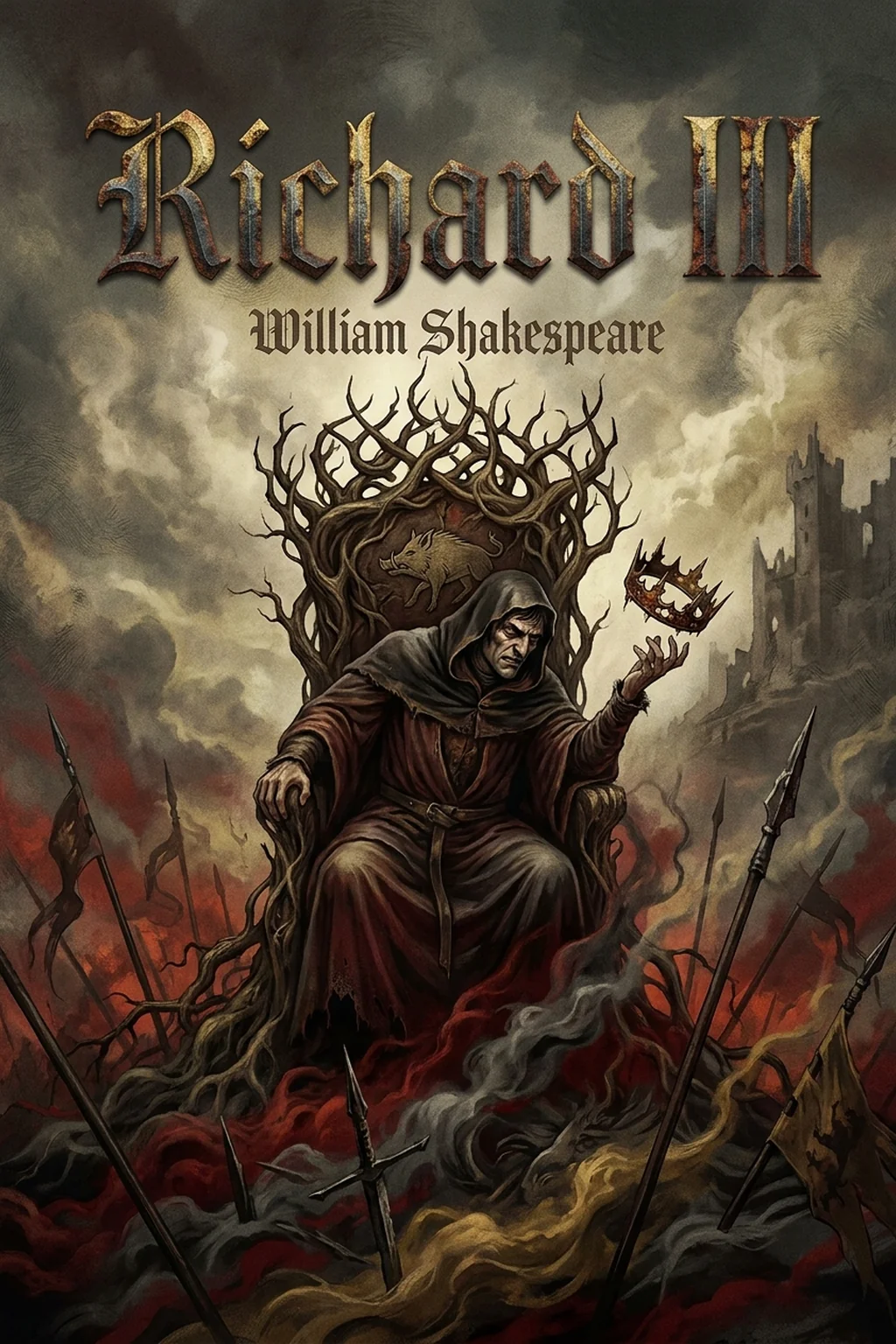
The play continues the history sequence after the Wars of the Roses and builds its action around Richard’s direct relationship with the audience. Its portrait of political villainy is powerful, but it also reflects the Tudor history tradition that shaped its view of the past.
Reading notes
- Notice how Richard uses private asides to recruit the audience into his plans.
- Track the women’s warnings and laments as a counter-history of the conflict.
- Consider how the final victory and its historical framing shape the play’s moral resolution.
Version note
Text source: the Standard Ebooks EPUB edition identified on this page. This site extracted the English text and retained the source edition’s chapter order. Public-domain status must be checked for the territory where the text will be distributed.