क्रिएटिव फ़ाइल
Most Iconic American Muscle Cars
Few things are as deeply embedded in American automotive culture as the muscle car. Built on a philosophy of raw power, V8 engines, and straight-line speed, these machines emerged from a generation eager for performance and freedom on the open road.
Finnian Ashford
निर्माता
फ़ाइल नोट
नीचे पूरा ट्यूटोरियल या लेख पढ़ें।
मॉड्यूल
डिजिटल कला
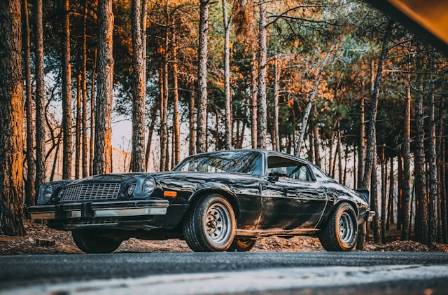
Few things are as deeply embedded in American automotive culture as the muscle car. Built on a philosophy of raw power, V8 engines, and straight-line speed, these machines emerged from a generation eager for performance and freedom on the open road.
Today, classic muscle cars are highly sought after, often commanding impressive prices at auctions and among collectors. While many models could claim legendary status, only a select few have truly shaped the history of American performance cars.
Below are some of the most iconic muscle cars ever produced. This list is not exhaustive, but it provides a strong introduction to the world of high-horsepower American legends.
Ford Mustang
The Ford Mustang is one of the most recognizable names in automotive history. First introduced in 1964, it has remained in continuous production and has defined the modern pony car segment.
Over the decades, Ford has released countless performance variants, including the Shelby GT350, GT500, Mach 1, Boss editions, Cobra models, and Bullitt-inspired versions. Each generation has added new interpretations of performance and style.
Modern Mustangs offer a range of engines from efficient four-cylinders to powerful V8s. Known for balancing performance and everyday usability, the Mustang remains one of the most influential American sports cars ever built.
Chevrolet Camaro
Launched in 1966, the Chevrolet Camaro was developed as Ford’s direct rival to the Mustang. It quickly established itself as another cornerstone of the muscle car era.
Throughout its history, the Camaro has featured performance-focused trims such as the Z28, SS, and special dealer-built variants like the Yenko models. After a production break in the early 2000s, the Camaro returned with modern engineering and improved performance.
Although it has not undergone as many redesigns as some competitors, the Camaro continues to be praised for its sharp handling and strong chassis balance. High-performance versions like the ZL1 1LE highlight its track capability.
Chevrolet Corvette
The Chevrolet Corvette has been General Motors’ flagship sports car since the early 1950s. It has evolved dramatically over time, with the most significant change coming in 2020 when Chevrolet introduced a mid-engine layout for the C8 generation.
This shift transformed the Corvette into a true supercar competitor, delivering outstanding acceleration and handling. With variants such as the Z06 and ZR1, the Corvette now competes with some of the world’s most exotic performance vehicles.
A C8 Corvette can reach 60 mph in under three seconds, demonstrating just how far the model has come from its early roots.
Dodge Challenger
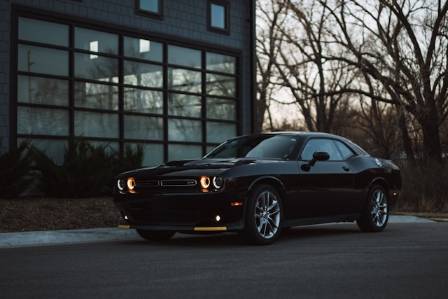
The Dodge Challenger is one of the last remaining true representatives of classic American muscle philosophy. Originally produced in the 1970s, it returned in 2008 after a long hiatus and embraced modern performance while retaining its retro identity.
Today’s Challenger lineup includes extremely powerful engines capable of producing well over 800 horsepower. Dodge has focused heavily on straight-line performance, making the Challenger a dominant force in drag racing culture.
Despite its aging platform, continuous updates have kept it relevant in the modern performance car landscape.
Dodge Charger
Originally introduced in the 1960s as a coupe, the Dodge Charger returned in 2006 as a full-size four-door performance sedan. This modern version combines practicality with serious horsepower.
It shares much of its mechanical DNA with the Challenger and is capable of delivering supercar-level acceleration in certain trims. The Charger has become one of the fastest production sedans available.
Rumors of future electrified versions suggest the nameplate will continue evolving in the coming years.
Pontiac GTO
The Pontiac GTO is widely credited as one of the cars that started the muscle car movement in the 1960s. Initially offered as an option package, it later became a standalone performance model.
Equipped with large V8 engines and aggressive styling, the GTO became a symbol of American performance during its golden era. Although it was briefly revived in the 2000s, it never regained its original impact.
Today, classic GTO models remain highly respected among collectors.
Plymouth Road Runner
The Plymouth Road Runner became famous for its simplicity, affordability, and raw power. Named after the popular cartoon character, it quickly became one of the most recognizable muscle cars of its time.
One of its most famous derivatives, the Superbird, gained legendary status through NASCAR racing and is now among the most valuable American collector cars.
Although later versions became heavier and less performance-focused, early models remain highly desirable.
Oldsmobile 442
The Oldsmobile 442 began as a performance package based on the Cutlass platform. Its name originally referred to its 400 cubic-inch engine, four-barrel carburetor, and dual exhaust system.
Over time, it evolved into a full model line, representing Oldsmobile’s performance identity. Early versions are especially valued due to their stronger engines and less restrictive emissions regulations.
Special editions like the Hurst 442 are particularly sought after by collectors today.
Buick GNX
The Buick GNX is a rare performance model developed in collaboration with McLaren. Produced for only one year, it became one of the fastest American cars of its time.
Despite conservative styling, it delivered impressive performance numbers that rivaled much more exotic vehicles. With limited production and strong acceleration, it remains highly collectible.
Its predecessor, the Grand National, also continues to be popular among enthusiasts.
AMC AMX
The AMC AMX was a unique two-seat muscle car produced in the late 1960s. It stood out for its compact design and strong performance relative to its size.
Powered by large V8 engines and equipped with advanced features for its era, the AMX offered a distinctive alternative in the muscle car market.
Due to limited production numbers and performance-focused options like the Go Package, it has become increasingly rare and collectible.
Conclusion
American muscle cars represent a defining chapter in automotive history. Built around power, attitude, and accessibility, they continue to symbolize freedom and performance.
From the Mustang and Camaro to rare icons like the GNX and AMX, these vehicles remain deeply influential. Today, they are not just cars but cultural artifacts that continue to inspire enthusiasts and collectors around the world.
संबंधित फ़ाइलें

पेस्टल रंगों से यथार्थवादी पशु फर बनाना सीखें: एक व्यापक मार्गदर्शिका
AUTH: शुभ्रांशु झिल्ला

30 Essential Tips for First-Time Skiers
AUTH: Simon Walsh

8 सबसे प्रसिद्ध फूल कलाकृतियाँ
AUTH: ज़रा

किसी भी अवसर के लिए सरल चीनी स्टिर-फ्राई रेसिपी
AUTH: देबाशीष घोष

ब्रेकफ़ास्ट ब्रेड की तीन रेसिपी
AUTH: तन्वी

Cattle Egret (Bubulcus ibis): The Globally Expanding Commensal Heron
AUTH: Stella