क्रिएटिव फ़ाइल
The world's most famous deserts
When people hear the word “desert,” they often picture endless seas of sand, towering dunes rising hundreds of meters high, sweeping winds crossing barren landscapes, and golden sands glowing beneath the sun before disappearing into the darkness of night. These vast regions seem far removed from human civilization and represent some of the most extraordinary natural scenery on Earth.
Evelyn Westbrook
निर्माता
फ़ाइल नोट
नीचे पूरा ट्यूटोरियल या लेख पढ़ें।
मॉड्यूल
डिजिटल कला
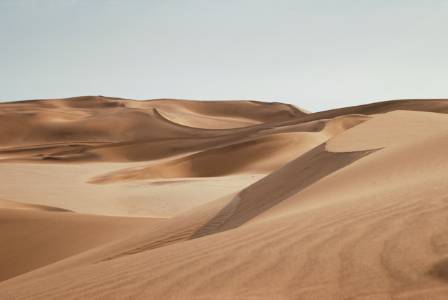
When people hear the word “desert,” they often picture endless seas of sand, towering dunes rising hundreds of meters high, sweeping winds crossing barren landscapes, and golden sands glowing beneath the sun before disappearing into the darkness of night. These vast regions seem far removed from human civilization and represent some of the most extraordinary natural scenery on Earth.
However, deserts are far more than endless stretches of sand. They are unique ecosystems with their own plants, wildlife, geological wonders, and even human communities.
Hidden Wonders and Mysteries of the Desert
Many deserts contain colorful mountains whose shades are created by different minerals and elements within the rocks.
Black mountains often contain large amounts of dark stones and valuable minerals. Red mountains usually gain their color from iron deposits, while white formations may be rich in pure silica or quartz. These landscapes reveal that even the most seemingly lifeless places on Earth can hold incredible natural treasures.
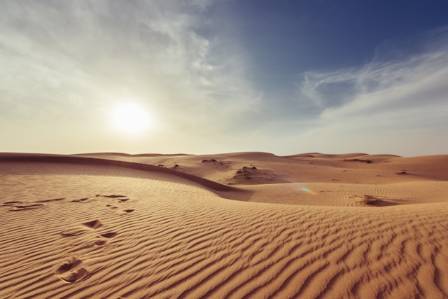
One of the most spectacular desert moments is sunset. When the sun sinks toward the horizon, the sands can transform into waves of yellow, orange, and crimson colors. Because the horizon is so open, the sunset appears to happen extremely quickly. As darkness arrives, the desert sky becomes filled with countless stars that seem unusually close and clear.
Antarctica: The Largest Desert on Earth
Many people assume the world’s largest desert must be the Sahara, but the answer is actually Antarctica.
A desert is defined not by temperature but by dryness. Any region receiving less than 250 millimeters of precipitation each year and losing more water through evaporation than it gains from rainfall can be classified as a desert.
By this definition, Antarctica is the largest desert on the planet. It covers approximately 13.8 million square kilometers and receives only about 51 millimeters of precipitation annually. The region is known for extreme weather conditions, including powerful storms with winds reaching up to 320 kilometers per hour.
The Sahara: The Largest Hot Desert
Located in northern Africa, the Sahara is the biggest hot desert in the world. It covers around 8.6 million square kilometers, stretching approximately 4,800 kilometers from west to east and up to 1,200 kilometers from north to south. Its area is comparable to the size of Brazil and occupies nearly one-third of Africa.
Apart from small sections of the Niger and Nile Rivers, the Sahara has very few permanent waterways. The desert receives only around 50 millimeters of rain each year and is dominated by vast sandy landscapes.
Among the Sahara’s most famous sand regions is Erg Chebbi in southeastern Morocco. This area contains impressive dunes extending about 22 kilometers from north to south and 5 kilometers from east to west. Some dunes rise as high as 150 meters, attracting travelers from around the world. Tourism in the area expanded after roads were built around the dunes in the early 2000s.
The Sahara has fascinated people for thousands of years. Ancient Greek historian Herodotus wrote about its harsh environment, while Roman writer Pliny the Elder described rainfall as extremely rare and emphasized how carefully local communities preserved water.
Surprisingly, the Sahara was not always dry. Archaeological discoveries suggest that millions of years ago, the region contained rivers, lakes, and possibly even an ocean, with whale fossils discovered beneath its sands.
Guelb er Richât: The Eye of the Sahara
One of the greatest mysteries of the Sahara is Guelb er Richât, a giant circular geological formation about 50 kilometers wide that can even be seen from space.
Often called the “Eye of the Sahara,” this structure consists of several circular rings located inside one another. Some theories suggest that it may have been connected to the legendary lost city of Atlantis because its shape resembles descriptions recorded by the Greek philosopher Plato.
Another explanation proposes that the formation was created around 500 million years ago by a massive geological event, possibly involving a meteor impact. Scientists have discovered unusual minerals and glass-like materials in the area that support theories about its extraordinary origin.
The rocks surrounding Richât contain formations rarely found elsewhere on Earth, and some researchers believe they may have formed from ancient volcanic activity. Like much of the Sahara, this region remains one of the least explored places on the planet.
The Gobi: Asia’s Largest Desert
Stretching across northern China and southern Mongolia, the Gobi Desert is the largest desert in Asia. It extends for more than 1,600 kilometers and covers approximately 1.295 million square kilometers.
The Gobi is divided into several regions, including the Trans-Altai Gobi, Mongolian Gobi, Alashan Desert, Gashun Gobi, and Dzungaria.
Unlike the typical image of deserts covered entirely by sand, much of the Gobi consists of rocky terrain and gravel plains. Its climate is extremely harsh, with dramatic temperature changes between seasons. Winter temperatures can fall to around -55°C, while summer temperatures may rise above 50°C, creating an annual temperature difference of more than 100 degrees.
Khongoryn Els: The Singing Sands of the Gobi
Although the Gobi has fewer sand areas than many other deserts, it contains one of its most impressive dune systems: Khongoryn Els.
Known as the “Singing Sands,” this region features enormous dunes reaching heights of up to 300 meters. The sand stretches for about 150 kilometers in length and varies in color, appearing white, yellow, pink, blue, or red depending on the sunlight.
The name comes from the mysterious sounds produced when moving sand grains slide against each other, creating a phenomenon that resembles distant singing.
Yueyaquan Oasis in the Gobi Desert
Near Dunhuang in western China lies Yueyaquan, also known as Crescent Lake, a remarkable oasis surrounded by desert.
Located about 6 kilometers from the city, this crescent-shaped lake has been an important cultural site and is associated with ancient Buddhist heritage. After restoration work, the area became a protected cultural destination and gained popularity among visitors.
Travelers can explore the surrounding desert by camel or jeep and enjoy the unusual contrast between golden sands and the peaceful blue waters of the oasis.
Atacama: The Driest Desert on Earth
The Atacama Desert in South America is considered one of the driest places on the planet. Located along the Pacific coast of Chile and extending for about 1,000 kilometers, it covers approximately 105,000 square kilometers.
Some areas of the Atacama have experienced almost no rainfall for hundreds of years. According to some measurements, the region receives only about 101 millimeters of rain over a thousand-year period.
Because of its location between the Andes Mountains and the Pacific Ocean, the desert has extremely dry air and intense solar radiation. Many parts are completely uninhabited.
Despite the extreme conditions, life survives through coastal fog known as “camanchaca.” When the fog condenses, it provides small amounts of moisture that allow isolated plant communities, including cacti and ferns, to exist.
The Atacama is home to famous landscapes such as Moon Valley, Death Valley, and ALMA, one of the world’s most advanced astronomical observatories. Visitors often receive coca-based products such as tea and sweets to help adjust to the high altitude.
Namib: The World’s Oldest Desert
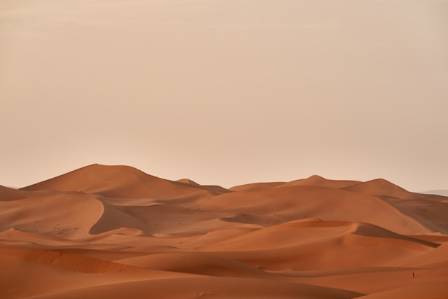
The Namib Desert, famous for its deep red sands, is believed to be the oldest desert on Earth. It has existed for approximately 80 million years, dating back to the era of dinosaurs.
Located along the southwestern coast of Africa, the Namib stretches for nearly 1,900 kilometers beside the Atlantic Ocean.
The desert is known for extreme heat, with sand temperatures reaching around 60°C. It also contains some of the highest dunes in the world, including massive formations rising 300 meters or more.
Dead Vlei: A Desert Landscape Frozen in Time
Deep inside the Namib Desert lies Dead Vlei, a famous clay pan surrounded by enormous orange sand dunes.
Around 900 years ago, shifting dunes blocked the river that once supplied water to this area. Without moisture, trees died and became preserved by the dry climate, leaving behind a striking landscape of blackened trunks standing against a bright white clay surface.
The contrast between dark trees, pale ground, and towering red dunes creates one of the most unforgettable desert scenes in the world.
Climbing the dunes at sunrise or sunset offers spectacular views as sunlight transforms the sand into shades of pink, gold, orange, and purple.
The Endless Beauty of Desert Landscapes
Our planet is filled with extraordinary natural wonders, and deserts are among the most remarkable. Their towering dunes, flowing sands, unusual rock formations, rare plants, and traces of wildlife create landscapes unlike anywhere else.
Standing in a desert, watching sand move like snow, observing waves carved by wind, and discovering life surviving in extreme conditions reveals the incredible power and beauty of nature.
Deserts are not empty wastelands. They are mysterious, beautiful worlds that deserve to be experienced not only through photographs and films but also with our own eyes.
संबंधित फ़ाइलें

जॉर्ज वॉशिंगटन ब्रिज के बारे में 12 लंबे समय तक चलने वाले फैक्ट्स
AUTH: शिवम्

The Definitive Guide to Men's T-Shirts: Style, Fit, and Fabric
AUTH: Cedric Langley

इतिहास की 10 सबसे रंगीन पेंटिंग
AUTH: आर्यन

10 रंग विकल्प जो छोटे कमरों को बड़ा दिखाएंगे
AUTH: कवि

आलूबुखारा और आलूबुखारा जूस के 10 बेहतरीन स्वास्थ्य लाभ
AUTH: हर्ष

Master the Art of Horological Coordination: A Guide for Every Setting
AUTH: Tristan Hollingsworth