क्रिएटिव फ़ाइल
How Intelligent Robots Master Complex Manufacturing Without Perfect Factory Conditions
Traditional industrial automation functions best inside highly structured environments. Factory components must arrive at exact physical coordinates constantly. Production lines must maintain fixed speeds throughout daily operations. Tasks must remain completely repetitive and predictable. Modern electronics manufacturing operates under entirely different real-world conditions. Short production runs, frequent product changes, component shortages, and changing delivery schedules make modern factories unpredictable. Advanced machine vision, three-dimensional modeling, and artificial intelligence help modern robots adapt to these challenging operating conditions.
Nathan Cooper
निर्माता
फ़ाइल नोट
नीचे पूरा ट्यूटोरियल या लेख पढ़ें।
मॉड्यूल
डिजिटल कला
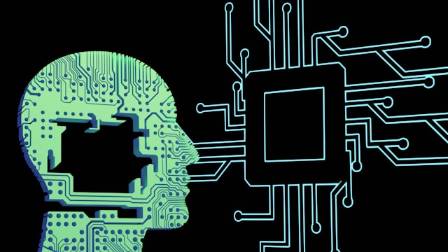
Traditional industrial automation functions best inside highly structured environments. Factory components must arrive at exact physical coordinates constantly. Production lines must maintain fixed speeds throughout daily operations. Tasks must remain completely repetitive and predictable. Modern electronics manufacturing operates under entirely different real-world conditions. Short production runs, frequent product changes, component shortages, and changing delivery schedules make modern factories unpredictable. Advanced machine vision, three-dimensional modeling, and artificial intelligence help modern robots adapt to these challenging operating conditions.
Why Traditional Factory Automation Calculations Fail on the Shop Floor
The historical approach to factory automation relied on a simple premise. Systems assumed a robot could easily replace any worker performing repetitive tasks. Electronics assembly proves far more complex in practical implementation. Replacing one physical operator often meant hiring an additional specialized engineer to supervise the robot. Financial projections initially showed lower labor expenses and rapid financial returns. Real factory floor conditions quickly disrupted those theoretical spreadsheet predictions. Production schedules varied, equipment required constant recalibration, and technical interventions occurred frequently. Operating costs remained high because specialized engineers were required to keep rigid machines running.
The Real Challenges of High Mix Low Volume Production
Electronics manufacturers frequently adopt high-mix low-volume production strategies. Facilities assemble numerous product variants in small individual batches. A factory might produce one circuit board design today and switch to a completely different device tomorrow. Rigid automated assembly lines struggle to handle these rapid production switches. Setting up custom tooling and reprogramming robots for small batches wastes valuable operational time. Unexpected supply chain delays force immediate changes to daily production sequences. Human workers adapt to unexpected changes intuitively by reorganizing physical components. Traditional automated machines lack that natural adaptability and stop working when conditions change unexpectedly.
Extreme Precision Demands in Electronics Manufacturing
Handling tiny electronic components requires exceptional physical accuracy. Large material handling robots can tolerate minor position errors without failing. Miniature electronic parts and circuit boards require exact alignment during assembly. A microscopic positioning error during automated testing can stop an entire assembly line. Misaligned testing sockets prevent circuit boards from connecting properly, triggering system errors immediately. Technicians then spend valuable time manually resetting the equipment and correcting software code. Modern intelligent robotics systems eliminate the need for rigid mechanical fixtures. Robots use visual sensing technology to scan surroundings and adjust physical movements dynamically.
Smart Visual Perception Before Physical Execution
Visual perception forms the foundation of modern intelligent automation. Robotic systems observe physical surroundings and evaluate incoming tasks before making physical movements. Advanced algorithms analyze visual data alongside three-dimensional spatial models. Robots evaluate object accessibility and choose optimal picking trajectories in real time. Smart vision systems check part positioning continuously when handling trays of electronic components. The robot selects the most accessible component first to minimize movement distance and avoid physical collisions. AI algorithms trained on standard electronic parts help robots handle unfamiliar component designs without requiring full reprogramming.
Integrated Quality Inspection Before Final Component Assembly
Sensors inspect physical component quality immediately after picking up parts. Optical systems verify pin alignment, check component orientation, and confirm part counts accurately. Damaged or defective components are flagged and separated before reaching the assembly stage. Modern automation approaches do not attempt to eliminate human operators completely. Rejected components transfer to human workers for manual inspection and physical adjustment. Aiming for seventy to eighty percent process automation represents a practical strategy for modern factories. Human experts continue managing complex edge cases and specialized quality decisions effectively.
Operating Efficiently Without Perfect Circuit Board Alignment
Intelligent robots can pick up unevenly arranged circuit boards with ease. Advanced vision systems identify exact spatial coordinates and rotation angles in real time. Algorithms process visual reference markers on the circuit board surface to determine precise position. Operators no longer need to align component carts or testing stations with sub-millimeter precision. Placing equipment within a general designated zone allows the visual system to locate exact coordinates automatically. Flexible software algorithms eliminate the requirement for a perfectly static factory environment.
Flexible Modular Robotics Across Dynamic Workstations
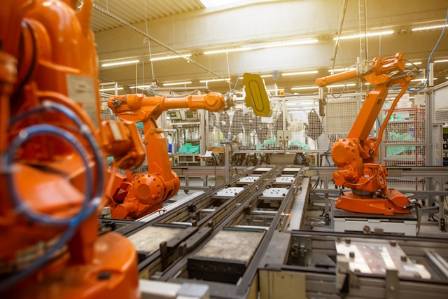
Modular system design provides essential operational flexibility for modern manufacturers. Traditional fixed production lines require massive capital investments and risk premature obsolescence when product demand shifts. Modular robots disconnect easily from one workstation and redeploy to different production tasks elsewhere. Human operators can take over primary manual assembly while the robot handles secondary tasks. Decoupling automation hardware from specific products creates a flexible resource that adjusts to active customer orders smoothly.
Securing Artificial Intelligence Data Within Internal Networks
Camera-equipped robots handle highly sensitive proprietary product designs on the factory floor. Early industrial AI systems relied heavily on external cloud processing services. Manufacturers strongly resist connecting optical factory floor equipment to public cloud networks due to cybersecurity risks. Modern intelligent robotics platforms utilize local physical servers installed directly inside the factory. Processing data locally within secure internal networks protects sensitive manufacturing intelligence while allowing system updates under controlled conditions.
Building Adaptive Robotic Systems for Imperfect Industrial Environments
Intelligent robotics gives machines the ability to adapt to natural real-world workplace imperfections. Pre-trained AI models handle the vast majority of standard electronic components effectively. Specialized edge cases receive additional targeted software training over time. Combining machine vision, spatial modeling, artificial intelligence, and modular hardware makes dynamic low-volume automation economically viable. Human workers collaborate alongside smart robots to supervise operations and resolve complex exceptions. Accepting real-world factory variations helps manufacturers maintain efficient local production capabilities.

संबंधित फ़ाइलें

समुद्री पक्षी क्या है?
AUTH: सोनाली

Beautiful and Intelligent Ways to Arrange a Children Bedroom That Parents and Kids Will Both Enjoy
AUTH: Austin Ryan Perry

Transforming Your Living Space with Harvest Gold Interior Tones
AUTH: Jonathan Michael Carter

The Guide to Planning Your Dream Beach Vacation
AUTH: Helena Winslet

How to Draw a Lotus Flower: A Step-by-Step Guide
AUTH: Sage Monroe

डिजिटल रूपांतरण: कृत्रिम बुद्धिमत्ता किस प्रकार दैनिक जीवन को बेहतर बना रही है
AUTH: रविंद्र गढ़वाल