← मुख्य पन्ना5 मिनट का पाठ
क्रिएटिव फ़ाइल
Mute Swan (Cygnus olor): A Comprehensive Fact File
The mute swan (Cygnus olor) is one of the most iconic and recognizable waterfowl, celebrated for its elegant white plumage, long curved neck, and gentle demeanor. Native to Europe and Asia, it has been introduced to continents worldwide, adapting to both natural wetlands and human-altered environments. Beyond its aesthetic appeal, this species boasts unique biological traits, from being one of the heaviest flying birds to its complex breeding behaviors. Below is a detailed overview of the mute swan’s key characteristics, lifestyle, and place in the natural world.
E
Evelyn
निर्माता
फ़ाइल नोट
नीचे पूरा ट्यूटोरियल या लेख पढ़ें।
मॉड्यूल
डिजिटल कला
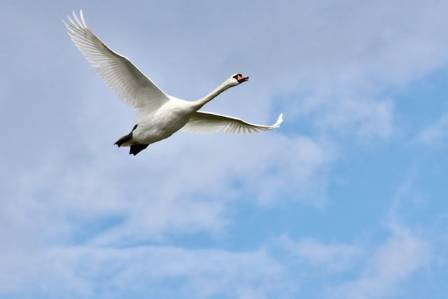
The mute swan (Cygnus olor) is one of the most iconic and recognizable waterfowl, celebrated for its elegant white plumage, long curved neck, and gentle demeanor. Native to Europe and Asia, it has been introduced to continents worldwide, adapting to both natural wetlands and human-altered environments. Beyond its aesthetic appeal, this species boasts unique biological traits, from being one of the heaviest flying birds to its complex breeding behaviors. Below is a detailed overview of the mute swan’s key characteristics, lifestyle, and place in the natural world.
Appearance: Elegant and Distinctive
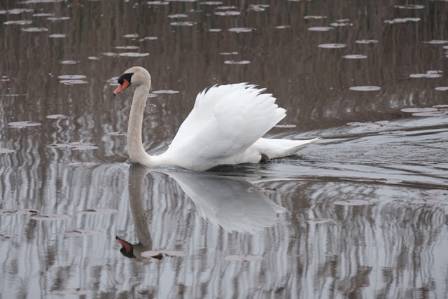
The mute swan’s most striking feature is its pure white plumage, covering nearly its entire body, with the only non-white detail being a small black knob on the forehead, positioned between its eye and orange beak. It has a large, rounded body and an elongated, gracefully curved neck—traits that contribute to its iconic silhouette. Adult males (cobs) have larger bills than females (pens), and both sexes possess black, webbed feet ideal for aquatic locomotion. As one of the heaviest flying birds globally, adults can weigh up to 12kg (26lbs), measure 1.5m (5ft) in length, and have a wingspan ranging from 2 to 2.5m (6.6 to 8.2ft), making their flight both impressive and powerful.
Diet: Herbivorous with Occasional Supplements
Classified primarily as a herbivore, the mute swan’s diet consists mostly of aquatic vegetation, algae, and grains, with small amounts of insects, frogs, and fish serving as supplements. Unlike diving waterfowl, it collects food by plunging its head underwater—never fully submerging—using its long neck to reach submerged plants. Interestingly, this feeding behavior benefits other habitat residents: by pulling aquatic vegetation to the surface, the swan makes food accessible to species unable to dive or reach deep-growing plants.
Key Statistics: Size, Lifespan, and Conservation Status
The mute swan’s conservation status is listed as “Least Concern” by the International Union for Conservation of Nature (IUCN), with populations currently increasing. Adults typically weigh up to 12kg (26lbs) and reach 1.5m (5ft) in length, with a wingspan of 2–2.5m (6.6–8.2ft). Their lifespan varies by environment: wild individuals live around 19 years, while captive swans can thrive for 30 to 40 years, benefiting from consistent food, protection from predators, and medical care.
Range: Native and Introduced Habitats
Native to Europe and Asia, the mute swan’s natural range spans numerous countries, from Afghanistan and Armenia to Japan, Russia, and the United Kingdom. It also inhabits parts of North Africa, including Egypt, Libya, and Morocco. Due to human introduction, established populations now exist in Australia, Canada, Iceland, New Zealand, South Africa, the United States, and the Faroe Islands. This widespread distribution is a testament to the species’ adaptability to diverse climates and ecosystems.
Habitat: Versatile Wetland Dwellers
Mute swans thrive in a variety of wetland habitats, including lakes, swamps, marshes, lagoons, and slow-moving rivers. They occasionally venture into brackish and coastal areas, though they prefer freshwater environments. With the expansion of human settlements, they have successfully adapted to artificial water bodies such as reservoirs, ornamental lakes, and canals. Additionally, they will graze in nearby fields, supplementing their aquatic diet with terrestrial vegetation.
Reproduction: Complex Courtship and Parental Care
Breeding season for mute swans begins in March and April. Contrary to the common myth of lifelong monogamy, they may have multiple partners throughout their lives. During breeding season, the black knob at the base of the male’s beak swells, signaling readiness to mate. Courtship involves the pair facing each other and turning their heads side to side in perfect unison—a graceful display of bonding. The pair constructs a large nest (up to 1m/3.3ft wide) at the water’s edge or on an island, using reeds, grass, and other vegetation. Females lay up to 12 pale blue-green eggs, which they incubate alone for 36–38 days; the male guards the nest while she feeds. Chicks (called cygnets) hatch with grey-brown down feathers, a grey beak, and no forehead knob. They leave the nest within 24 hours, often riding on the mother’s back for protection, and can fly within 60 days. Parents drive cygnets away at the start of the next breeding season, and the young reach full adult plumage in 2–3 years, becoming sexually mature at 3–4 years old.
Behavior: Graceful, Social, and Adaptive
In flight, mute swans can reach speeds of up to 88.5km/h (55mph), using their large wings to generate lift despite their substantial weight. Though named “mute,” they are not entirely silent: they hiss, grunt, and emit low trumpeting sounds, primarily to defend their nest or young. Mute swans are social birds, forming flocks of several thousand individuals in favorable habitats, especially during non-breeding seasons. Native populations are migratory, moving to warmer climates in winter, while introduced populations tend to be sedentary, remaining in one area year-round.
Predators and Threats: Natural Risks and Human Impact
Natural predators of mute swans primarily target eggs and cygnets, including raccoons and minks. Adult swans are rarely preyed upon unless ill or elderly. Human activities pose significant threats: hunting for sport, food, and the pet trade has impacted populations, though conservation efforts and the species’ adaptability have led to population growth. Despite these pressures, the IUCN’s “Least Concern” status reflects the mute swan’s resilience and stable global numbers.
Quick Facts: Fascinating Trivia
The mute swan is also commonly known as the white swan. Males are called “cobs,” females “pens,” and chicks “cygnets.” For centuries, they have symbolized love and fidelity, as pairs often form a heart shape with their necks and bodies when interacting. Additionally, Hans Christian Andersen’s fairytale “The Ugly Duckling” is based on the mute swan—depicting a cygnet mistaken for an ugly duckling until it matures into a graceful swan.
Conclusion: A Beloved and Resilient Species
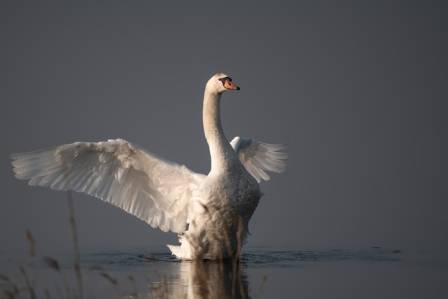
The mute swan’s elegance, adaptability, and cultural significance have made it a beloved species worldwide. From its role in wetland ecosystems to its presence in art, literature, and folklore, it holds a special place in human consciousness. As a “Least Concern” species with increasing populations, it serves as a testament to the success of conservation efforts and the importance of protecting wetland habitats. Whether gliding across a peaceful lake or raising its young, the mute swan remains a symbol of grace, resilience, and the beauty of the natural world.
संबंधित फ़ाइलें
// hi
घर पर बीच के पत्थरों को पॉलिश करने के 5 आसान स्टेप्स
AUTH: आशा
// en
A Dozen Depictions of Duck Discovery: Ten Unknown Realities
AUTH: Katie

// hi
प्रामाणिक वियतनामी पारंपरिक पोशाक चुनने के लिए एक व्यापक मार्गदर्शिका
AUTH: सुरजीत मान
// hi
मेगासिटीज़: ये धरती पर 10 सबसे बड़े शहरी समूह हैं
AUTH: चेतना

// hi
शनि ग्रह का अन्वेषण: वलययुक्त विशालकाय ग्रह और उसका विविध उपग्रह तंत्र
AUTH: काजल सचदेवा

// en
The Most Efficient Method for Dicing Bread for Stuffing
AUTH: Crow