Introduction
Building blocks have stood the test of time as a beloved staple in children’s toy collections across generations. Far more than just colourful pieces of wood, plastic, or foam, these simple yet infinitely versatile playthings serve as powerful catalysts for holistic child development. From nurturing cognitive prowess and refining physical dexterity to fostering social bonds and igniting creative sparks, block play offers a multifaceted learning experience that unfolds naturally through fun and exploration. In this comprehensive guide, we delve into the myriad ways building blocks contribute to every crucial aspect of a child’s growth journey, highlighting why this timeless toy remains an indispensable tool for parents and educators alike.
Cognitive Development: Laying the Foundation for Critical Thinking
Enhances Problem-Solving Skills
One of the most profound benefits of playing with building blocks lies in its ability to sharpen children’s problem-solving abilities. As kids experiment with fitting blocks together, balancing intricate structures, and troubleshooting collapses, they engage in a constant process of trial and error that hones critical thinking and logical reasoning. Whether they are figuring out how to support a tall tower without it toppling over or designing a stable base for a make-believe castle, each challenge pushes them to analyze situations, evaluate options, and adjust their strategies. This hands-on problem-solving practice is invaluable, as it teaches children to approach obstacles with curiosity and resilience rather than frustration, laying the groundwork for effective decision-making skills that will serve them well in academic and real-world scenarios.
Boosts Spatial Awareness
Building blocks are also exceptional tools for developing spatial awareness—a fundamental cognitive skill that underpins success in subjects like mathematics, engineering, architecture, and even art. When children manipulate blocks of varying shapes, sizes, and dimensions, they learn to visualize spatial relationships, understand concepts like symmetry, proportion, and balance, and grasp how objects interact in three-dimensional space. For instance, arranging rectangular blocks to form a bridge requires them to consider weight distribution and structural stability, while stacking triangular pieces to create a roof helps them comprehend how angles and shapes fit together to form a cohesive whole. This early exposure to spatial thinking not only enhances their academic readiness but also improves their ability to navigate and make sense of the physical world around them.
Encourages Early Math Skills
Block play serves as a playful gateway to foundational mathematical concepts, introducing children to counting, sorting, measuring, and pattern recognition long before they step foot in a formal classroom. As kids stack blocks one by one, they naturally practice counting and develop an understanding of numerical order. Grouping blocks by colour, shape, or size helps them grasp the concept of classification, while comparing block lengths or heights introduces basic measurement skills. Moreover, arranging blocks in repeating sequences—such as a red block followed by a blue block, then another red block—fosters pattern recognition, a key skill for understanding more complex mathematical concepts like algebra later in life. These informal math lessons, embedded within the joy of play, make learning feel effortless and engaging, nurturing a positive attitude toward mathematics from an early age.
Physical Development: Refining Motor Skills and Coordination
Develops Fine Motor Skills
Grasping, stacking, arranging, and manipulating building blocks is a fantastic way for children to refine their fine motor skills—the small, precise movements of the hands and fingers that are essential for everyday tasks. As little hands pick up tiny LEGO bricks, stack wooden cubes, or snap together magnetic tiles, they strengthen the muscles in their fingers, wrists, and hands, improving dexterity and control. These skills are critical for a wide range of activities, from writing with a pencil and buttoning a shirt to using scissors and tying shoelaces. For toddlers, in particular, block play provides a low-pressure, enjoyable way to practice these essential motor skills, helping them gain the confidence and control they need to tackle more complex tasks as they grow older.
Improves Hand-Eye Coordination
Placing a single block on top of another may seem like a simple task, but it requires a high degree of hand-eye coordination—the ability to synchronize visual perception with hand movements. As children repeatedly aim, adjust, and place blocks to build their creations, they refine this vital skill, enhancing their ability to control and direct their movements with precision. This improved hand-eye coordination translates to success in a variety of other activities, including sports like throwing and catching a ball, drawing and colouring, and even using digital devices like tablets and computers. Over time, the repetitive practice of block play helps children develop a level of coordination that allows them to perform tasks more efficiently and confidently, supporting their overall physical development.
Social and Emotional Development: Cultivating Connection and Resilience
Encourages Cooperative Play
Building blocks are inherently social toys that encourage children to engage in cooperative play—a key component of healthy social development. When kids play with blocks in groups, whether with siblings, friends, or classmates, they learn essential social skills like sharing, taking turns, communicating ideas, and working together toward a common goal. For example, a group of children building a “block city” might assign roles: one child constructs roads, another builds houses, and a third designs a park. This collaborative process requires them to listen to each other’s ideas, compromise when disagreements arise, and celebrate shared successes. These interactions not only strengthen their communication and teamwork skills but also help them develop empathy, as they learn to consider the perspectives and needs of others.
Builds Patience and Perseverance
Constructing elaborate block structures—whether a towering skyscraper, a sprawling castle, or a complex spaceship—requires a great deal of patience and perseverance. Children often face setbacks during the building process: a tower may collapse halfway through construction, a carefully placed block may slide out of place, or a design may not turn out as planned. In these moments, they learn to manage frustration, regulate their emotions, and try again with a new strategy. This process of trial and error teaches them resilience—the ability to bounce back from failure—and determination, as they discover that persistence often leads to success. Over time, these experiences help children develop a growth mindset, believing that their abilities can be improved through effort and practice, a trait that will serve them well in all areas of life.
Enhances Creativity and Imagination
Building blocks are a blank canvas for children’s creativity and imagination, offering endless possibilities for open-ended play. Unlike toys with fixed functions, blocks can be transformed into virtually anything a child can dream up—a castle for a princess, a rocket ship for an astronaut, a farm for animals, or even a fantastical creature from a storybook. This type of unstructured play encourages children to think outside the box, experiment with new ideas, and express themselves freely. As they build and reimagine their creations, they develop original thinking skills and artistic sensibilities, learning to turn abstract ideas into tangible structures. This creative exploration not only fuels their imagination but also boosts their self-esteem, as they take pride in bringing their unique visions to life.
Language and Communication Skills: Expanding Vocabulary and Expression
Expands Vocabulary
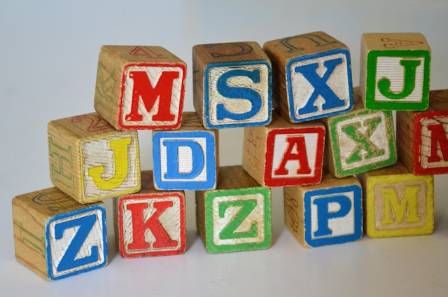
Block play provides a rich context for children to expand their vocabulary and develop language skills. As they describe their creations to parents, caregivers, or peers, they naturally use words related to shapes (circle, square, triangle), colours (red, blue, green), sizes (big, small, tall, short), and spatial relationships (on top of, next to, under, beside). For example, a child might say, “I built a tall tower with a triangular roof and a square base!” or “My block house has a door next to the window.” Parents and educators can further enhance this learning experience by engaging children in conversations about their structures, asking open-ended questions like “How did you get the tower to stay up?” or “What will you build next?” These interactions not only help children learn new words but also improve their ability to articulate their thoughts and ideas clearly.
Improves Storytelling Abilities
Building blocks also serve as a springboard for storytelling, helping children develop narrative skills and organize their thoughts in a logical sequence. After constructing a block structure, children often invent stories about the people, animals, or creatures that inhabit it. For instance, a child who builds a block town might create a tale about a group of friends who go on an adventure through the town’s streets, visit the park, and solve a mystery at the local bakery. As they weave these stories, they practice setting a scene, developing characters, and creating a beginning, middle, and end—all essential components of effective storytelling. This type of imaginative play not only enhances their language skills but also fosters creativity and critical thinking, as they learn to connect ideas and create coherent narratives.
Emotional and Psychological Benefits: Nurturing Well-Being and Confidence
Reduces Stress and Anxiety
In today’s fast-paced world, children can experience stress and anxiety just like adults, and block play offers a calming, therapeutic outlet for these emotions. The focused, hands-on nature of building with blocks helps children stay present in the moment, diverting their attention from worries or distractions and allowing them to enter a state of flow—a feeling of complete immersion in an enjoyable activity. As they concentrate on stacking blocks or designing a structure, their minds quiet down, and feelings of stress and anxiety fade away. Additionally, completing a block creation gives children a sense of accomplishment, boosting their self-confidence and self-esteem. This positive reinforcement helps them develop a healthy sense of self-worth, making them more resilient in the face of challenges.
Encourages Independence
Building blocks are ideal for promoting independent play, which is crucial for fostering self-reliance and decision-making skills in children. When kids play with blocks on their own, they have the freedom to explore at their own pace, make their own choices, and follow their curiosity wherever it leads. They can experiment with different building techniques, try out wild and wacky ideas, and learn from their mistakes without the pressure of pleasing others. This independent play helps children develop a sense of autonomy, teaching them to trust their own judgment and take responsibility for their actions. Over time, this confidence in their abilities translates to other areas of their lives, helping them become more self-assured and independent individuals.
How Parents Can Encourage and Enhance Block Play
Provide a Variety of Blocks
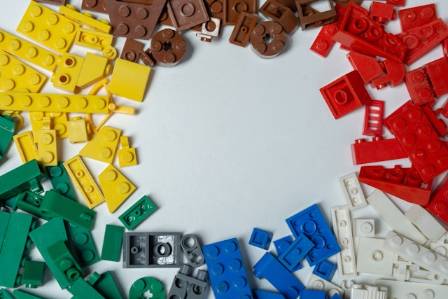
To keep children engaged and maximize the developmental benefits of block play, parents should offer a diverse range of block types. Wooden blocks are perfect for classic stacking and building, helping children develop a sense of weight and balance. LEGO bricks and DUPLO sets allow for more intricate, interlocking designs, fostering creativity and fine motor skills. Magnetic tiles and panels offer a unique twist, as children can create structures that stick together without the need for stacking, introducing them to concepts like magnetism and geometry. By rotating different types of blocks, parents can keep playtime fresh and exciting, encouraging children to explore new building techniques and expand their creative horizons.
Create Challenges and Themes
Introducing challenges and themed activities can take block play to the next level, making it more engaging and educational. Parents can set simple challenges, such as “Build a bridge that can hold a toy car” or “Create a tower taller than your teddy bear,” which encourage children to think critically and problem-solve. Themed play—like building a farm, a space station, or a medieval castle—can spark children’s imagination and make playtime more immersive. For example, a “farm theme” might involve building barns, fences, and animal enclosures, while a “space theme” could include rockets, planets, and space stations. These challenges and themes not only make block play more fun but also help children apply the skills they’ve learned in new and exciting ways.
Join in the Play
One of the best ways parents can enhance their child’s block play experience is by joining in the fun. Playing alongside children allows parents to model new building techniques, introduce new vocabulary, and ask thought-provoking questions that stimulate cognitive development. For example, a parent might say, “What if we use these triangular blocks to make the roof steeper?” or “How can we make this tower more stable?” These interactions not only strengthen the parent-child bond but also provide children with valuable guidance and feedback. Additionally, playing together as a family turns block play into a social activity, fostering communication and teamwork skills while creating lasting memories.
Conclusion
Building blocks are far more than just toys—they are powerful educational tools that support every aspect of a child’s holistic development. From sharpening cognitive skills and refining physical coordination to nurturing social-emotional well-being and igniting creative expression, block play offers a wealth of benefits that unfold naturally through fun and exploration. By providing children with access to a variety of blocks, creating engaging challenges, and joining in their play, parents and educators can unlock the full potential of this timeless toy. So the next time you see a child stacking blocks, remember that they are not just playing—they are building the essential skills, confidence, and resilience they need to thrive in the future.