क्रिएटिव फ़ाइल
Fascinating facts about giant pandas
As one of the world’s leading organizations dedicated to wildlife protection and animal welfare, IFAW works to safeguard endangered species across the planet.
Madison Brooks
निर्माता
फ़ाइल नोट
नीचे पूरा ट्यूटोरियल या लेख पढ़ें।
मॉड्यूल
डिजिटल कला
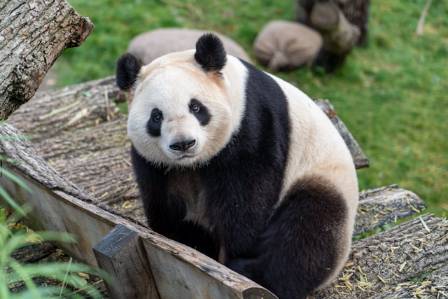
As one of the world’s leading organizations dedicated to wildlife protection and animal welfare, IFAW works to safeguard endangered species across the planet.
Among threatened animals, few have experienced a more inspiring recovery story than the giant panda. Once facing the possibility of extinction, this beloved species has benefited from decades of conservation work. In 2016, giant pandas were officially moved from the endangered category to vulnerable status after wild populations showed signs of recovery.
Understanding more about giant pandas helps us appreciate their unique biology, their importance in nature, and why continued conservation remains essential.
Giant Pandas Have Remarkable Natural Camouflage
The famous black-and-white appearance of giant pandas may seem like it would make them easy to spot, but their coloring actually helps them hide in their environment.
Although their fur does not perfectly match the forest around them when viewed up close, from a distance of about 50 meters their shape becomes difficult for predators to recognize among trees and vegetation.
Their unusual coloring is an evolutionary balance that works across different seasons. The white areas of their fur help them blend into snowy landscapes during winter, while their dark ears, eyes, and limbs help them disappear into shadows in brighter conditions.
Are Giant Pandas Really Bears?
Scientifically, giant pandas are members of the bear family, but their classification was debated for many years.
Because pandas have a completely different diet from most bears and survive almost entirely on bamboo, early researchers believed they might be more closely related to raccoons or red pandas.
However, genetic studies conducted in the 1990s confirmed that giant pandas belong to the Ursidae family and are true bears.
Two features make pandas especially different from other bears: their plant-based diet and their specialized thumb-like structure that helps them hold bamboo stalks.
Giant Pandas Have Cat-Like Eyes
Although cats and giant pandas appear very different, they share one surprising feature: their eyes.
Like cats, giant pandas have vertically shaped pupils. In China, one traditional name for pandas, “daxiongmao,” translates roughly to “giant cat bear.”
Their unusual eyes also provide excellent low-light vision, which helps them search for food during darker hours.
How Giant Pandas Got Their Name
The scientific name of the giant panda, Ailuropoda melanoleuca, means “black and white cat-foot.”
The common name “giant panda” developed because early observers noticed similarities between pandas and red pandas, including their bamboo-based diets and similar paw structures.
Scientists once believed the two animals were closely related, but later genetic research showed that they belong to separate evolutionary groups. Despite this discovery, the name remained.
Giant Pandas Are Skilled Climbers and Swimmers
Despite their large bodies and slow-looking movements, giant pandas are surprisingly capable athletes.
They can climb mountains to elevations of around 3.9 kilometers (13,000 feet), especially during warmer months when they move higher into bamboo forests where temperatures are cooler.
Pandas use their strong claws and body strength to climb trees by gripping the trunk and pulling themselves upward.
They are also good swimmers. When threatened, pandas may use rivers and streams as escape routes. Although they do not usually dive underwater, they enjoy spending time in cool water, especially after winter snow begins melting.
Bamboo Makes Up Almost Their Entire Diet
Most bear species are omnivores and eat a wide range of foods, including plants, insects, fish, and mammals. Giant pandas, however, are highly specialized feeders.
Around three million years ago, pandas evolved to depend almost completely on bamboo. Today, approximately 99% of their diet consists of bamboo leaves and shoots.
Occasionally, they may eat other foods such as pumpkins, beans, wheat, insects, or small animals, but these make up only a tiny part of their diet.
Pandas Have Special Adaptations for Eating Bamboo
Because bamboo is tough and low in nutrients, giant pandas have developed several adaptations to survive on this challenging food source.
Their wrist bones have evolved into a thumb-like extension called a pseudo-thumb. This extra structure works like an additional finger, allowing pandas to grip bamboo stems and break them apart.
They also have powerful jaws and large molars designed for crushing and grinding fibrous plant material.
Pandas also have a stronger ability to detect bitter tastes compared with many other bears. This helps them recognize potentially harmful substances such as cyanide, nicotine, and ricin that have bitter flavors.
Pandas Spend Much of Their Day Eating
Giant pandas can spend up to 16 hours each day feeding on bamboo.
Their digestive systems are still similar to those of meat-eating bears, meaning they are not highly efficient at processing plants. Since bamboo provides limited nutrients, pandas must consume large amounts to meet their energy needs.
A single panda may eat around 12 kilograms (26.4 pounds) of bamboo every day.

When Pandas Are Not Eating, They Are Usually Sleeping
Pandas mainly focus their daily activities around two things: eating and resting.
Unlike humans, they do not usually sleep for one long period. Instead, they take several naps throughout the day and night, often lasting two to four hours.
A typical 24-hour period includes around 12 to 16 hours of eating and another 8 to 12 hours of sleeping. During hot summer months, pandas may rest even longer.
They usually sleep lying on their backs or curled up on their sides.
Giant Pandas Produce a Lot of Waste
Because pandas consume such large amounts of bamboo, they also produce waste frequently.
A giant panda may defecate around 100 times per day. Their bodies can digest only a small portion of the bamboo they eat, with much of the plant material passing through as waste.
Since pandas continue producing droppings even while resting, researchers can sometimes estimate how long a panda has been sleeping by examining the amount of waste nearby.
Giant Pandas Do Not Hibernate
Although many bear species hibernate during winter, giant pandas do not.
Most meat-eating bears can gain enough energy from their food reserves to survive months without eating. Pandas, however, receive far fewer calories from bamboo, making long-term hibernation impossible.
Instead, when temperatures drop, pandas move to lower elevations where the climate is milder and food remains available.
Giant Pandas Are Powerful Cultural Symbols
Giant pandas have become important symbols of China and have been connected with Chinese culture for centuries.
They appear in traditional art, stories, and mythology, often representing peacefulness, strength, and kindness.
China’s practice of sharing pandas with other countries, known as panda diplomacy, has been used to strengthen international relationships. This tradition began more than 1,000 years ago during the Tang Dynasty when Empress Wu Zetian sent pandas to Japan.
Today, instead of permanently gifting pandas, China typically loans captive-bred pandas to foreign zoos to support conservation education, research, and funding.
Giant Pandas Are Considered Living Fossils
Giant pandas are among the few animals described as “living fossils” because they have changed very little over millions of years.
The biggest difference between ancient pandas and modern ones is their size. Early pandas were only about one meter long, while today’s giant pandas can grow up to 1.9 meters in length.
Fossils discovered in the 2000s revealed that ancient pandas had very similar bones, teeth, and skull structures compared with modern pandas.
Giant Pandas Are No Longer Classified as Endangered
Conservation efforts have helped giant pandas recover from the edge of extinction.
In 2016, the International Union for Conservation of Nature (IUCN) changed their status from endangered to vulnerable after decades of habitat protection, anti-poaching measures, and breeding programs.
China has created more than 60 panda reserves, while forest restoration projects have expanded bamboo habitats.
Today, there are estimated to be around 500 to 1,000 mature giant pandas living in the wild, along with several hundred individuals in captivity.
Although their population is improving, giant pandas still face challenges, especially from climate change and habitat loss. Continued conservation work remains necessary.
Giant Pandas Help Maintain Healthy Ecosystems
Giant pandas are considered a keystone species because they play an important role in maintaining the balance of their environment.
By moving through forests, pandas carry plant seeds in their fur and spread them to new locations, helping vegetation grow and supporting biodiversity.
Their feeding habits also influence bamboo forest growth. By consuming large amounts of bamboo, pandas help prevent forests from becoming overcrowded and unsuitable for other species.
Their droppings provide natural fertilizer that enriches the soil and supports plant life.
Protecting giant pandas means protecting the wider ecosystem they are part of. Their recovery demonstrates that dedicated conservation efforts can create meaningful change for wildlife around the world.

संबंधित फ़ाइलें

यूरोप में उत्तरी लाइट्स देखने के लिए 6 स्थान
AUTH: मानस

A Comprehensive Guide to Vibrant Home Decor: Exploring the Dynamics of Colors in Interior Design
AUTH: Ethan Ryder

दुनिया की 10 सबसे बेहतरीन केबल कार राइड
AUTH: अभय

Japanese Soufflé Pancakes
AUTH: Kieran Drake

A Guide to Identifying the Perfect Winter Outerwear
AUTH: Henry Lucas Bennett

8 Creative and Unexpected Uses for Orange Juice in Your Kitchen
AUTH: Connor