क्रिएटिव फ़ाइल
Everything you need to know about the Moon
The night sky is filled with remarkable celestial objects, but few capture our attention quite like the Moon. Its soft glow has inspired legends, guided travelers, and sparked scientific curiosity for thousands of years. As Earth’s nearest cosmic neighbor, the Moon continues to provide valuable clues about the history of our planet and the evolution of the solar system.
Tristan West
निर्माता
फ़ाइल नोट
नीचे पूरा ट्यूटोरियल या लेख पढ़ें।
मॉड्यूल
डिजिटल कला
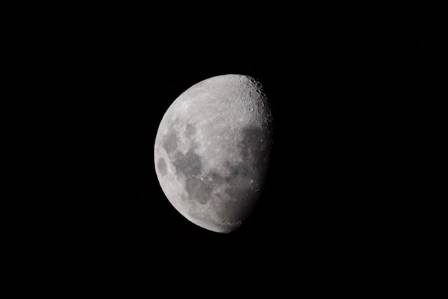
The night sky is filled with remarkable celestial objects, but few capture our attention quite like the Moon. Its soft glow has inspired legends, guided travelers, and sparked scientific curiosity for thousands of years. As Earth’s nearest cosmic neighbor, the Moon continues to provide valuable clues about the history of our planet and the evolution of the solar system.
Let’s take a closer look at the Moon’s size, composition, distance from Earth, and the reason its appearance changes throughout the month.
How Large Is the Moon?
The Moon is Earth’s only permanent natural satellite and ranks as the fifth-largest moon in the solar system. It measures approximately 2,159 miles (3,475 kilometers) in diameter, making it about one-quarter the size of Earth, which has a diameter of roughly 7,918 miles (12,742 kilometers).
Although much smaller than our planet, the Moon is still enormous. Its total surface area is nearly equal to the combined land area of North America and South America. This makes it a substantial world in its own right rather than merely a small object orbiting Earth.
What Is the Moon Made Of?
The Moon is composed of several layers. Its outer crust consists mainly of rocky materials containing oxygen, silicon, magnesium, iron, calcium, and aluminum, along with smaller amounts of elements such as titanium, potassium, and uranium.
Beneath the crust lies the mantle, which contains minerals including olivine and pyroxene. At the center is a relatively small iron-rich core. Unlike Earth’s molten outer core, the Moon’s core appears to be largely solid, which helps explain the absence of a strong global magnetic field.
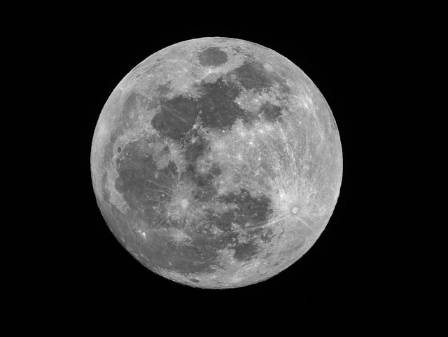
The lunar landscape is dominated by rugged highlands and vast dark plains called maria. These maria formed billions of years ago when giant impacts fractured the Moon’s crust, allowing molten material from the interior to flow across the surface and eventually cool.
The entire Moon is covered by a layer of fine dust and fragmented rock known as regolith. This material was created through billions of years of impacts from meteorites and micrometeorites.
Scientists have also discovered deposits of water ice within permanently shadowed craters near the Moon’s south pole. These frozen reserves are of great interest because they could support future human exploration and long-term lunar settlements. This is one of the major reasons NASA’s Artemis missions are focusing on the lunar south polar region.
How Far Away Is the Moon?
The average distance between Earth and the Moon is about 238,855 miles (384,400 kilometers). However, the Moon’s orbit is not perfectly circular, so this distance changes throughout the month.
At perigee, the point where the Moon is closest to Earth, the distance is approximately 225,623 miles (363,300 kilometers). At apogee, when the Moon reaches its farthest point, it is around 251,968 miles (405,500 kilometers) away.
These changes in distance are responsible for the phenomenon known as a supermoon. A supermoon occurs when a Full Moon coincides with perigee, causing the Moon to appear slightly larger and brighter than usual. While the difference is visible, it is relatively subtle, with a supermoon appearing only about seven percent larger than an average Full Moon.
Why Does the Moon Change Shape?
One of the Moon’s most recognizable features is its changing appearance, known as the lunar phases. These phases occur because of the changing positions of the Sun, Earth, and Moon as the Moon travels around our planet.
A complete cycle of phases takes approximately 29.5 days.
New Moon
During the New Moon phase, the Moon is positioned between Earth and the Sun. The side facing Earth receives no direct sunlight, making it appear invisible in the sky. Solar eclipses can only occur during this phase.
Waxing Crescent
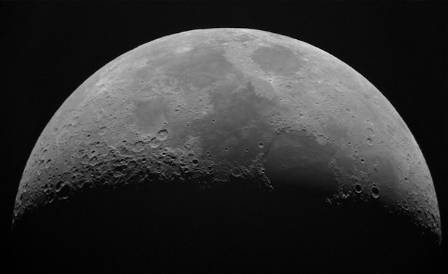
After the New Moon, a thin crescent of illuminated surface becomes visible. This bright portion gradually increases each night as more sunlight reflects toward Earth.
First Quarter
At this stage, half of the Moon’s Earth-facing side is illuminated. The Moon appears as a half-circle in the sky.
Waxing Gibbous
More than half of the visible surface is now lit. The illuminated area continues to expand as the Moon approaches Full Moon.
Full Moon
When Earth lies between the Sun and the Moon, the entire side facing Earth becomes illuminated. The Full Moon is the brightest lunar phase, and lunar eclipses can only occur during this time.
Waning Gibbous
Immediately after Full Moon, the illuminated portion begins to shrink. The Moon remains mostly bright but gradually loses visible surface illumination each night.
Last Quarter
Once again, half of the Moon’s visible side is illuminated. However, the opposite half is lit compared to the First Quarter phase.
Waning Crescent
Only a narrow crescent remains visible. This illuminated sliver continues to decrease until the Moon returns to the New Moon phase and the cycle begins again.
The Moon’s Importance to Earth
For billions of years, the Moon has accompanied Earth on its journey around the Sun. Its gravitational influence affects ocean tides, helps stabilize Earth’s axial tilt, and has played a major role in shaping the planet’s environment.
The Moon continues to fascinate professional astronomers, amateur skywatchers, and anyone who looks up at the night sky. By studying our nearest celestial neighbor, scientists gain important insights into the formation of planets, the history of the solar system, and the future of human space exploration.
The next time you see the Moon shining overhead, remember that it is much more than a bright object in the sky. It is a unique world with a rich history, a complex structure, and a vital connection to life on Earth.
संबंधित फ़ाइलें

शीतल पेय के नुकसान
AUTH: इशान

गुलाब के विभिन्न प्रकार: एक संपूर्ण मार्गदर्शिका
AUTH: हेमंत

आधुनिक एसयूवी को समझना: विकास, प्रभाव और विवाद
AUTH: रंजना शुक्ला

Top 10 Safest Cars of 2023: A Glimpse into Cutting-Edge Safety
AUTH: Amelia Claire

मेगासिटीज़: ये धरती पर 10 सबसे बड़े शहरी समूह हैं
AUTH: चेतना

दुनिया के शीर्ष 7 सबसे रंगीन पक्षी
AUTH: वंदना