क्रिएटिव फ़ाइल
Intriguing Realities of the Three-Fingered Sloth
The three-fingered sloth is a remarkable mammal that defines the concept of a specialized lifestyle. Often misunderstood as merely "lazy," their behavior is actually a sophisticated evolutionary response to their environment. While these creatures are known to rest for up to 16 hours a day, they are primarily diurnal, meaning they are most active during daylight hours. This sedentary existence is a necessity caused by their diet; sloths consume leaves that are exceptionally high in cellulose and tough organic compounds. Because these materials are so difficult to break down, the sloth must remain still for extended periods to allow its digestive system to process the nutrients.
Edwin Tobias Langford
निर्माता
फ़ाइल नोट
नीचे पूरा ट्यूटोरियल या लेख पढ़ें।
मॉड्यूल
डिजिटल कला
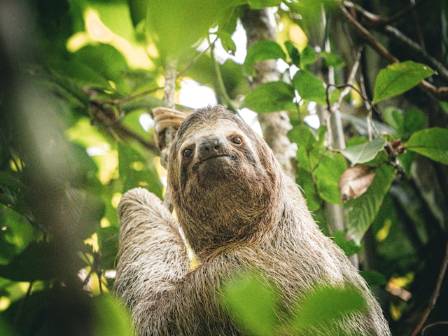
The three-fingered sloth is a remarkable mammal that defines the concept of a specialized lifestyle. Often misunderstood as merely "lazy," their behavior is actually a sophisticated evolutionary response to their environment. While these creatures are known to rest for up to 16 hours a day, they are primarily diurnal, meaning they are most active during daylight hours. This sedentary existence is a necessity caused by their diet; sloths consume leaves that are exceptionally high in cellulose and tough organic compounds. Because these materials are so difficult to break down, the sloth must remain still for extended periods to allow its digestive system to process the nutrients.
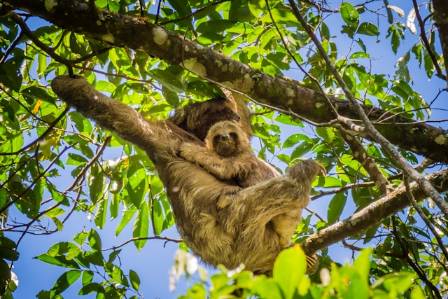
To maximize efficiency, sloths specifically target younger leaves, which contain fewer toxins and are easier to digest. In the rainforests of Costa Rica, they are most frequently found in the Cecropia insignis tree, which serves as their primary food source.
Habitat and Territorial Habits
Sloths do not require vast territories to thrive. An individual typically spends its entire life within a small cluster of 10 to 15 trees spread across just a few acres. They act as "tree huggers" in a literal sense, rotating between their favorite spots to allow vegetation time to regrow. This rotation ensures they always have a fresh supply of foliage without exhausting the resources of a single tree.
Despite their slow movement on branches, they exhibit a mysterious and risky behavior when it comes to hygiene. Approximately once a week, a sloth will descend from the safety of the canopy to the forest floor to defecate. Biologists are still investigating why they take this risk. Some theories suggest the waste acts as a high-quality fertilizer for their favorite trees, while others believe it serves as a scent marker to communicate their territory to other sloths.
A Living Ecosystem and Unique Sounds
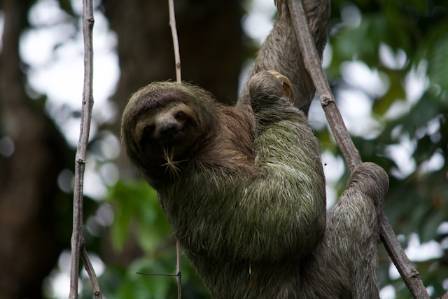
A sloth's fur is more than just a covering; it is a functioning ecosystem. Due to their slow movement and the humid environment, algae frequently grow within their hair, giving them a distinct greenish tint that provides excellent camouflage. This fur also hosts a specific species of moth that lives nowhere else on Earth. These moths remain with a single sloth for their entire life cycle, only migrating to a new host when a sloth gives birth.
During the mating season, the quiet forest is interrupted by the sloth's surprising vocalizations. Males produce a piercing sound that resembles a high-pitched human screech or the hoot of an owl to attract mates. These calls allow researchers to monitor population density within reserves, as the sounds are distinct enough to be tracked through the dense foliage.
Resilience and Environmental Protection
The three-fingered sloth is a notably tolerant species. They are capable of adapting to moderate environmental disturbances as long as a few key trees remain standing. If their primary habitat is compromised, they will migrate to areas featuring fast-growing trees to establish a new home. However, like many inhabitants of the tropical rainforest, they face ongoing threats from habitat loss.
Protecting the rainforest is essential for ensuring that the three-fingered sloth maintains its place in the wild. Efforts to preserve these habitats allow this unique mammal to continue its slow, specialized journey through the canopies of Central America.
संबंधित फ़ाइलें

36 अद्भुत तथ्य जिन्हें आप पिज्जा के बारे में नहीं जानते हैं
AUTH: स्टेफ़नी कैप्टनकोस

बास्केटबॉल में 4 तरह के डिफेंस
AUTH: करण

क्या नूडल्स सेहतमंद हैं? आहार विशेषज्ञ से कौन सा सबसे अच्छा है
AUTH: रोहित

वैश्विक खाद्य पदार्थ: 5 देशों के प्रमुख व्यंजन
AUTH: आयुष्मान

10 खूबसूरत ऑरेंज कैट ब्रीड
AUTH: पल्लवी

How to Make DIY Clay Pet Paw Prints
AUTH: Violetta Kingsley