क्रिएटिव फ़ाइल
Iceberg: Antarctica's Wandering Giant
Icebergs have long been one of the most recognizable symbols of the frozen landscapes of Antarctica and the Arctic. Some have even drifted into major shipping routes, leaving their mark on human history. Many icebergs have gained worldwide attention because of their enormous size or their impact on maritime travel, such as the iceberg linked to the sinking of the RMS Titanic in 1912.
Vivienne Sterling
निर्माता
फ़ाइल नोट
नीचे पूरा ट्यूटोरियल या लेख पढ़ें।
मॉड्यूल
डिजिटल कला
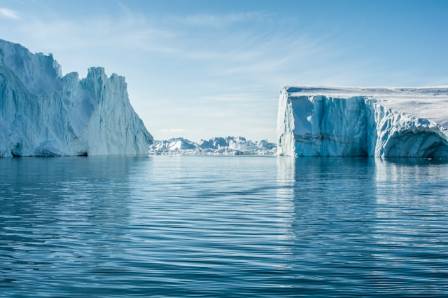
Icebergs have long been one of the most recognizable symbols of the frozen landscapes of Antarctica and the Arctic. Some have even drifted into major shipping routes, leaving their mark on human history. Many icebergs have gained worldwide attention because of their enormous size or their impact on maritime travel, such as the iceberg linked to the sinking of the RMS Titanic in 1912.
Among Antarctica’s vast icy wilderness, one enormous iceberg has captured global interest: Iceberg A23a. Covering nearly 4,000 square kilometers, this massive tabular iceberg is made of ancient compressed ice that formed thousands of years ago. Its surface area is larger than that of some countries, and its incredible journey has lasted for decades. During an Antarctic expedition, travelers may have the rare opportunity to witness this frozen giant — a remarkable sight that is impossible to overlook.
How Old Is Iceberg A23a?
The ice that makes up A23a is far older than the iceberg itself. Its frozen layers originated from glaciers that have fed Antarctica’s ice shelves over thousands of years, slowly accumulating and becoming compressed into thick, ancient ice.
Iceberg A23a first formed in 1986 when it separated from the Filchner-Ronne Ice Shelf in Antarctica. It was one of several enormous icebergs created naturally as part of the continent’s long-term glacial cycle.
Unlike many icebergs that quickly melt away or break apart, A23a remained trapped because of its immense size and weight. It became grounded on the seafloor of the Weddell Sea, where it stayed almost stationary for nearly four decades, becoming a permanent-looking feature of the frozen landscape.
Where Is Iceberg A23a Now?
In late 2023, satellite observations revealed a surprising development: A23a had broken free from the seabed and started drifting again. Scientists believe this happened because of years of pressure from surrounding ice, repeated impacts from other icebergs, and the gradual erosion of its underside by warmer ocean water.
Driven by winds and ocean currents, A23a entered the Antarctic Circumpolar Current, the powerful current that flows around Antarctica. It then began moving away from the Weddell Sea and Antarctic Peninsula toward the South Atlantic Ocean.
By March 2025, A23a had once again become grounded on the seabed approximately 73 kilometers (45 miles) from the coast of South Georgia.
In August 2025, researchers from the British Antarctic Survey reported that A23a had begun breaking apart, producing huge sections of ice that were carried northwest into an area known as “iceberg alley.” After holding the title of the world’s largest iceberg intermittently since the 1980s, A23a lost that distinction in August 2025 to another iceberg, D15a, which remains attached to the Antarctic coastline.
The breakup of A23a has continued. In January 2026, NASA satellite images showed that the iceberg had significantly decreased in size after several major fractures during the summer of 2025. Scientists also observed blue areas appearing on the ice surface, indicating the presence of meltwater that is speeding up the collapse process. Reports suggested that A23a could completely disappear within weeks or even days, bringing an end to a remarkable story that lasted more than 40 years.
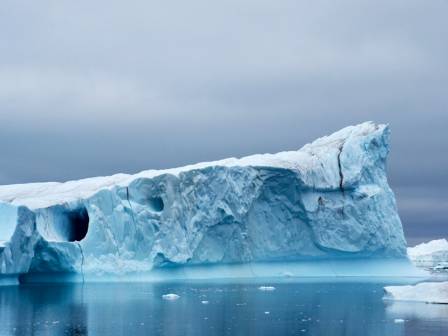
The Impact of Iceberg A23a on Antarctica
Although the separation of A23a from the Filchner-Ronne Ice Shelf was not directly caused entirely by climate change, the increasing frequency of major iceberg breakoffs and their interaction with warmer ocean conditions reflect a broader pattern of instability across Antarctica’s ice shelves.
As enormous icebergs like A23a move through the ocean, they can scrape the seafloor and release nutrients into surrounding waters. This process may influence marine ecosystems in both beneficial and harmful ways.
Large icebergs also introduce significant amounts of freshwater into sub-Antarctic environments as they melt. This can affect ocean circulation, nutrient distribution, and the balance of local ecosystems.
Scientists continue to investigate whether A23a could threaten wildlife around South Georgia. There are concerns that the massive iceberg may block access routes to feeding areas used by penguins and seals. Large icebergs like A23a are carefully monitored because they provide valuable information about Antarctic changes, global warming, and the relationship between ice formations and biodiversity.
Iceberg A23a Facts
A23a is the eighth-largest iceberg ever recorded. The largest verified iceberg in history, B-15, was nearly three times larger than A23a.
When it began drifting again in 2023, A23a was approximately the size of the U.S. state of Rhode Island and about twice the size of Greater London.
The iceberg weighs around one trillion tons.
A23a spent almost 40 years trapped on the seafloor of the Weddell Sea.
In 1956, the USS Glacier reported an iceberg measuring approximately 333 kilometers long and 100 kilometers wide, which may have been the largest iceberg ever recorded, although its actual dimensions remain debated.
Experiencing Icebergs Up Close in Antarctica
Not every iceberg encountered in Antarctica is as enormous as A23a. During Antarctic expeditions, visitors can discover a wide variety of ice formations in different shapes and sizes.
Small pieces of floating ice are known as growlers and bergy bits, while larger icebergs are classified according to their dimensions, ranging from small to extremely large.
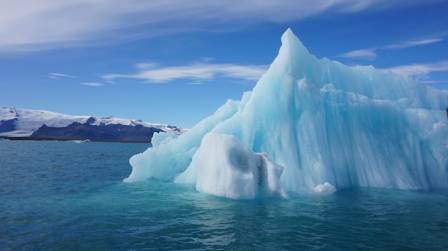
Icebergs are generally divided into two main categories: tabular and non-tabular. Tabular icebergs have steep sides and broad, flat tops, resembling enormous floating platforms. Non-tabular icebergs come in several forms, including dome-shaped, pinnacle, wedge-shaped, dry-dock, and blocky structures.
Whatever type of iceberg you encounter, witnessing the interaction between ice, ocean, and time is a humbling experience. These frozen landscapes reveal the powerful forces shaping our planet and remind us that Earth’s environments are constantly changing.
As Iceberg A23a continues its slow journey through the open ocean, it leaves behind more than just a trail of ice. It carries a story connected to ancient natural processes, the passage of time, and the environmental changes influenced by modern human activity. Its legacy stands as a powerful reminder of the fragile and ever-changing nature of our planet.
संबंधित फ़ाइलें

पवन ऊर्जा के अद्भुत फायदे: हमारे ग्रह के लिए 3 शक्तिशाली लाभ
AUTH: प्रिया

दुनिया के सबसे प्रेरणादायक दौड़ने वाले ट्रैक
AUTH: देव

कोस्टा रिकान तट का यह अनिर्दिष्ट खिंचाव एक सर्फर्स स्वर्ग है
AUTH: लिंडसे मैकिन्टोश

पृथ्वी से मिल्की वे कैसे देखें: सभी जानकारी
AUTH: एशा

11 Essential Hat Styles for Women’s Wardrobes
AUTH: Christopher Reed

मिट्टी की मूर्तिकला मार्गदर्शिका: खोखली आकृतियाँ बनाने की विस्तृत तकनीकें
AUTH: दिव्या शर्मा