क्रिएटिव फ़ाइल
Van Gogh: Starry Night
“Starry Night” stands as one of the most iconic artworks globally. Its presence is everywhere—on mugs, t-shirts, posters, phone cases, and more. In many ways, its recognition seems to rival or even surpass the fame of its creator, Vincent van Gogh. Yet, its enduring popularity is proof of its universal appeal and timeless beauty.
Sydney Vale
निर्माता
फ़ाइल नोट
नीचे पूरा ट्यूटोरियल या लेख पढ़ें।
मॉड्यूल
डिजिटल कला
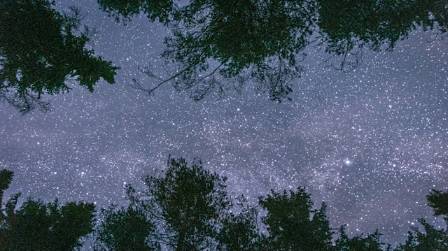
“Starry Night” stands as one of the most iconic artworks globally. Its presence is everywhere—on mugs, t-shirts, posters, phone cases, and more. In many ways, its recognition seems to rival or even surpass the fame of its creator, Vincent van Gogh. Yet, its enduring popularity is proof of its universal appeal and timeless beauty.
Background of Starry Night
Van Gogh completed Starry Night in 1889 while staying at the Saint-Paul-de-Mausole asylum in Saint-Rémy-de-Provence. During his time there, he enjoyed more freedom than most patients: he could leave the grounds under supervision, paint, read, and retreat to his room. He even had access to a small studio. Although he experienced occasional relapses into depression and hallucinations—he had been diagnosed with epileptic fits—there were periods of mental stability and creativity.
Eventually, Van Gogh’s mental health declined again, influencing a darker tone in his work. Starry Night reflects this transition, dominated by deep blues that merge the rolling hills with the night sky. At the painting’s base lies a quaint village rendered in shades of brown, gray, and muted blue. The stars and moon, glowing in yellow and white, immediately capture attention against the swirling blue heavens.
The Painting’s Composition
The brushwork in Starry Night is remarkable. The sky twists and swirls, each stroke rolling around the luminous stars and moon, giving the scene a dreamlike quality. The cypress tree bends with the flow of the sky, while the hills gently descend toward the structured village below. In contrast, the buildings are painted with vertical and rigid lines, creating a sense of order. Small trees scattered through the town soften the harsh geometry, connecting the natural with the human-made.
Interestingly, the landscape is entirely imagined. The view does not correspond to what Van Gogh saw from his window in Saint-Rémy. As an artist known for painting what he observed, this imaginative composition marks a distinct departure in his work.
Themes and Symbolism
The painting explores contrasts: reality versus dreams, natural versus constructed, and even earthly versus divine. Some interpretations link the work to Genesis 37:9, where Joseph dreams of the sun, moon, and eleven stars bowing to him—a symbolic reflection of authority and destiny. Van Gogh’s own family, often skeptical of his career, might have influenced this celestial motif.
The composition can be divided into three layers:
The Sky – Ethereal and surreal, representing the divine or unreachable.
The Cypress and Hills – Flowing, soft forms that echo the swirls of the sky, bridging the heavens and earth.
The Village – Geometric and rigid, yet dotted with trees and a church steeple pointing upward, connecting human life with the spiritual realm.
Through this layering, Van Gogh blends the earthly and divine, capturing both imagination and emotion in one vivid scene.
Final Thoughts
Starry Night is a visual and emotional marvel. Its swirling skies, expressive brushwork, and imaginative composition continue to captivate viewers more than a century after it was painted. By balancing dreamlike fantasy with earthly grounding, Van Gogh invites us to witness the world through both a human and transcendent lens, making Starry Night a truly timeless masterpiece.
संबंधित फ़ाइलें
दुनिया के सबसे अच्छे गांव कौन से हैं?
AUTH: समीर
यूरोप में उत्तरी लाइट्स देखने के लिए 6 स्थान
AUTH: मानस

A Comprehensive Guide to Vibrant Home Decor: Exploring the Dynamics of Colors in Interior Design
AUTH: Ethan Ryder

दुनिया की 10 सबसे बेहतरीन केबल कार राइड
AUTH: अभय

Japanese Soufflé Pancakes
AUTH: Kieran Drake
A Guide to Identifying the Perfect Winter Outerwear
AUTH: Henry Lucas Bennett