क्रिएटिव फ़ाइल
Ten Captivating Insights into the Art of Origami
Origami is a expansive and delightful craft steeped in narrative and historical depth. While many find the simple act of transforming a flat sheet of paper into a three-dimensional object inherently magical, the discipline contains several remarkable truths that extend far beyond basic paper boats. These facts span from ancient spiritual rituals to cutting-edge aerospace engineering, revealing the surprising complexity of paper folding.
Sophia Reynolds
निर्माता
फ़ाइल नोट
नीचे पूरा ट्यूटोरियल या लेख पढ़ें।
मॉड्यूल
डिजिटल कला
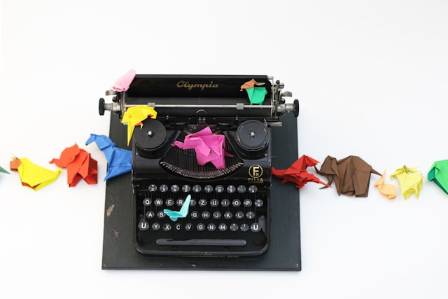
Origami is a expansive and delightful craft steeped in narrative and historical depth. While many find the simple act of transforming a flat sheet of paper into a three-dimensional object inherently magical, the discipline contains several remarkable truths that extend far beyond basic paper boats. These facts span from ancient spiritual rituals to cutting-edge aerospace engineering, revealing the surprising complexity of paper folding.
The Spiritual and Noble Origins of Folding
Although the precise origins of paper are difficult to trace due to its perishable nature, it is widely accepted that papermaking was introduced to Japan by Buddhist monks from China. Initially, paper was a rare and costly commodity, reserved primarily for sacred ceremonies. One of the earliest examples of folding can be seen in "Shide"—zigzag-shaped paper streamers used in Shinto rituals. These streamers are still visible today, adorning protective ropes at shrines across Japan.
As paper became slightly more accessible over the centuries, it was adopted by the Japanese nobility and the Samurai class. For these warriors, "Noshi" became a significant ritual. This involved wrapping a piece of dried shellfish in stylistically folded paper as a formal gift. While the use of actual shellfish has faded, the geometric designs of these wraps persist on modern Japanese gift envelopes, serving as a lasting symbol of warrior etiquette.
The Legend of a Thousand Cranes
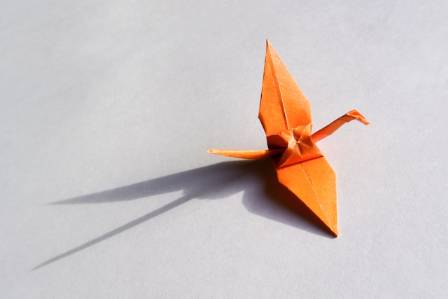
In Japanese culture, the crane is a revered creature believed to live for a millennium, making it a potent symbol of health and longevity. This belief birthed the tradition of "Senbazuru"—the act of stringing together one thousand folded paper cranes to earn a divine wish or recovery from illness.
This practice gained international recognition through the story of Sadako Sasaki, a young survivor of the Hiroshima bombing who attempted to fold a thousand cranes while battling radiation-induced leukemia. Today, her legacy has transformed the origami crane into a global icon of peace. Strings of a thousand cranes are still frequently offered at shrines today, representing collective hopes for success, happiness, and healing.
Origami in Modern Space Exploration
The geometric and mathematical principles found in origami are vital to the future of space travel. Engineers use folding techniques to solve the "packing problem"—the challenge of fitting large structures into the cramped interiors of rockets. Solar shields and panels on various spacecraft are designed to unfold once they reach orbit.
The James Webb Space Telescope is a prime example of this application, utilizing origami-inspired designs for its primary mirror assembly and its multi-layered sunshield. Beyond engineering, astronauts on the International Space Station have also practiced traditional origami as a gesture of international cooperation and peace, proving that a craft requiring no heavy tools is ideal for zero-gravity environments.
Breaking World Records in Scale and Size
The world of paper folding is home to several staggering records that push the limits of patience and scale. In 2009, a group in Hiroshima constructed the world's largest paper crane, boasting a wingspan of nearly 82 meters. On the opposite end of the spectrum, the smallest known crane was crafted by a Japanese professor using a microscope and a sewing needle, starting with a minute square of paper measuring just one millimeter. Other notable feats include a nine-meter-long functional paper boat floated in Germany, demonstrating the unexpected structural capabilities of folded paper.
The Mathematical Limits of Folding
A common myth suggests that a piece of paper cannot be folded in half more than seven times. However, this is largely a matter of the paper's initial size and thickness. In 2002, mathematician Britney Gallivan broke this barrier by folding a sheet of tissue paper 12 times. To achieve this, she required a strip of paper measuring 1.2 kilometers in length.
This challenge highlights the power of geometric progression: every fold doubles the thickness of the stack. Mathematically speaking, if you could fold a standard sheet of paper 26 times, the stack would reach the height of Mount Everest. By 42 folds, the thickness would span the distance from the Earth to the Moon.
Famous Practitioners and Educational Tools
Interestingly, the legendary escape artist Harry Houdini was a practitioner of the craft. Fascinated by paper-based magic tricks, he authored a book titled "Paper Magic," which detailed traditional models like the crane and the frog alongside his repertoire of illusions.
Beyond entertainment, origami has long served as a tool for education. In 1893, Indian mathematician T. Sundara Row published "Geometric Exercises in Paper Folding." This seminal work demonstrated how complex geometric constructions could be taught through folding rather than using traditional instruments. This helped formalize the link between art and mathematics that remains essential to modern geometric study.
Advanced Techniques and European Traditions
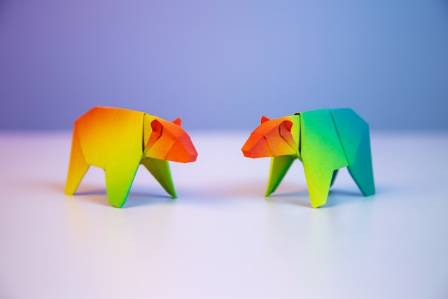
Modern origami has evolved beyond simple sharp creases through a method known as "wet folding." Developed by the grandmaster Akira Yoshizawa, this technique involves dampening thick paper before folding it. This allows artists to create soft curves and organic, sculptural forms that look more like clay than paper. It is particularly effective for creating realistic animals and human figures.
While often associated exclusively with Japan, paper folding has a rich history in Europe as well. It is believed that the Moors introduced the craft to Spain, where it is known as "Papiroflexia." The most famous European model is the "Pajarita," a stylized bird that holds a cultural significance in Spain similar to that of the crane in Japan. Known by various names across the continent—such as "cocotte" in France or "papierdrache" in Germany—the Pajarita suggests that the desire to create art through folding is a universal human impulse.
संबंधित फ़ाइलें

विंटर सनशाइन ब्रेक- अफ्रीका- एशिया- दक्षिण अमेरिका- कैरिबियन
AUTH: जेम्स लिटस्टन

The Guide to Planning Your Dream Beach Vacation
AUTH: Helena Winslet
How to Draw a Lotus Flower: A Step-by-Step Guide
AUTH: Sage Monroe

A Lasting Tribute to the Timeless and Iconic Bug
AUTH: Lena Harrison

कूपे को समझना: स्टाइल और परफॉर्मेंस के लिए एक गाइड
AUTH: विशाल मंगल
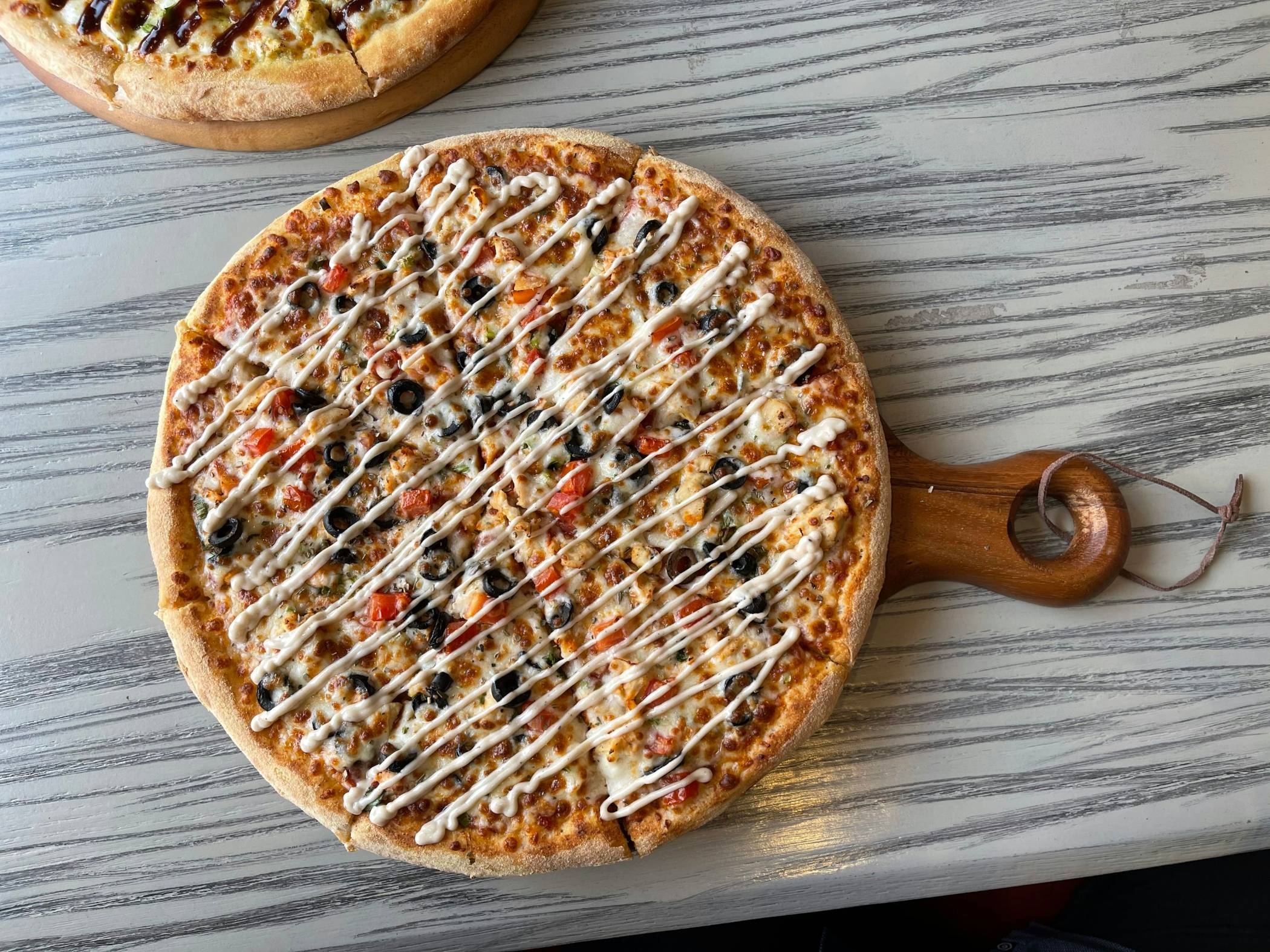
36 अद्भुत तथ्य जिन्हें आप पिज्जा के बारे में नहीं जानते हैं
AUTH: स्टेफ़नी कैप्टनकोस