← मुख्य पन्ना4 मिनट का पाठ
क्रिएटिव फ़ाइल
The Enigmatic Seahorse: 10 Astonishing Truths from SEA LIFE Melbourne
Within the tranquil exhibits of SEA LIFE Melbourne resides one of the ocean’s most peculiar and enchanting creatures: the seahorse. With a visage resembling a chess piece and a body clad in bony armor, these animals defy conventional fish anatomy. They are not merely exhibits; they are biological anomalies that challenge our understanding of reproduction, locomotion, and survival in the marine world. Here are ten essential facts that reveal why these creatures are so extraordinary.
E
Elijah Miller
निर्माता
फ़ाइल नोट
नीचे पूरा ट्यूटोरियल या लेख पढ़ें।
मॉड्यूल
डिजिटल कला
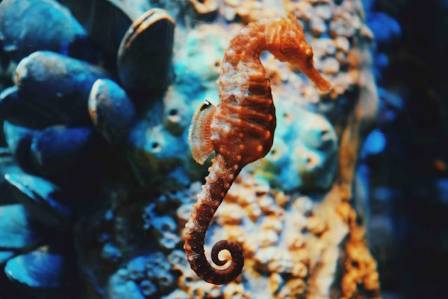
Within the tranquil exhibits of SEA LIFE Melbourne resides one of the ocean’s most peculiar and enchanting creatures: the seahorse. With a visage resembling a chess piece and a body clad in bony armor, these animals defy conventional fish anatomy. They are not merely exhibits; they are biological anomalies that challenge our understanding of reproduction, locomotion, and survival in the marine world. Here are ten essential facts that reveal why these creatures are so extraordinary.
1. Yes, They Are Actually Fish
Despite their alien appearance, seahorses (genus Hippocampus) are teleost fishes belonging to the family Syngnathidae, sharing lineage with pipefish and sea dragons. They possess gills for breathing, a swim bladder for buoyancy control, and fins for movement. Their defining features—a horse-like head, a prehensile monkey-like tail, and segmented armor plating—set them apart from typical scaled fish. They thrive in tropical and temperate shallow waters, including seagrass meadows, coral reefs, and mangrove ecosystems.
2. Masters of Disguise
Seahorses are the chameleons of the sea. They utilize specialized pigment cells called chromatophores to change color rapidly, allowing them to blend seamlessly into coral, seaweed, or sand. This camouflage serves a dual purpose: evading predators and ambushing tiny prey like copepods. Furthermore, they exhibit independent eye movement, meaning one eye can scan for threats while the other hunts for food.
3. The Males Give Birth
In a biological role-reversal unique among vertebrates, the male seahorse bears the burden of pregnancy. The female deposits her eggs into a specialized brood pouch on the male’s abdomen. He fertilizes them internally and incubates them for two to four weeks, regulating salinity and providing oxygen and nutrients. When the time is right, he undergoes muscular contractions for up to 12 hours to expel fully-formed miniature seahorses (fry).
4. Romance in the Ocean Currents
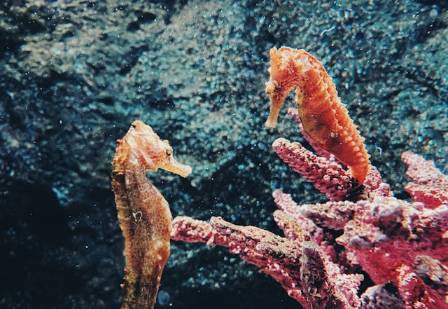
Seahorses are renowned for their monogamous bonds and elaborate courtship rituals. Each morning, bonded pairs engage in a "dance," mirroring each other’s movements, changing colors in sync, and intertwining their tails. These displays reinforce their pair bond and synchronize their reproductive cycles, ensuring they are ready to mate when the conditions are optimal.
5. The Slowest Swimmers in the Sea
Don’t expect a seahorse to win any races. They are among the slowest-moving fish, propelled only by a tiny, rapidly beating dorsal fin. Their rigid bodies lack the caudal (tail) fin used by most fish for thrust. To compensate for this lack of speed, they have evolved a prehensile tail. They wrap this tail around stationary objects like seagrass or coral to anchor themselves against strong currents and tides, preventing them from drifting into open water.
6. Constant Grazers with No Stomach
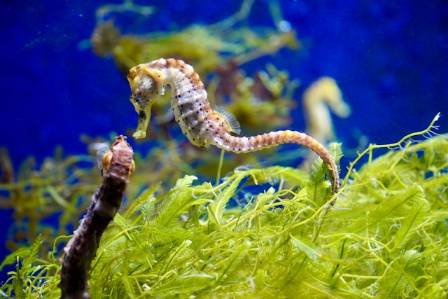
A seahorse’s life revolves around eating. Due to the absence of a true stomach and a rudimentary digestive tract, food passes through their system too quickly to store energy. Consequently, they must eat constantly to survive. Using a tubular snout like a vacuum cleaner, they suck in tiny crustaceans and plankton. An adult seahorse may consume 30 to 50 meals a day, sometimes up to 3,000 brine shrimp in a single day.
7. Remarkable Diversity
There are over 40 recognized species of seahorses, ranging dramatically in size. The Australian big-bellied seahorse (Hippocampus abdominalis) can reach up to 35 cm (14 inches), while the pygmy seahorse (Hippocampus denise) is barely larger than a grain of rice at less than 2.5 cm (1 inch). This diversity allows them to occupy niches from the cold waters of New Zealand to the tropical reefs of the Philippines.
8. Conservation Crisis
Seahorses face significant anthropogenic threats. An estimated 37 million seahorses are extracted from the wild annually. The primary drivers are the traditional medicine trade (particularly in Asia), the curio (souvenir) trade, and accidental bycatch in trawl fisheries. Habitat degradation, particularly the destruction of seagrass beds and mangroves due to coastal development, further exacerbates their decline.
9. Evolutionary Marvels
Seahorses evolved from pipefish ancestors approximately 25 million years ago. Their signature upright posture is a recent evolutionary adaptation that allows them to mimic the swaying motion of seagrass, enhancing their camouflage. Their unique morphology—including a neck that can rotate to increase strike range by 20%—demonstrates a highly specialized evolutionary path.
10. The Sea Dragons of Melbourne
SEA LIFE Melbourne is famous for housing the leafy (Phycodurus eques) and weedy (Phyllopteryx taeniolatus) sea dragons. While technically not seahorses, they are close relatives. Unlike seahorses, male sea dragons carry eggs on a specialized patch under their tail rather than in a pouch. Protected under Australian law, these dragons can live up to a decade in the wild, showcasing the incredible longevity possible within this family of fish.
Quick Reference: Seahorse FAQs
-
What are baby seahorses called? Fry. They are born fully independent and receive no parental care after birth.
-
How long do they live? Most seahorse species live between 1 to 5 years in the wild, averaging around 3 years. Sea dragons generally live longer, often reaching 6 to 10 years.
-
Why are they poor swimmers? Their small dorsal fin provides insufficient thrust, and their rigid bodies create drag, making them reliant on anchoring rather than swimming to navigate their environment.
संबंधित फ़ाइलें

// hi
बास्केटबॉल में 4 तरह के डिफेंस
AUTH: करण
// hi
कबूतरों के बारे में तथ्य
AUTH: अनुपमा
// hi
गमले में लगे ऑर्किड की देखभाल कैसे करें
AUTH: अर्जुन

// en
Step-by-Step Guide to Drawing a Vase
AUTH: Adrian Cole

// hi
डेज़ी के 6 सामान्य प्रकार
AUTH: मोहित
// hi
पेड़ को फिर से हाइड्रेट कैसे करें: पानी की कमी वाले पेड़ को ठीक करना
AUTH: गगन